
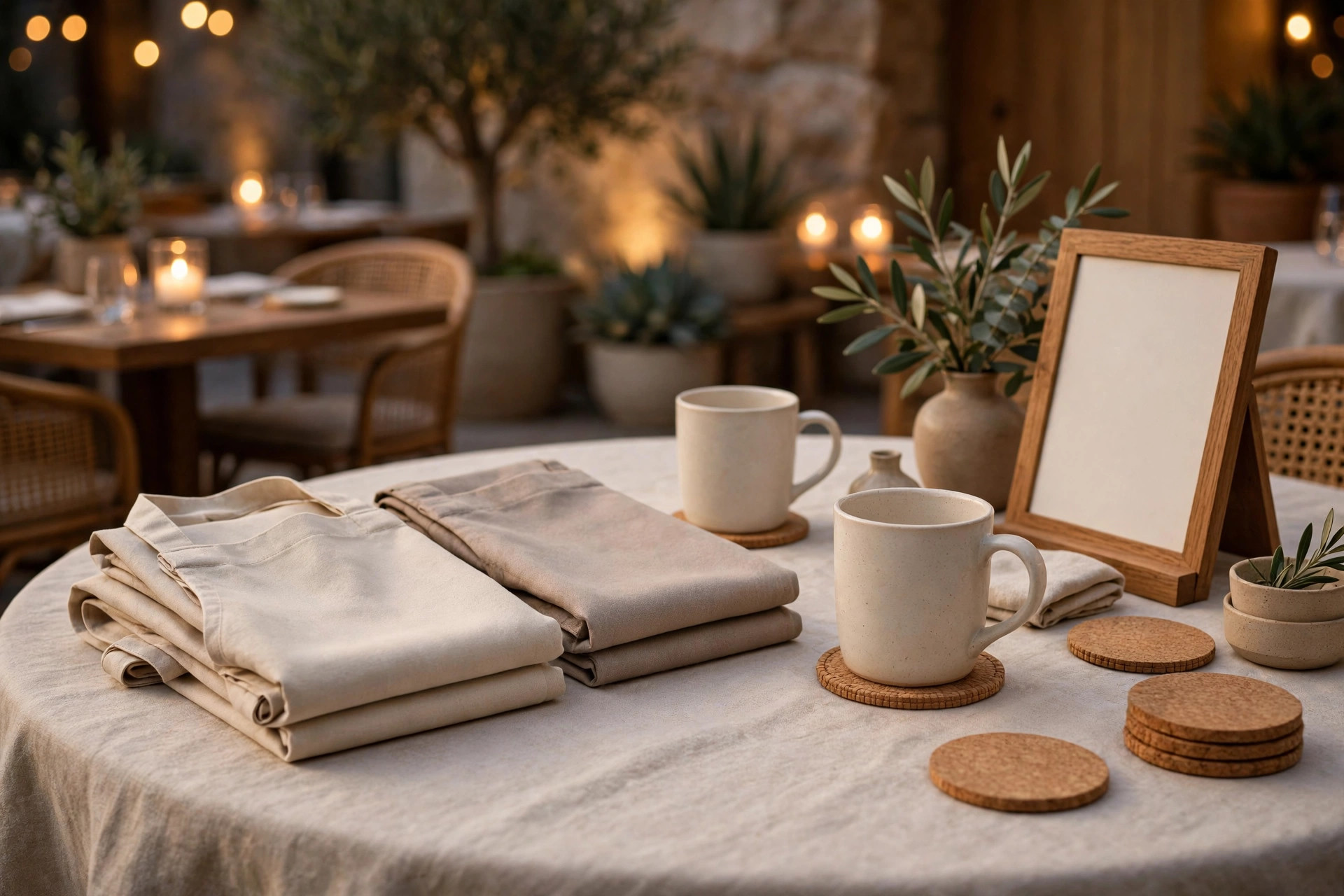
Walk through any successful restaurant in Dubai — from a JBR beachfront venue to a beloved karak spot in Deira — and you will notice something beyond the food: the staff uniforms carry the brand, the mugs on the tables carry the logo, the takeaway bags are unmistakably theirs, and sometimes there is even a small retail corner selling branded caps or tote bags. That is restaurant branded merchandise at work, and in Dubai’s fiercely competitive F&B scene, it has grown from a nice-to-have into a genuine business asset.
Branded merchandise does three jobs for a restaurant simultaneously: it makes staff look professional and unified, it turns every customer touchpoint into brand reinforcement, and — when done well — it creates an additional revenue stream. This guide covers everything a Dubai restaurant, cafe, cloud kitchen, or catering business needs to know: what merchandise to invest in, how to brand it, what it costs in practical terms, and how to avoid the mistakes that waste F&B marketing budgets.
Why Restaurants in Dubai Need Branded Merchandise
Dubai’s food and beverage market is one of the most competitive in the region. Hundreds of new venues open every year, delivery apps make switching effortless, and customers are spoiled for choice. In this environment, brand recall is survival — and merchandise is brand recall made physical.
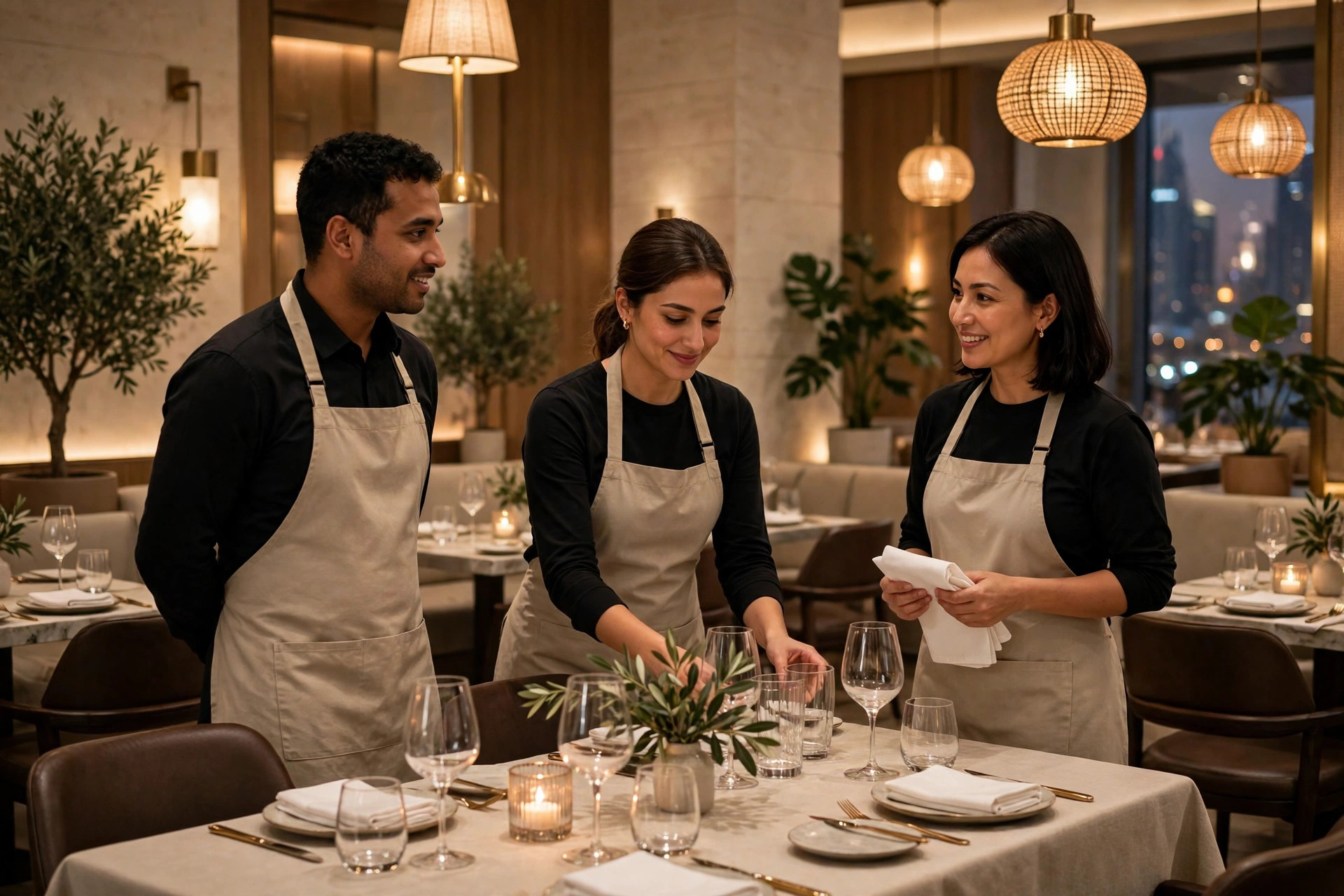
Professional identity. Uniformed staff signal a serious operation. Customers unconsciously associate branded uniforms with hygiene, organization, and quality — critical perceptions in food service. A team in matching, well-designed uniforms looks fundamentally more trustworthy than one in random clothes, regardless of the food quality.
Every table is a billboard. Branded mugs, napkins, coasters, menus, and table tents put your identity in front of customers for the entire duration of their visit. Unlike a social media ad that flashes past in a second, a branded mug sits in a customer’s hands for twenty minutes. That sustained exposure builds the familiarity that drives repeat visits.
Takeaway is mobile advertising. Every delivery order that leaves your kitchen in branded packaging becomes a moving advertisement — seen by the delivery rider, the building reception, neighbours, and anyone nearby when the customer carries it. In a city where food delivery volumes are enormous, unbranded packaging is a missed opportunity on every single order.
Merchandise as revenue. Branded caps, t-shirts, tote bags, and specialty items (signature spice blends, branded coffee, sauce bottles) can be sold in-venue or online. For restaurants with a loyal following, merchandise extends the brand beyond the dining room and creates a new income line — while customers pay you to advertise your restaurant.
Staff pride and retention. Quality branded apparel that staff are proud to wear contributes to team identity and morale. In an industry with high staff turnover, small signals that “this is a professional place that invests in its team” support retention.
Social media fuel. Photogenic branded items — a distinctive mug, a clever tote bag, striking packaging — get photographed and shared. User-generated content featuring your branding is the most credible marketing a restaurant can get, and merchandise manufactures the opportunities for it.
Staff Merchandise: Uniforms, Aprons, Caps, and More
Staff-facing merchandise is the foundation — get this right before investing in customer-facing items.
Uniforms and Aprons
The uniform is your most-seen branded item, worn for entire shifts in front of every customer.
Design principles: uniforms must balance brand identity with practicality. Dark colours hide stains (critical in food service); breathable fabrics matter in Dubai’s climate and hot kitchens; the fit should allow free movement. The branding — usually an embroidered logo on the chest, sometimes a larger back print — should be visible but not garish.
Aprons deserve special attention: the apron is often the most visible garment on front-of-house staff. A well-designed apron in a distinctive colour with clean embroidery becomes a brand signature — think of how instantly recognizable certain Dubai cafes are by their aprons alone. Consider different apron styles for different roles (full bib for kitchen, waist apron for servers) in coordinated colours.
Embroidery vs printing for staff wear: embroidery is the premium choice for staff uniforms — it looks professional, survives countless washes, and conveys quality. Screen printing or heat transfer works for larger back designs or photographic elements but wears faster. For items washed daily, embroidery’s durability justifies its cost many times over.
Caps and Headwear
Branded caps serve dual purposes: part of the uniform for kitchen and delivery staff (hygiene and identity), and a sellable merchandise item for customers. A well-designed cap with an embroidered logo is one of the highest-visibility merchandise items — worn on heads, at eye level, in public.
Name Badges and Lapel Pins
Personal touches humanize the uniform: name badges (engraved or printed) help customers connect with staff by name, and small branded lapel pins add a refined detail. For fine-dining venues, these small elements contribute disproportionately to the perception of polish.
Sizing and ordering practicalities: staff merchandise requires size ranges and reorders as teams change. Order with buffer stock in common sizes, establish a reordering process with your supplier (small top-up runs should be feasible), and keep artwork files on record so reorders match exactly. High staff turnover in F&B makes this operational discipline essential — running out of medium uniforms with new joiners starting is an avoidable embarrassment.
Customer-Facing Merchandise: What Guests See, Use, and Take Home
Branded Drinkware
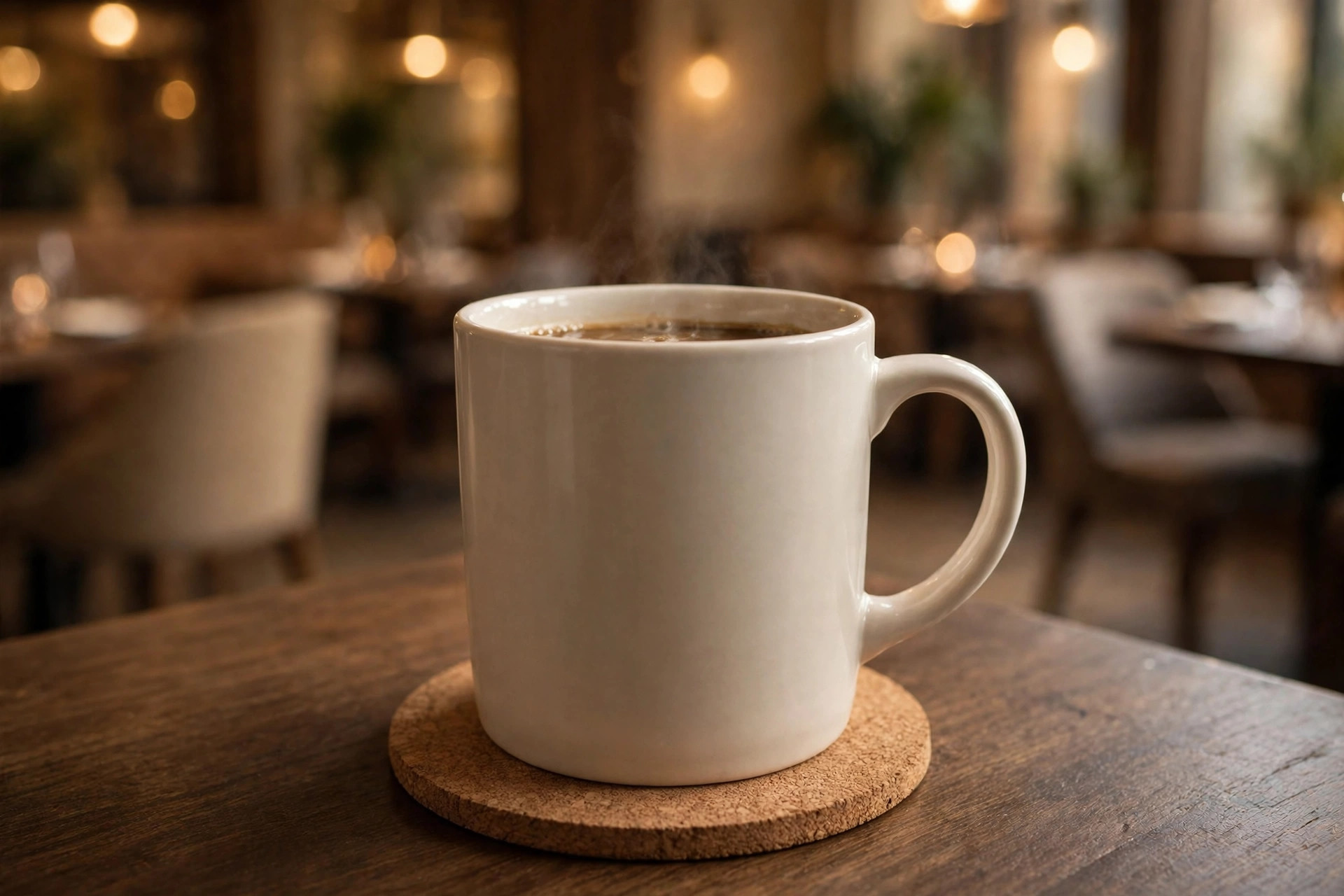
Custom mugs are the classic restaurant merchandise item for good reason: they are used daily, kept for years, and visible in homes and offices. A distinctive mug design — not just a logo slapped on a generic mug, but a considered design in your brand colours — becomes a keepsake. Our guide to custom mugs in Dubai covers shapes, printing methods, and ordering practicalities.
Beyond mugs: branded water bottles for health-conscious venues, specialty glasses for bars and cafes (a distinctive glass shape becomes part of the drink’s identity), and travel tumblers for coffee shops with heavy takeaway trade.
Apparel for Customers
Branded t-shirts, hoodies, and caps sold or gifted to customers turn loyal guests into walking advertisements. The key insight: customer apparel must be designed as fashion, not as uniforms. A clever graphic, quality fabric, and a fit people actually want to wear — merchandise people buy voluntarily advertises far more effectively than freebies people accept politely. Study how successful Dubai F&B brands design their retail apparel: the best pieces would sell even without the restaurant connection.
Our detailed guide to custom t-shirts in Dubai covers fabrics, printing methods, and the quality differences that determine whether your tees get worn or drawer-bound.
Tote Bags and Everyday Carriers
Branded tote bags are among the highest-ROI merchandise items: economical to produce, used repeatedly in public, and genuinely useful (which is why people keep them). A well-designed tote from a beloved Dubai restaurant gets carried to supermarkets, beaches, and gyms — thousands of brand impressions from a single item. In a city increasingly conscious of single-use plastics, a quality reusable tote also aligns your brand with sustainability.
Specialty and Signature Items
The most memorable restaurant merchandise is unique to the venue: a signature spice blend in branded packaging, house-made sauce bottles with custom labels, branded coffee beans from your roastery partner, a recipe booklet, or even a small cookbook. These items deepen the brand relationship — customers are not just buying merchandise, they are taking a piece of the experience home. They also make exceptional gifts, which is why they overlap with corporate gifting (many Dubai companies order food-brand merchandise as client gifts).
Customer Loyalty Gifts: Turning Guests Into Regulars
Customer loyalty gifts are merchandise with a strategic purpose: rewarding repeat business and deepening the customer relationship. For restaurants, this is where merchandise directly drives revenue.
Tiered loyalty rewards: many Dubai restaurants run informal or app-based loyalty programmes where milestones earn branded rewards — a branded mug after ten visits, an exclusive t-shirt for top-tier members, a limited-edition item for anniversaries. Physical rewards feel more substantial than points, and every reward is another branded item in circulation.
Surprise and delight: unexpected gifts create stronger loyalty than expected ones. A complimentary branded item for a regular’s birthday, a small gift for a customer celebrating an occasion in your venue, a “thanks for being a regular” package — these gestures generate the emotional connection that points systems cannot.
Take-home mementos: for special occasions — a restaurant anniversary, a holiday season, a new branch opening — limited-edition branded items create urgency and collectability. Scarcity transforms a mug from merchandise into a memento.
Corporate and group business: restaurants that host corporate events can offer branded mementos to event organizers — a natural bridge between hospitality and corporate gifting. A company that held its team dinner at your venue, and received elegant branded gifts afterwards, remembers you for the next booking.
Cafe Branded Merchandise: The Specialty Coffee Playbook
Cafes deserve a dedicated section because specialty coffee shops in Dubai have elevated branded merchandise to an art form — and their playbook applies to any F&B concept with a strong identity.
The cafe merchandise stack: reusable cups (branded, often in collaboration with cup manufacturers), tote bags, caps and beanies, t-shirts with distinctive designs, stickers and pins (low-cost, high-distribution), and retail coffee bags with striking label design. The best Dubai cafes treat merchandise as a design discipline equal to their interior design.
Reusable cups as a movement: branded reusable cups do double duty — they reduce single-use waste (a value many cafe customers hold) and they advertise with every use. Offering a small discount for customers who bring your branded reusable cup creates a virtuous loop: the customer saves money, the cafe saves on disposables, and the brand travels.
Design-led, not logo-led: the cafes whose merchandise sells best lead with design, not logos. An artistic illustration, a clever slogan, a distinctive pattern — with the cafe name integrated naturally rather than stamped large. Customers buy merchandise that looks good; the branding rides along.
Collaborations: cafes collaborating with local artists or designers on limited merchandise runs generate buzz and reach new audiences. The collaboration itself becomes a marketing event, and the limited nature drives urgency.
Takeaway Packaging: Your Highest-Volume Branded Touchpoint
For many Dubai restaurants — especially cloud kitchens and delivery-heavy concepts — packaging is the merchandise customers interact with most. It deserves the same design attention as any other branded item.
What to brand: delivery bags, boxes, cup sleeves, stickers seals, napkins, sauce containers, and even the delivery rider’s branded bag or jacket. Each is a touchpoint; together they create an unboxing experience that differentiates you from the dozen competitors on the same delivery app.
Design for the journey: packaging must survive transport while looking good on arrival. Grease-resistant coatings, sturdy construction, and designs that read clearly even when slightly crumpled — practical considerations that separate professional packaging from pretty-but-fragile concepts.
The unboxing moment: customers photograph attractive packaging and share it. A well-designed box with a thoughtful insert (a thank-you card, a discount code for the next order, a QR code linking to your loyalty programme) turns a delivery into a marketing event. In 2026, the unboxing experience is as much a part of restaurant branding as the dining room.
Sustainability in packaging: Dubai customers increasingly notice packaging waste. Recyclable, compostable, or reusable packaging — communicated clearly with on-pack messaging — aligns your brand with values your customers hold. Avoid excessive packaging: the goal is protection and presentation, not layers of waste.
Cost reality: custom-printed packaging has meaningful minimum orders (typically in the thousands for printed bags and boxes), so it suits established venues with steady volume. Smaller restaurants can start with branded stickers and stamps on quality plain packaging — a professional look at a fraction of the cost — and graduate to fully custom packaging as volume grows.
Branding Methods for F&B Merchandise: What Works Where
Different merchandise items need different branding methods. Here is the practical mapping:
Embroidery — the default for staff apparel: aprons, uniforms, polos, caps. Professional appearance, extreme wash durability, premium feel. Best for logos and simple designs; not suited to photographic detail or very small text.
Screen printing — the workhorse for customer t-shirts, tote bags, and high-volume textile items. Economical at volume, vibrant colours, good durability. Best for bold graphics; per-colour setup means complex multi-colour designs cost more.
UV printing — ideal for hard-surface items: mugs (with appropriate mug-specific processes), bottles, coasters, signage, and gift boxes. Full-colour detail with excellent durability. Our guide to UV printing in Dubai covers this method in depth.
Laser engraving — for premium hard goods: metal bottles, wooden serving boards, leather menu covers, glassware. Permanent, elegant, single-tone. The premium choice for high-end venues.
Heat transfer / DTF — for full-colour designs on apparel at smaller quantities, or photographic prints on textiles. More economical than screen printing for short runs and complex artwork.
Debossing and foil — for leather goods (menu covers, coasters, aprons with leather straps) and premium paper items. Tactile luxury that suits fine dining.
Labels and stickers — the versatile low-cost option: branded seals for packaging, labels for signature products (sauce bottles, spice packs), stickers as giveaways. Custom labels transform generic containers into branded products.
Match the method to the item, the design complexity, the quantity, and the wash/wear the item will endure. A good supplier will recommend rather than just execute — ask for their recommendation and the reasoning behind it.
Lessons From Gym Branded Merchandise
Restaurants can learn from how Dubai’s fitness industry handles branded merchandise — gyms were early adopters of merchandise-as-brand-strategy, and their lessons transfer directly.
Community identity: successful gyms sell merchandise that members wear proudly because it signals belonging to a community. Restaurants with loyal followings can cultivate the same dynamic — merchandise that says “I’m a regular here” carries social value beyond the item itself.
Quality as non-negotiable: gym members work out in their branded apparel; it must perform. The lesson for restaurants: customer-facing merchandise must be genuinely good — fabric, fit, print quality — because subpar merchandise actively harms the brand it carries.
Limited drops: gyms and streetwear brands popularized the “drop” model — limited-edition merchandise released periodically. Restaurants can adopt this for seasonal or anniversary items, creating urgency and collectability that one-time merchandise orders cannot.
Staff as models: gym trainers wearing the merchandise sell it effortlessly. Restaurant staff wearing sharp branded apparel similarly normalize and promote customer merchandise — especially if staff genuinely like what they wear.
The gym branded merchandise approach — community, quality, limited editions, staff advocacy — is a proven template. Adapt it to your restaurant’s personality.
The Small Restaurant Playbook
Independent restaurants and small cafes sometimes assume branded merchandise requires big budgets. The small business branded merchandise approach proves otherwise — start focused, then expand.
Start with the essentials: staff aprons or uniforms (non-negotiable for professionalism), branded stickers and stamps for packaging (maximum impact per dirham), and one signature customer item (a great mug, a clever tote). This starter set transforms your brand presence for a modest investment.
Grow with revenue: add customer apparel once you have demand signals (customers asking “where can I get that?”), invest in custom packaging when delivery volume justifies minimums, and develop signature retail products (sauces, spice blends, coffee) as brand extensions.
Leverage personality: small restaurants have an advantage chains cannot copy — genuine personality. Merchandise with humour, local references, or the owner’s story resonates in ways corporate-polished merchandise cannot. A karak shop’s witty tote bag will outsell a chain’s generic one every time.
Collaborate locally: partner with local designers, artists, or complementary businesses on merchandise. Collaborations split costs, cross-pollinate audiences, and generate the novelty that drives merchandise sales.
MOQs, Timelines, and Budgeting for Restaurant Merchandise
Minimum order quantities: embroidered apparel typically starts from 50–100 units per design; screen-printed tees from around 100 units (fewer with digital/DTF methods); custom mugs from 100+ units for printed designs; custom packaging from 1,000–5,000+ units depending on the item. Stickers and labels are economical even at a few hundred. Always confirm MOQs with your supplier for your specific items — they vary by method and material.
Timelines: standard branded apparel and merchandise typically takes 2–4 weeks from artwork approval; embroidered uniforms similar; custom packaging 4–8 weeks; complex or imported items longer. For a new restaurant opening, start merchandise planning 8–12 weeks before launch — branded staff uniforms must be ready on day one, not ordered in opening week.
Budgeting approach: think in categories — staff uniforms (a per-employee cost, budgeted with hiring), packaging (a per-order cost, built into food cost calculations), customer merchandise for sale (inventory investment with margin), and promotional merchandise (marketing budget). Separating these prevents the common mistake of treating all merchandise as one amorphous expense.
Reorder discipline: the unglamorous secret of merchandise programmes is reordering. Track stock, set reorder points, and maintain your artwork files with the supplier so reprints match. Nothing undermines a merchandise programme like your signature mug being unavailable for three months.
Practical and Food-Safety Considerations
Food-safe printing: inks and materials that contact food (packaging interiors, cup linings, reusable containers) should be food-safe. Discuss this explicitly with your supplier — reputable packaging suppliers understand food-contact compliance as standard.
Durability in F&B environments: kitchen heat, steam, grease, and constant washing punish merchandise. Specify commercial-grade materials and branding methods rated for these conditions. A mug print that fades after twenty dishwasher cycles was the wrong specification, not bad luck.
Allergen and ingredient labelling: if you sell packaged food merchandise (spice blends, sauces, baked goods), labelling must comply with UAE food labelling requirements — ingredients, allergens, expiry dates. Your packaging supplier or a regulatory consultant can advise; this is not an area for guesswork.
Hygiene and staff apparel: uniforms should withstand hot commercial washing; aprons should be easily replaceable; caps for kitchen staff serve a hygiene function as well as branding. Design staff merchandise with the health inspector’s eye, not just the photographer’s.
Selling and Distributing Your Merchandise
In-venue retail: a small, well-designed display near the entrance or counter — not hidden, not pushy. Staff who genuinely like the merchandise sell it naturally; consider a small staff incentive for merchandise sales.
Online: your website or social media shop extends merchandise beyond your physical location — particularly valuable for delivery customers who may never visit. Simple e-commerce (even Instagram-based ordering) suffices to start.
Bundling: merchandise bundled with food (a meal deal including a branded mug, a catering package with branded packaging upgrades) moves inventory while enhancing the food offering.
Gifting and partnerships: merchandise doubles as corporate gifts — many Dubai companies order restaurant-brand items (specialty foods, branded mugs) as client gifts. This is a B2B revenue channel worth developing: your signature products in corporate gift boxes, supplied through a corporate gifts partner.
Measuring success: track merchandise revenue, but also track the softer metrics — social media tags featuring your merchandise, customer feedback, staff satisfaction with uniforms. The brand-building value often exceeds the direct revenue.
Frequently Asked Questions
What branded merchandise should a new restaurant in Dubai order first?
Prioritize in this order: staff uniforms/aprons (essential for opening day professionalism), branded packaging basics (stickers, stamps, bags — every order is a touchpoint), tabletop branding (menus, coasters, tents), and one signature customer item (a distinctive mug or tote). Expand into customer apparel and retail products once the restaurant is established and demand is proven.
How much does restaurant branded merchandise cost in Dubai?
Costs vary widely by item, quantity, and branding method — embroidered uniforms, printed tees, custom mugs, and packaging each have different cost structures, with per-unit costs falling as quantities rise. Rather than fixed figures, budget by category (staff, packaging, retail, promotional) and get itemized quotes from your supplier for your specific selections and volumes.
What is the minimum order for custom restaurant uniforms?
Embroidered staff apparel typically starts from around 50–100 units per design in Dubai, though this varies by supplier and garment. For small teams, ask about digital printing or DTF methods that accommodate lower quantities, and plan buffer stock in common sizes plus a reorder process for new joiners.
Embroidery or printing for staff uniforms?
Embroidery for the primary logo — it looks premium and survives daily commercial washing far better than any print. Screen printing or heat transfer can supplement for large back designs or complex graphics. For garments washed daily in F&B environments, embroidery’s durability makes it the professional standard.
Can we sell our restaurant merchandise online?
Yes — even simple setups work. An Instagram shop, a page on your website, or delivery-app merchandise add-ons can all move product beyond your physical venue. Start simple, photograph merchandise well (lifestyle shots outperform product shots), and promote new drops to your existing customer base first.
How do we make our takeaway packaging stand out on delivery apps?
Invest in distinctive branded packaging — custom-printed bags or boxes in your brand colours, a branded seal sticker, and a thoughtful insert (thank-you card, discount code, loyalty QR). On delivery apps where the food photo is standardized, your physical packaging is the main differentiator customers actually touch. Start with branded stickers on quality plain packaging if custom-printed volumes are not yet justified.
Conclusion
Restaurant branded merchandise in Dubai is no longer decoration — it is infrastructure. Staff uniforms build trust, tabletop branding builds familiarity, takeaway packaging builds reach, and retail merchandise builds revenue and community. The restaurants winning the brand battle are the ones treating merchandise as a system, not a shopping list.
Start with the essentials, insist on quality, design for your customers (not just your logo), and build the programme steadily. Your brand is already in every dish you serve — merchandise just makes sure it travels further.
Vision Advertising — 38A St, Hor Al Anz, Deira, Dubai, UAE | +971 50 970 9564 | [email protected] — from embroidered staff apparel to custom mugs, packaging, and retail merchandise, explore our unique corporate gifts collection and learn more about us.




