
Good corporate gift etiquette is rarely about the price of the gift. In the UAE, it is about judgement: knowing what is appropriate for the person, the occasion, their faith and culture, their company policy, and the moment in the business relationship. Dubai is one of the most international business cities in the world. A single client list can include Emirati partners, Arab executives from across the region, South Asian and East Asian business owners, and Western expatriates, often inside the same building. That diversity is exactly what makes gifting here rewarding, and exactly why a gift that works perfectly in one context can land badly in another.
This guide sets out the practical rules Dubai businesses actually follow: what to give, what to avoid, when to send it, how to present it, and how to stay on the right side of company and government gift policies. None of it is complicated. Almost all of it comes down to one habit: think about the recipient before you think about the product.
Why Etiquette Matters More in the UAE
In many markets, a corporate gift is a marketing item with a logo on it. In the Emirates, business still runs heavily on personal relationships and trust. Deals are discussed over coffee, partnerships are built across majlis-style conversations and long lunches, and a well-chosen gift is read as a sign of respect for the relationship, not just a branding exercise. That is why the same box can build goodwill in one office and create quiet embarrassment in another.
There are three reasons etiquette carries extra weight here. First, the UAE is a Muslim-majority country, and Islamic values shape everyday business life, from food and drink to the rhythm of Ramadan. A gift that ignores those values does not look generous; it looks careless. Second, the workforce and client base are extraordinarily diverse, so dietary rules, religious observances and personal preferences vary widely within a single company. Third, a large share of business in Dubai touches government, semi-government and regulated entities, where gifts are governed by formal compliance policies rather than personal taste. A gift that would be unremarkable between two private companies can be a genuine problem for a public-sector recipient.
The encouraging part is that none of this requires insider knowledge. The rules below are the ones experienced Dubai suppliers and office managers apply every day, and they are mostly common sense made specific: respect faith and dietary practice, respect the calendar, respect the recipient’s employer policy, and keep the gift clearly a courtesy rather than an attempt to influence a decision. Taken together, they form the working code of business gift etiquette UAE companies rely on in every gifting season.
The First Rule: A Gift Is a Courtesy, Never a Lever
Before any cultural detail, there is a professional one. A business gift should thank, celebrate or mark an occasion. It should never be timed or sized to sway a tender, a contract renewal, an approval or any other decision. That line matters legally and reputationally. Most established companies in the UAE, and virtually all government-related entities, operate anti-bribery and compliance frameworks under which employees must decline or declare gifts that could be seen as inducements.
In practice, this means a few simple things. Keep values modest and proportionate to the relationship. Never give cash or cash equivalents such as gift vouchers with a cash value, which many policies treat as the most sensitive category of all. Do not send a valuable gift to someone who is currently evaluating your proposal, approving your invoices or running a procurement process you are part of; wait until the process is closed, or send a token seasonal greeting instead. And if your own company has a gifting policy, follow it on the giving side too: many Dubai firms cap what their staff may send, require approval above a threshold, and keep a simple register of gifts given to public-sector contacts.
Framed this way, corporate gift etiquette is not a restriction on generosity. It is what keeps generosity safe for both sides. A modest, thoughtful gift that a recipient can accept without paperwork or awkwardness is worth far more than an expensive one they have to hand back.
The Classic Mistake: Alcohol
Ask any experienced Dubai supplier what not to gift clients, and one answer comes back every time. If there is one error that defines poor business gift etiquette in the UAE, it is alcohol. Wine, spirits and champagne hampers are standard corporate gifts in many countries, and international companies sometimes ship the same template into Dubai without thinking. It is the single most likely gift to offend, to be refused, or to be quietly disposed of.
The reasons are straightforward. Islam prohibits alcohol, and a large proportion of clients, partners and employees in the UAE do not drink for religious reasons, whether or not they say so openly. You cannot reliably tell who drinks and who does not from a name, a nationality or how Westernised someone appears, and guessing wrong is not a small social slip; it signals that you did not consider the person at all. Even for recipients who do drink, alcohol creates practical problems. Its sale and transport in the UAE are licensed and regulated, rules differ between emirates, and delivering alcohol to an office can put the recipient in an uncomfortable position with their own employer, building management or family. Many corporate policies ban alcohol on premises entirely.
The safe rule is absolute: do not include alcohol in corporate gifts in the UAE unless you know the individual recipient personally, know for certain that they would welcome it, and are delivering it privately rather than to a workplace. For business gifting at any scale, simply leave it out. Premium dates, specialty coffee, fine teas, chocolates from reputable makers, and non-alcoholic sparkling drinks give you the same sense of occasion with none of the risk. No client relationship in Dubai has ever been damaged by the absence of a bottle.
Food Gifts: Halal, Dietary Awareness and Timing
Food is the most popular corporate gift category in the Emirates, and for good reason: it is shared, it suits most budgets, and a good hamper works for clients and teams alike. But food is also where dietary and timing mistakes happen, so it deserves more care than any other category.
Halal is the baseline
Any food gift sent in the UAE should be halal-certified or from a source that clearly is. This applies to obvious items such as meat and gelatin-based sweets, and to less obvious ones such as some chocolates, marshmallows, gummy sweets and baked goods that may contain alcohol-based flavourings or non-halal gelatin. Buy from established UAE suppliers who label certification properly rather than importing gift baskets from abroad without checking. The same care applies to your wider recipient list: some recipients keep vegetarian diets, some avoid beef or pork for religious reasons, and some have medical restrictions such as diabetes or nut allergies. You will not always know, which is why mixed hampers with individually wrapped, clearly labelled items are the safest format: the recipient can choose, share or pass on items without difficulty.
Ramadan: the timing rule that matters most
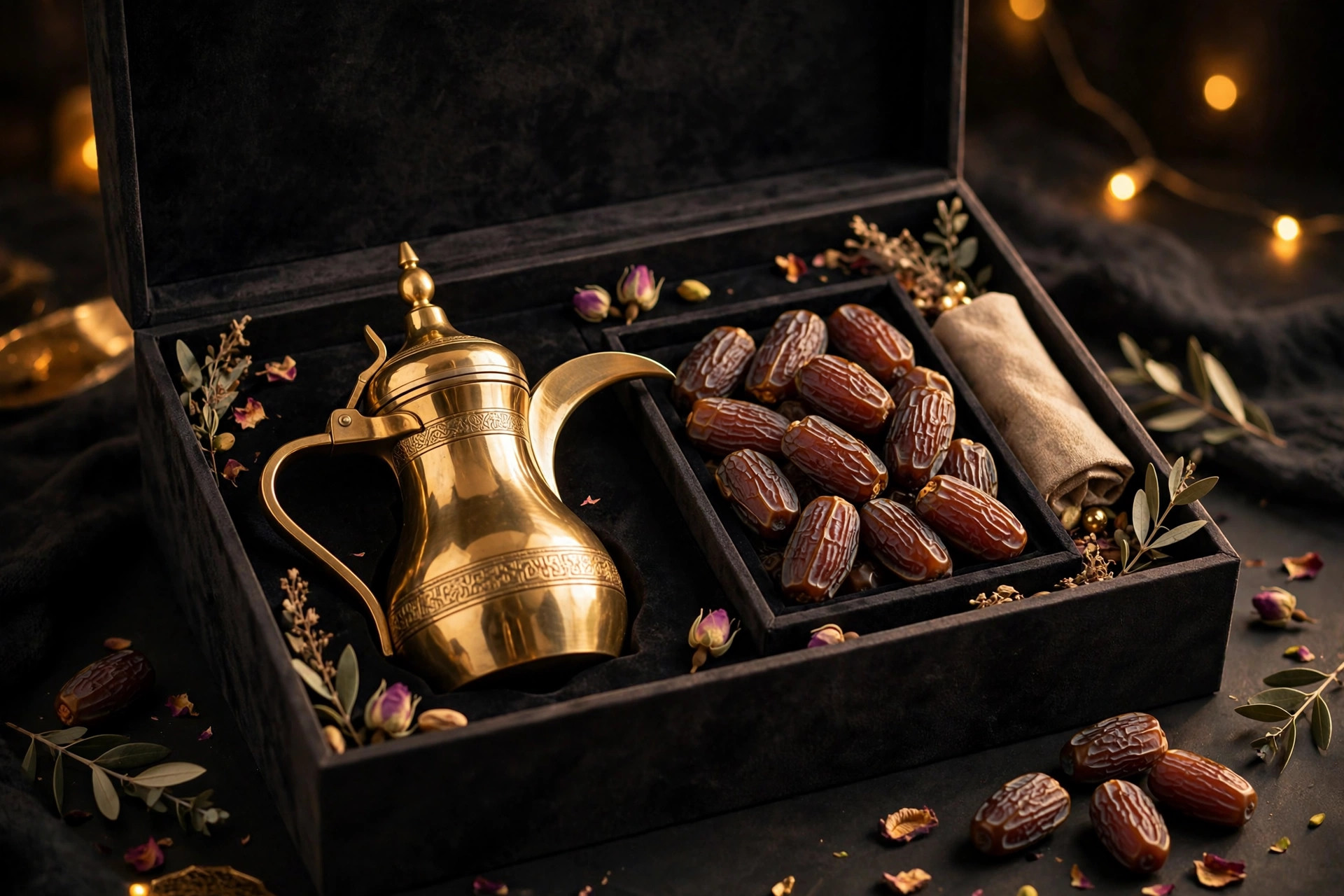
During Ramadan, practising Muslims fast from dawn to sunset. Sending a food gift to a fasting colleague or client during daylight hours, or worse, expecting them to sample it in a meeting, is a genuine etiquette failure. It is not that the gift is unwelcome; it is that the timing ignores the central fact of their day. The correct approach is simple. Food gifts during Ramadan should be framed for iftar, the evening meal that breaks the fast, and delivered late in the afternoon where possible, or presented as something for the family to enjoy at home. Dates are the traditional and most appropriate choice, because dates are what the fast is traditionally broken with. If you are planning seasonal gifting around the holy month, our guide to Ramadan corporate gifts in Dubai covers quantities, packaging and delivery windows in detail.
Also remember that Ramadan working hours are shorter and the pace of business changes. Scheduling a gift delivery, a tasting or a celebratory event in the middle of a fasting day shows the same inattention. And when Ramadan ends, the gifting moment shifts to Eid Al Fitr, which is the natural time for the more generous, celebratory gesture. Many companies hold their main food gifting for Eid for exactly this reason; the Eid corporate gifts guide explains how that timing works.
Leather, animal products and individual convictions
Beyond food, materials deserve a thought. Leather goods are premium corporate gifts and are widely accepted in the UAE, but some Hindu and Jain recipients avoid leather for religious reasons, and some recipients avoid animal products generally. This is not a reason to drop a popular category; it is a reason to know your recipient. For a close client whose preferences you know, choose accordingly. For a large list where you cannot know, balance the order with high-quality non-leather options such as metal, wood, bamboo, fabric or recycled-material products, so nobody receives something they cannot use. The same principle covers fur, exotic skins and similar materials, which carry both ethical and customs complications and have no place in routine corporate gifting.
Symbolism, Superstition and the Small Things
A few presentational details recur in advice about gifting in the region, and they are worth knowing even though they should never be applied rigidly to individuals. Sharp objects such as knives and letter openers are traditionally said to symbolise a cut relationship in several cultures, which is why experienced buyers tend to choose other premium desk items. Clocks and watches are a normal, popular business gift in the Gulf, whatever older superstitions exist elsewhere, so there is no need to avoid them here. What matters more in daily practice is simpler: remove all price tags and never include a receipt or invoice in the box; present the gift in your right hand or with both hands rather than the left hand alone, which is traditionally considered impolite in the region; and do not expect the recipient to open the gift in front of you. In much of the region, gifts are set aside and opened privately later, so a lack of immediate unwrapping is not a lack of gratitude. Never press a recipient to open it on the spot, and never follow up asking whether they liked it.
Gender-appropriate gifting is another area where a little thought goes a long way. Keep gifts professional rather than personal: avoid perfume, clothing and personal-care items for recipients you do not know well, whatever their gender, because scent and size are personal and easily misjudged. When presenting a gift to a woman colleague or client, follow her lead on handshakes and physical contact generally, and present the gift in the same professional manner you would to anyone else. The safest gifts across every line are the classic ones: fine food, quality stationery, desk items, plants, books and well-made practical products.
Reading the Recipient, Not the Stereotype
Guides like this one often descend into lists of what each nationality supposedly likes. Resist that. Dubai’s communities are not monoliths: two Emirati executives, two Indian business owners or two British expatriates can have completely different tastes, faiths and company rules. Etiquette based on stereotypes will eventually embarrass you; etiquette based on attention will not.
The reliable method is to work from what you actually know about the individual. What have they served you at their office? What did they give last year, and at what level? Does their company publish a gift policy, as many larger and government-linked organisations do? If you work through an assistant, a relationship manager or a mutual contact, a discreet question about preferences or restrictions is normal professional practice in Dubai, not a breach of the surprise. Where you know nothing, default to the universally safe choices: modest value, halal food or no food, no alcohol, no leather if the list is mixed and large, elegant packaging, and a warm card. Personalisation, used well, is the strongest signal of attention of all: a name engraved on a notebook says more than any assumption about background. Our guide to personalized corporate gifts in Dubai shows how to do that tastefully, with the branding kept quiet and the recipient’s name doing the work.
The Gifting Calendar: Occasions Across the Year
Much of gift giving rules dubai business practice comes down to the calendar. The UAE year has several natural gifting moments, and each has its own tone.
Ramadan and Eid Al Fitr
Ramadan is the most significant period. The correct tone is respectful and warm rather than lavish: dates, Arabic coffee sets, oud and bakhoor, lanterns and modest hampers for iftar. Greetings matter as much as gifts; “Ramadan Kareem” or “Ramadan Mubarak” on the card is expected and appreciated. Eid Al Fitr, which ends the month, is the celebratory moment when more generous gifts, sweets and family-oriented hampers are appropriate, greeted with “Eid Mubarak”. Eid Al Adha is observed more quietly by many businesses, with greetings and modest gestures rather than large campaigns.
UAE National Day
National Day, celebrated on 2 and 3 December, is a point of genuine pride, and gifts in the colours of the UAE flag, or featuring national symbols handled respectfully, are well received by Emirati and expatriate recipients alike. Treat the flag and national emblems with care in design terms: they should appear complete, correctly coloured and never on items that will be placed on the floor or used in a demeaning way. Production slots in late November disappear quickly, and the National Day holiday itself closes offices and suppliers, so this is an occasion to plan early.
Christmas, Diwali and New Year
Dubai’s diversity means the December season is widely celebrated commercially, and Christmas gifts for Christian clients and staff are normal and welcomed, in the same spirit as the rest of the festive calendar. Diwali is a significant occasion for the large Indian business community, when sweets, dry fruits, lamps and gold-accented gifts are traditional; as with Ramadan food, check that sweets suit the recipient, since many families prefer eggless or vegetarian preparations during the festival. New Year gifting in the first week of January has grown as an alternative to the December rush, and diaries, planners and desk items fit it naturally. The practical lesson across all of these is the same: keep a simple calendar of the occasions your client base actually observes, and let each gift arrive inside its own season rather than in a single generic year-end drop.
Government and Semi-Government Recipients: Value Limits and Policies
This is the section where etiquette becomes compliance. Many government departments, semi-government entities, banks, healthcare groups and large listed companies in the UAE maintain formal gift and hospitality policies for their staff. The details vary, and you should never assume a specific number applies everywhere, but the common pattern is consistent: gifts above a modest value must be declared by the recipient, entered in a register, shared with the department, or declined altogether. Some entities prohibit gifts from suppliers and vendors entirely, particularly during tender periods. Others set a low nominal threshold, often in the region of a few hundred dirhams or less, below which a token gift may be accepted without declaration.
For the giver, the working rules are these. Keep gifts to public-sector and regulated-sector contacts genuinely modest: a box of premium dates, a quality diary or a small hamper in the range you would spend on a token of appreciation, not a statement. Never give luxury items, electronics, jewellery or anything that looks like personal enrichment to a government recipient. Never give during a live procurement, licensing or approval process involving that entity. Address the gift to the office or department rather than singling out an individual where the relationship is institutional, and expect that it may be shared, registered or politely returned; none of those outcomes is a snub, and you should make returning easy by never making the gift personal or extravagant. If you regularly work with an entity, ask your contact, once and professionally, whether they have a gift policy you should be aware of. That question itself builds trust, because it shows you respect their position.
The premium end of gifting still has its place, but it belongs in the private sector, with long-standing relationships, and at values proportionate to that relationship. Even there, judgement rules: the guidance in our overview of luxury corporate gifts in Dubai stresses presentation and restraint over size, which is exactly the instinct compliance policies are designed to protect.
Presentation: Wrapping, Cards and Delivery
In the UAE, presentation carries unusual weight, because it is the part of the gift that speaks before the contents are seen. A modest gift beautifully wrapped will be received better than an expensive one in a supplier’s plastic bag. Use rigid boxes or quality gift bags, tissue and ribbon in condition that survives the journey, and check every box before it leaves: heat in Dubai damages chocolate, candles and cosmetics quickly, so summer deliveries need insulated handling and should never sit in a courier’s van over a weekend.
The card matters more than most companies realise. Every business gift should carry a card that names the recipient, says something specific rather than generic, and is signed by a named person, ideally the senior person who owns the relationship. “Season’s greetings from the team” signed by nobody is the weakest version of the gesture. A short handwritten line, even on a printed card, changes the register completely. Cards for Ramadan and Eid should use the appropriate greeting; cards for close clients should reference the actual relationship, a project completed, a year worked together, a new office, rather than a formula.
Delivery method is the final piece. For key clients, hand delivery by someone from your own team remains the gold standard in Dubai business culture: it turns a parcel into a visit. For volume gifting, courier delivery to the office is normal, but address the parcel to a named person, include your company name clearly on the delivery details so reception does not treat it as anonymous marketing, and avoid Friday and public-holiday delivery attempts. Never send a gift to a home address you happen to know unless the relationship genuinely justifies it; office delivery is the professional default. If you are structuring a wider programme rather than a one-off gesture, the segmentation approach in our guide to corporate gifts for clients in Dubai will help you match the level of gift, and the level of ceremony, to the level of relationship.
Reciprocity, and What to Do When a Gift Is Declined
Reciprocity in UAE business culture is real but relaxed. A received gift creates warmth, not an invoice: your counterpart may reciprocate at the next occasion, at a different scale, or with hospitality rather than an object. Do not keep score, do not match values competitively, and do not escalate year on year until the exchange becomes a burden to both sides. If you receive something generous, a prompt, specific thank-you matters more than a return gift of equal size; acknowledge it by name, mention the item, and let the next natural occasion carry your response.
Declines happen, and they are a normal part of corporate gifting mistakes recovery rather than a crisis. A recipient may decline because their employer’s policy requires it, because the timing touches a procurement process, or because the gift is something they cannot accept personally, such as alcohol or a food item outside their diet. The correct response is always the same: accept immediately, warmly and without argument. Never insist, never repackage the same gift and try again, and never make the person explain at length. A graceful sentence, “Of course, we completely understand, the thought was the point,” closes the matter and usually strengthens the relationship, because it shows your gift was never a lever. Then note the restriction in your CRM so the same mistake is not repeated next season, and, where appropriate, substitute a policy-safe gesture instead: a greeting card, a charitable donation in the spirit of the occasion, or an invitation to coffee. Many experienced Dubai businesses keep exactly this kind of note against each major account, and it is one of the simplest systems you can copy.
A Quick Etiquette Checklist
- Confirm the recipient’s employer gift policy before sending anything above token value, especially for government, semi-government and banking contacts.
- Leave alcohol out of corporate gifts in the UAE, without exception at any scale.
- Use halal-certified food from established local suppliers, with ingredients labelled so recipients can choose safely.
- During Ramadan, frame food gifts for iftar, deliver late in the day, and keep the generous gesture for Eid.
- Balance large orders with non-leather options so recipients who avoid animal products are covered.
- Remove every price tag and never include a receipt, invoice or price list in the box.
- Present the gift with the right hand or both hands, and do not expect it to be opened in front of you.
- Write a named, specific card signed by a real person, with the correct greeting for the occasion.
- Keep values modest and proportionate, and never gift during a live tender, approval or procurement process.
- Record declines and restrictions against the account so next season starts from knowledge, not guesswork.
Frequently Asked Questions
Is it acceptable to give alcohol as a business gift in Dubai?
No, not as a corporate gift. Many recipients in the UAE do not drink for religious reasons, alcohol is licensed and regulated, and many employers ban it on their premises. Premium dates, specialty coffee, fine teas and quality chocolates deliver the same sense of occasion without any risk of offence or refusal.
What value of gift can a government employee in the UAE accept?
It depends on the entity, and there is no single national figure that applies to everyone. Many government and semi-government organisations require gifts above a modest threshold to be declared, registered or declined, and some prohibit supplier gifts altogether, particularly during tenders. The safe approach is to keep such gifts genuinely token in value, address them to the office rather than the individual, and ask your contact about their policy if you work with the entity regularly.
When should food gifts be delivered during Ramadan?
Frame them for iftar, the evening meal, and deliver late in the afternoon rather than during fasting hours. Dates are the most traditional and appropriate choice. Do not present food for immediate tasting in daytime meetings, and consider holding larger celebratory hampers for Eid Al Fitr instead.
Should a corporate gift be opened in front of the giver?
Often it will not be, and that is normal. In much of the region, gifts are set aside and opened privately later. Do not press a recipient to open your gift on the spot, and do not read a delayed opening as a lack of appreciation.
What should we do if a client politely declines our gift?
Accept at once, warmly, and without argument or a second attempt. Declines are usually driven by employer policy, not by the relationship. Note the restriction in your records, and substitute a policy-safe gesture such as a greeting card or an invitation to coffee.
Are personalised gifts appropriate for senior or government contacts?
For senior private-sector contacts, tasteful personalisation such as an engraved name is usually the most appreciated form of gift. For government contacts, keep the item itself modest and token in value regardless of personalisation, and be ready for it to be declared or shared within the department.
Getting It Right Is Easier Than It Looks
Almost every rule in this guide reduces to a single habit: pause before ordering and see the gift from the recipient’s chair. Check the calendar, check the policy, check the contents against the person’s faith, diet and taste, and spend your effort on the card and the wrapping rather than on size. Do that, and corporate gift etiquette stops being a list of risks and becomes what it should be, a quiet competitive advantage, because clients remember the companies whose gifts showed thought.
If you would like help building a gifting programme that respects all of this by default, halal-certified contents, correct seasonal timing, policy-safe value tiers and presentation that reflects well on your business, talk to Vision Advertising at our base in Hor Al Anz, Deira. Call us on +971 50 970 9564 to discuss your list and your occasions, or start with the wider corporate gifts in Dubai guide for ideas across every budget and season.