
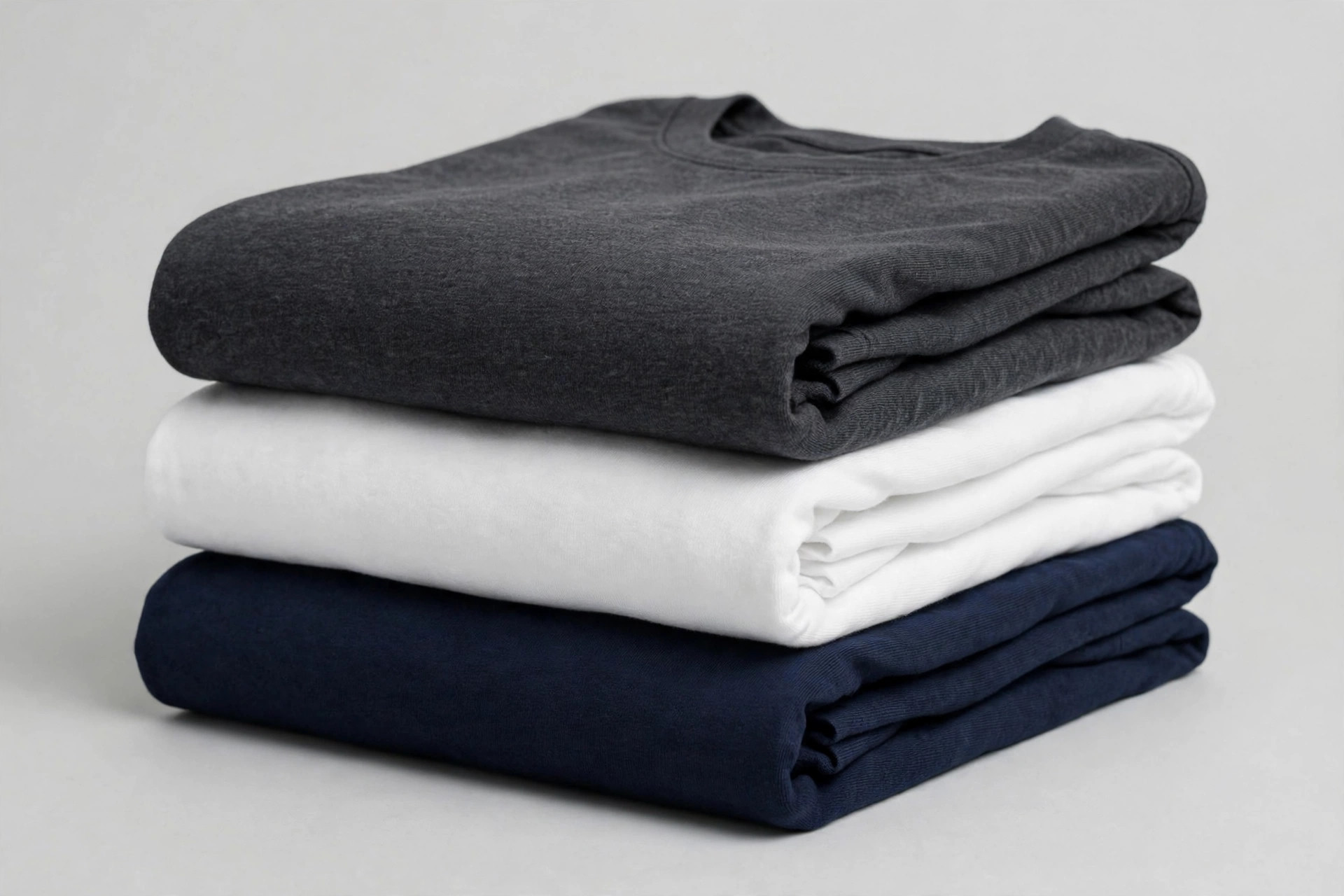
Few promotional products work as hard as a t-shirt. It is a uniform, a walking billboard, a team-builder and a giveaway all in one — and in a city that hosts exhibitions, conferences, product launches and outdoor events almost every week of the year, demand for custom t-shirts in Dubai never really slows down. Whether you are kitting out a sales team for GITEX, dressing volunteers for a community run, or building a staff uniform programme that has to survive daily wear in Gulf heat, the decisions you make before printing — fabric, print method, fit and sizing — determine whether your shirts get worn proudly or quietly disappear into the back of a drawer.
This guide walks Dubai and UAE buyers through everything that matters: how fabric weight (GSM) and fibre choice affect comfort and durability, how the four main decoration methods compare, when a polo beats a tee, how to build a size run that actually fits your whole team, and the design habits that separate professional corporate apparel from cheap-looking giveaways. No hype, no invented numbers — just the practical detail procurement, HR and marketing teams ask about before placing an order.
Why Custom T-Shirts in Dubai Remain a Corporate Staple
Dubai’s business calendar is built around face-to-face events: trade shows at Dubai World Trade Centre, conferences in Business Bay, mall activations, roadshows and a long season of outdoor community events once the weather cools. Every one of those occasions puts your people in front of customers, and matching branded shirts are the fastest way to make a team look organised, approachable and easy to spot in a crowd.
Beyond events, custom t-shirts serve three other corporate jobs:
- Staff uniforms for retail, F&B, logistics, facilities and field-service teams where a full formal uniform is impractical or too hot.
- Internal culture — onboarding kits, anniversary shirts, wellness challenges and team days where a shared shirt creates a sense of belonging.
- Giveaways and merchandise for campaigns, where a well-made shirt keeps a logo in circulation for years instead of days.
The common thread is wearability. A shirt only advertises your brand while somebody is happy to wear it, which is why the fabric and print quality matter far more than shaving a small amount off the unit cost.
Choosing the Right Fabric for Custom T-Shirts in Dubai
Fabric is the single biggest factor in how a custom t-shirt feels in the UAE climate. Dubai is hot and humid for much of the year, and even air-conditioned venues involve outdoor transfers, loading bays and site walks. Here is how the main options compare.
Cotton and GSM: Understanding Fabric Weight
Cotton is the default choice for most corporate orders because it is soft, breathable, prints beautifully and feels familiar to every wearer. The specification that matters most is GSM — grams per square metre — which describes the fabric’s weight and thickness:
- Lightweight (roughly 140–160 GSM): Thin and airy. Suitable for one-day event giveaways and indoor promotions where the shirt is worn for a few hours. The trade-off is durability and opacity — very light white shirts can look see-through and lose shape after a few washes.
- Midweight (roughly 170–190 GSM): The sweet spot for most corporate orders. It drapes well, holds a print crisply, survives regular washing and still breathes in warm weather. If you are unsure what to order, start here.
- Heavyweight (roughly 200–220 GSM and above): A dense, premium-feeling fabric with excellent structure. Popular for fashion-style merchandise and brands that want a retail feel. It is warmer to wear outdoors in summer, so it suits indoor teams, evening events and the cooler months.
Two construction details are worth asking about. Combed cotton has been processed to remove short fibres, giving a smoother print surface and less pilling. Ringspun cotton is softer still. And check whether the fabric is pre-shrunk — untreated cotton can shrink noticeably, which is a real problem when you have ordered uniforms to a size chart.
Polyester and Performance Fabrics
Polyester t-shirts — often marketed as sports, dry-fit or performance tees — wick moisture away from the skin and dry quickly, which makes them the practical choice for outdoor events, warehouse and logistics teams, delivery staff, sports days and any role involving physical work in the heat. Modern performance polyester is far softer than the shiny sports shirts of a decade ago, and it holds its colour and shape extremely well wash after wash.
The limitations are decoration-related (covered below) and feel-related: some wearers simply prefer the hand-feel of cotton, and pure polyester can retain odour more than natural fibre if worn all day. For mixed indoor-outdoor teams, polyester is usually the safer functional pick.
Cotton-Polyester Blends: The Middle Ground
Blended fabrics — commonly around 60/40 or 65/35 cotton to polyester — combine cotton’s softness and printability with polyester’s durability, shape retention and wrinkle resistance. Blends shrink less than pure cotton, fade more slowly and cost less than premium cotton. For staff uniforms that get washed constantly, a good blend is often the most sensible long-term choice, and it is the fabric family many Dubai uniform programmes settle on after their first order.
Other Fabric Considerations for the UAE Climate
- Colourfastness: Intense sun bleaches weak dyes quickly. For outdoor teams, ask about colourfast fabrics, especially for dark brand colours.
- Side seams vs tubular: Side-seamed shirts fit the body better and twist less after washing — a small detail that noticeably improves how a uniform looks.
- Neck construction: A ribbed or reinforced collar keeps its shape; a flimsy collar is the first thing that makes a shirt look old.
- Bio-washed fabric: An enzyme finish that removes fuzz and gives a smoother, slightly softer surface — worth it for premium-feel orders.
Printing Methods for Custom T-Shirts in Dubai, Compared
The right decoration method depends on your artwork, your quantities, your fabric and how long the shirts need to last. The four methods below cover almost every corporate order placed in Dubai.
Screen Printing
Screen printing pushes ink through a mesh stencil, one colour at a time. It produces bold, opaque, extremely durable prints and is the most economical method at volume, because the setup cost is spread across many shirts. It is ideal for logos and designs with a limited number of flat colours.
Best for: Bulk orders (events, uniforms, giveaways), simple logos, spot colours that must match brand guidelines exactly.
Limitations: Photographic or gradient artwork needs halftone work and still won’t match a true photo print; very small runs carry a higher per-shirt cost because of setup; each additional colour adds a screen.
DTF (Direct-to-Film) Printing
DTF printing prints your design onto a film, which is then heat-pressed onto the shirt. It handles full-colour, detailed and photographic artwork beautifully, works on cotton, polyester and blends alike, and stays economical at small and medium quantities because there is no per-colour setup.
Best for: Detailed multi-colour logos, small-to-medium runs, mixed fabric orders, names and numbers.
Limitations: The print sits on the surface as a thin film, so very large solid areas can feel slightly rubbery; extreme stretch fabrics can stress the film over time. Quality varies with film and powder quality, so ask to see and feel a sample.
Sublimation Printing
Sublimation uses heat to turn dye into gas that bonds permanently inside polyester fibres. The result has zero hand-feel — you cannot feel the print at all — and it will never crack, peel or fade because the colour is part of the fabric. It also enables all-over prints that cover the entire shirt, seam to seam.
Best for: Sports teams, all-over designs, photographic artwork, polyester performance wear.
Limitations: It only works on polyester (or high-polyester blends) and effectively only on white or very light garments, since the dyes are transparent. It is not an option for a navy cotton shirt.
Embroidery
Embroidery is stitching rather than printing, but it belongs in every comparison because it is the premium standard for polos, uniforms and executive apparel. A stitched logo looks established and survives as long as the garment itself. It suits simple, bold designs; very fine text and gradients do not stitch well, and dense designs need a backing stabiliser to avoid puckering.
Best for: Polos, long-term uniforms, premium and executive wear.
Limitations: Not suitable for large artwork or fine detail; cost scales with stitch count; heavy stitching can feel stiff on thin t-shirt fabric, which is why embroidery is more common on polos than tees.
Quick Decision Guide
- Simple logo, large quantity → screen printing
- Full-colour artwork, small or medium quantity → DTF
- All-over design or sports polyester → sublimation
- Premium polo or long-term uniform → embroidery
Whichever method you choose, the same rule applies as with any of the promotional products in Dubai your company orders: approve a physical sample or a high-quality mock-up before the full run, and check the print against your brand colour references in daylight, not just under office lighting.
Polo Shirt or T-Shirt? Choosing for Corporate Use
The polo-versus-tee question comes up in almost every apparel order, and the honest answer is that they do different jobs.
Choose custom t-shirts when the setting is casual or high-energy: exhibitions, activations, sports days, volunteer programmes, warehouses and creative teams. Tees offer a larger, flatter print area — your design can run big across the chest or back — and they are generally the lower-cost option, which matters for large event quantities. They also layer easily and suit a younger, more relaxed brand personality.
Choose polo shirts when the wearer represents the company in a semi-formal setting: client-facing field staff, sales engineers on site visits, hospitality supervisors, golf days and trade-show teams that meet senior decision-makers. The collar instantly reads as “uniform” rather than “giveaway”, and polos pair naturally with embroidery, which reinforces that premium impression.
A few practical points:
- Climate: A midweight cotton or blended polo is comfortable in air-conditioned venues, but for staff working outdoors all day, a performance-fabric tee or a breathable piqué polo will be kinder.
- Longevity: Polos usually look smart for longer in a uniform programme because the structure of the garment resists the “worn-out tee” look.
- Mixed programmes: Many Dubai companies order both — polos for client-facing roles and tees for events and internal days — using the same logo placement rules so the brand looks consistent.
- Female fits: If your order includes ladies’ cuts, choose them deliberately rather than issuing smaller men’s sizes; a proper female-fit polo or tee looks far more professional on the wearer.
Whatever you choose, apparel works best as part of a coordinated kit. Pairing shirts with items such as custom tote bags for events, or issuing them inside onboarding packs, makes the shirt feel like one considered piece of a bigger welcome rather than an afterthought.
Sizing and Fit: Getting the Size Run Right
More corporate apparel orders go wrong on sizing than on any other detail. A beautiful print on the wrong fit still ends up unworn. Build your size run methodically:
Collect Real Sizes, Not Guesses
If the shirts are for named staff, circulate a simple size-collection form and let people choose their own size — self-selected sizes have far fewer exchanges than sizes guessed by a manager. For event giveaways where wearers are unknown, order a curve weighted to the middle sizes (M and L typically dominate), with a smaller tail of S and a sensible share of XL and XXL so nobody is left out.
Understand Fit Styles
- Regular/classic fit: Straight cut, comfortable for most body types — the safe default for mixed teams and giveaways.
- Slim/modern fit: Tapered body and shorter sleeves. Looks sharp on younger teams but order carefully; slim fits run small, and staff will not wear a shirt that feels tight.
- Ladies’ fit: Shaped waist, shorter body and sleeves. Always include it when ordering for women.
- Unisex fits: Common with fashion-style heavyweight tees; check the size chart closely, as unisex Medium often equals a men’s Medium.
Read the Size Chart in Centimetres
Never convert sizes by assumption — a “Large” varies by manufacturer. Ask for the garment’s flat measurements (chest width and body length in cm) and compare them against a shirt your team already wears comfortably. Also confirm the size range available: most corporate ranges run from S to 3XL, and larger sizes sometimes carry a modest surcharge.
Order a Buffer
Uniform programmes always need spares: new joiners, replacements for damaged shirts, and the inevitable size swap. Adding roughly 10% extra across the popular sizes is far cheaper than a tiny top-up order later, where minimum quantities and setup apply all over again.
Custom T-Shirts in Dubai for Events, Exhibitions and Uniforms
Events and Exhibitions
At a trade show, your shirt is wayfinding: visitors scan a hall for a logo they recognise. Make the design do that job — a large, high-contrast logo on chest and back, a short campaign line if needed, and nothing else competing for attention. Coordinate shirt colour with your stand graphics so the team looks like part of the stand design. Plan one shirt per person per day for multi-day exhibitions; a fresh shirt each morning is a hygiene basic in a warm climate, not a luxury.
Staff Uniforms
For uniforms, consistency and reorder-ability matter more than novelty. Choose a stock style and colour your supplier can replenish months later, keep the branding simple (an embroidered or small printed chest logo outlasts fashion prints), and register every wearer’s size in a simple sheet so replacements are painless. Uniform shirts pair well with the wider staff-appreciation approach described in our guide to corporate gifts for employees in Dubai — people wear a uniform with more pride when the company treats apparel as part of looking after the team, not just branding it.
Sports Days, Runs and Outdoor Programmes
Switch to performance polyester with sublimation or DTF, prioritise light colours that reflect heat, and consider a cap in the same branding. For early-morning or evening events, a reflective print element is a thoughtful safety touch.
Design Tips That Make Custom T-Shirts Look Professional
- Respect the logo. Use the vector version, keep its clear-space and minimum-size rules, and never stretch, recolour or add drop shadows “to make it pop”.
- Limit the message. One logo plus one short line is a design; five logos, a URL, a phone number and a QR code is a noticeboard. Sponsor logos belong in a tidy lockup, ideally one colour.
- Design for the fabric colour. A design that sings on white can disappear on navy. Ask for mock-ups on the actual garment colour, and consider a white underbase for prints on dark fabrics.
- Mind the print area. Chest prints typically sit in a band roughly 28–30 cm wide; backs can go bigger. Oversized prints look fashionable but can crack sooner if the method is wrong — match ambition to the print method.
- Choose ink colours deliberately. For screen printing, Pantone references keep brand colours honest. For DTF and sublimation, expect a CMYK process and approve a struck-off sample.
- Place names and roles thoughtfully. “STAFF”, “CREW” or “ASK ME” on the back helps visitors more than a personal name does, and avoids reprinting when people change roles.
- Think about the back. At events, backs are seen more than fronts. A strong back design often carries the whole shirt.
- Proofread like it matters. A misspelled campaign line on 500 shirts is a very public error. Have two people check the final artwork file, letter by letter.
How Ordering Custom T-Shirts in Dubai Usually Works
The process is straightforward, and timelines are generally manageable when artwork is ready. As a general guide — every order differs, so treat these as orientation rather than promises — local printing on stocked shirts often turns around within several working days to about two weeks depending on quantity, method and season, while fully custom-made garments, special fabrics or very large runs need longer. Peak periods (the autumn exhibition season, Ramadan and year-end) stretch every supplier’s queue, so ordering early is the single best timeline insurance.
A typical sequence:
- Brief: Garment style, fabric, colour, sizes, quantities, artwork and deadline.
- Quote and artwork proof: Digital mock-up on the correct garment colour.
- Sample or strike-off: Strongly recommended for new designs and uniform programmes.
- Production: Printing or embroidery after written artwork approval.
- Quality check and delivery: Count sizes against the order sheet before distribution.
You can browse garment and gift options in our online shop to narrow down styles before requesting a quote. And if you are building a full merchandise programme rather than a single order, the team at Vision Advertising can coordinate apparel with the rest of your branded items so colours and logos match across everything.
Frequently Asked Questions
What is the minimum order quantity for custom t-shirts in Dubai?
Minimums vary by supplier, garment and print method. Digital methods such as DTF are usually flexible at lower quantities, while screen printing becomes economical once the setup is spread over a larger run. As a general rule, the more shirts you order, the lower the per-shirt cost — share your quantity and deadline when asking for a quote so the method can be matched to your budget.
Which fabric is best for staff who work outdoors in Dubai?
Performance polyester is usually the most practical choice for outdoor roles because it wicks moisture and dries quickly in the heat. If the team prefers a natural-fibre feel, a cotton-polyester blend in a midweight GSM offers a good compromise between comfort, durability and heat tolerance.
Can I print a full-colour photograph on a t-shirt?
Yes. DTF printing reproduces full-colour and photographic artwork well on most fabrics, and sublimation does the same on polyester with the added benefit that the print can never crack or peel. Screen printing is better reserved for flat-colour designs and logos.
How far in advance should I order for an exhibition?
As early as your artwork allows. Standard local orders often complete within one to two weeks, but exhibition season compresses every schedule in the city. Ordering three to four weeks ahead leaves room for a sample, a size-curve adjustment and a calm delivery — and protects you if a reprint is needed.
Should staff uniform t-shirts be printed or embroidered?
For t-shirts, printing is usually the better match because embroidery can feel heavy on lightweight fabric. For polo shirts and long-term uniform programmes, embroidery is the premium standard and typically outlasts the print alternatives. Many companies print event tees and embroider uniform polos under one consistent brand system.
Get Custom T-Shirts Your Team Will Actually Wear
The formula is simple: a fabric chosen for Dubai’s climate, a print method matched to your artwork, a size run built from real measurements, and a design with the discipline to say one thing well. Get those four right and your shirts will be worn at events, on site and long after the campaign ends. To discuss fabrics, request a sample or get a quote for your next order, contact Vision Advertising on +971 50 970 9564 or email [email protected] — we will help you choose the right garment and get it right the first time.




