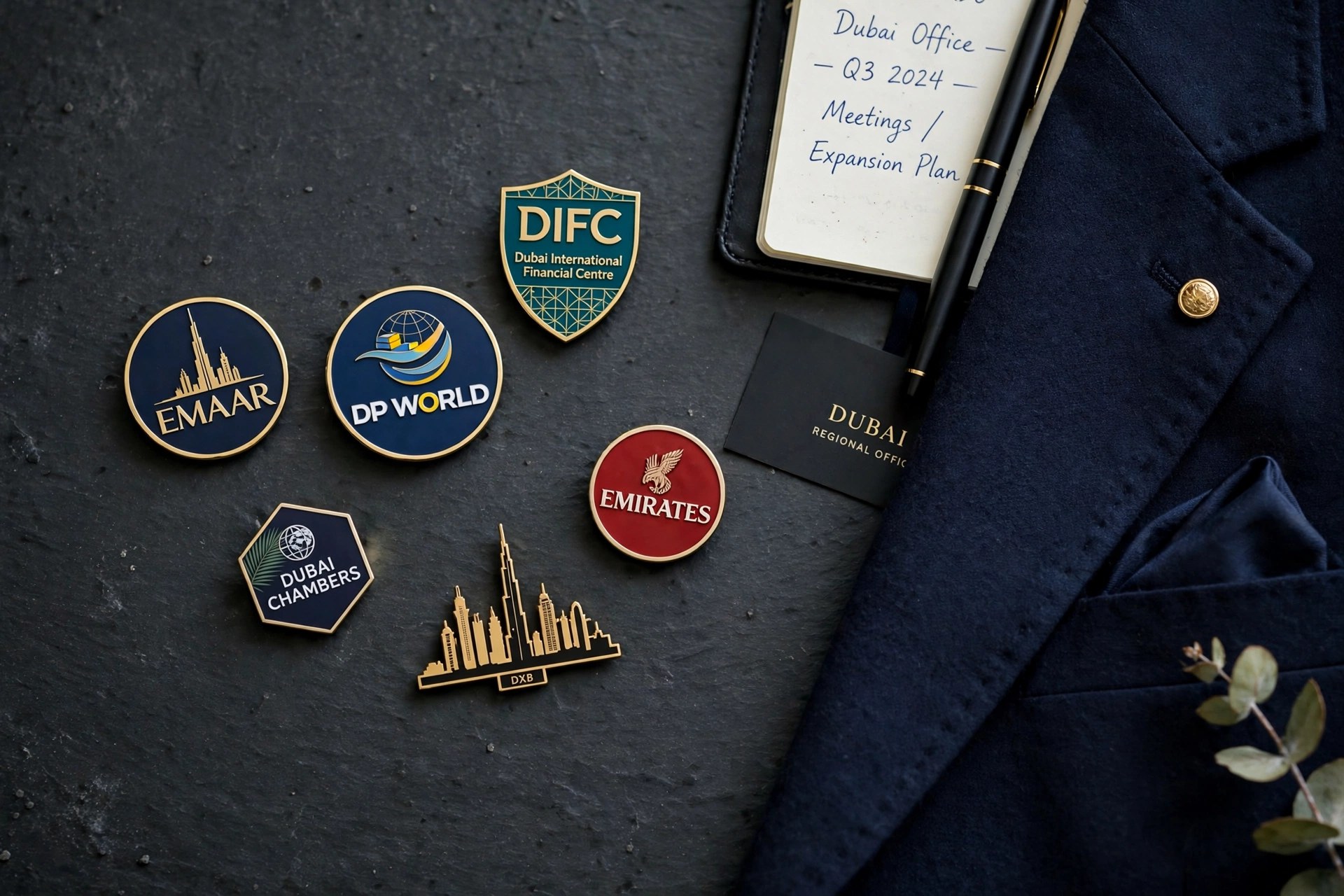
A lapel pin is one of the smallest branding tools a company can buy, yet it travels further than almost any other promotional item. It sits on a blazer at a Gulf trade exhibition, on a hotel concierge’s uniform in Deira, on a school blazer in Abu Dhabi, and on the jacket of a delegate flying home from a Dubai conference — quietly advertising the organisation behind it every single time. That is why demand for custom lapel pins in Dubai keeps growing among companies, event organisers, schools, clubs and government-linked entities across the Emirates.
This complete guide walks you through everything a buyer in the UAE needs to know before ordering: the main pin types and how they differ, the metals and plating finishes available, backing and attachment options, how to prepare artwork that produces a clean result, the step-by-step ordering process, realistic notes on minimum quantities and timelines, and the most effective use cases — from staff uniforms and corporate awards to membership programmes and national celebrations.
Whether you are ordering fifty pins for a company anniversary or ten thousand for a nationwide campaign, the principles in this guide will help you choose the right specification, avoid the common artwork mistakes, and brief your supplier with confidence. If you already know what you need, you can go straight to our dedicated page for custom lapel pins in Dubai and request a quotation.
Why Custom Lapel Pins Work So Well in the UAE Business Culture
Dubai’s business culture places a high value on presentation. Meetings, exhibitions and formal events are a normal part of commercial life, and professional dress — suits, uniforms and traditional attire worn with pride — creates a natural home for a well-made pin. A few practical reasons explain why custom lapel pins in Dubai have become a staple order for marketing and HR departments:
- They formalise a uniform instantly. A plain blazer or abaya-friendly jacket becomes branded workwear the moment a logo pin is added — far cheaper than embroidering every garment.
- They signal membership and rank. Long-service pins, tiered membership pins and award pins carry meaning because they are earned, not bought.
- They photograph well. Pins appear in press photos, event coverage and social media posts, extending brand visibility beyond the event itself.
- They are easy to distribute and store. A box of pins takes almost no space, needs no sizing, and suits every recipient — unlike apparel, there is no wrong size.
- They feel premium at modest unit cost. A metal pin has weight and permanence that a sticker or paper badge can never match, especially in gift and award contexts.
Pins also pair naturally with other branded items. Many companies order them alongside custom lanyards in Dubai for conferences, or present them as part of wider corporate gifts in Dubai programmes for clients and partners.
The Main Types of Custom Lapel Pins in Dubai
Choosing the right pin type is the single most important specification decision. Each type is made differently, looks different, and suits different artwork and budgets. Here are the types most commonly ordered by UAE buyers.
Soft Enamel Pins
Soft enamel is the most popular and most economical enamel option. The design is stamped into a metal base, creating recessed areas that are filled with coloured enamel. The enamel sits slightly below the raised metal lines, so the finished pin has a textured, dimensional feel when you run a finger across it.
Soft enamel pins give you bold, clearly separated colours and crisp metal outlines. They are an excellent choice for logos with distinct colour blocks, mascots, flag designs and event pins. Because production is comparatively straightforward, they usually carry the friendliest pricing and are the default recommendation for large event runs. If you are weighing this option against its polished sibling, our detailed comparison of soft enamel vs hard enamel pins explains exactly how the two differ in finish, durability and cost.
Hard Enamel Pins (Cloisonné-Style)
Hard enamel pins are filled with enamel in multiple layers, then polished flat so the surface is completely smooth and flush with the metal lines. The result is a glossy, jewellery-like finish with a premium feel and excellent resistance to scratching and fading.
Hard enamel suits executive gifts, award pins, membership pins and any design where a refined, high-end impression matters — for example, pins presented to VIP clients or senior staff. Production takes a little longer and costs more than soft enamel, but for smaller quantities of important pins the difference is usually worth it.
Die-Struck Pins
Die-struck pins use no colour at all. The design is stamped into solid metal and finished with plating and polishing, so the artwork is expressed purely through raised and recessed metal. The look is classic, understated and very durable — think of the pins worn by long-serving airline crew, military-style insignia, and embossed logo pins for law firms and banks.
Because there is no enamel to chip, die-struck pins are among the longest-lasting options. Antique plating finishes work particularly well here, as the darker recessed areas make fine detail readable.
Printed Pins (Offset and Screen Printed)
When artwork contains gradients, photographic detail or tiny text that cannot be reproduced with separated enamel colours, printing is the answer. In offset-printed pins, the design is printed onto the metal base and usually sealed under a clear epoxy dome that protects the print and adds a slight lens effect. Screen-printed pins are a simpler variant for bold, flat designs.
Printed pins are ideal for detailed logos, event artwork with shading, and designs that must match brand colours exactly — including colour gradients that enamel simply cannot reproduce.
Epoxy Dome Pins
An epoxy dome can be added over printed or soft enamel pins. The clear resin layer adds shine, depth and scratch protection, and gives the pin a smooth, rounded surface. It is a sensible upgrade for pins that will be handled frequently, such as retail staff pins or pins given to children at school and community events.
Metals and Plating Finishes: Getting the Look Right
The base metal and plating determine both the appearance and the price band of your pin. Most custom lapel pins in Dubai are produced on iron, brass, copper or zinc alloy bases, each with its own strengths:
- Iron — economical and strong, widely used for soft enamel pins; slightly heavier feel.
- Brass and copper — finer detail and a more premium base; common for hard enamel and die-struck pins.
- Zinc alloy — cast rather than stamped, so it handles 3D shapes, cut-outs and unusual outlines that stamping cannot achieve.
On top of the base, plating gives the pin its colour and character. Popular finishes include:
- Gold plating (shiny or antique) — the classic choice for awards, VIP pins and anything celebratory.
- Silver / nickel plating — clean, modern and neutral; suits technology and corporate logos.
- Black nickel — a dark, contemporary finish that makes bright enamel colours stand out.
- Antique gold, silver, copper and bronze — aged finishes that highlight stamped detail and give a heritage feel; excellent for die-struck designs.
- Rainbow plating — an iridescent, colour-shifting finish used for creative, youth and entertainment brands.
- Dye black / matte finishes — understated options for minimal, design-led artwork.
A useful rule of thumb: match the plating to the occasion. Shiny gold and polished hard enamel read as “premium and formal”; antique finishes read as “established and classic”; black nickel reads as “modern and bold”. When pins are part of a formal recognition programme alongside trophies, it is worth coordinating finishes with your corporate awards in Dubai so the whole presentation looks deliberate.
Backing and Attachment Options
A pin is only useful if it stays attached — and different wearers need different fittings. Standard options include:
- Butterfly clutch (metal) — the classic pin back; secure, familiar and the default for most orders.
- Rubber clutch — softer against skin and clothing, popular for retail and hospitality staff who wear pins all day.
- Safety pin back — a larger fitting suited to bigger pins and thicker fabrics.
- Magnetic backing — no hole in the garment at all; ideal for delicate fabrics, suits and situations where clothing must not be pierced. Note that magnets should not be worn by people with certain medical devices, so keep a clutch option available too.
- Deluxe clutch — a locking-style metal clutch for higher-value pins that must not be lost.
- Tie-tack and stick-pin fittings — niche options for formal menswear accessories.
For staff who wear pins daily on uniforms, rubber or deluxe clutches tend to be more comfortable and secure. For one-day events, the standard butterfly clutch is perfectly adequate and keeps unit costs down.
Design and Artwork Tips for a Clean Result
Most pin problems are artwork problems. Enamel and stamped metal are physical media with real limits, and designs that ignore those limits come back simplified, muddy or delayed. Follow these guidelines and your custom lapel pins in Dubai will come back looking like the design you approved.
Keep the Design Bold and Simple
A lapel pin is usually between 20mm and 40mm across. At that size, fine lines disappear, tiny text becomes unreadable, and detailed illustrations collapse into blobs. Simplify your logo for pin use: remove taglines, thicken thin lines, and increase spacing between elements. If your brand has a simplified icon or monogram version, that is almost always the better pin design.
Respect Minimum Line and Colour Separation
Every colour area in an enamel pin must be separated by a metal line. Very thin colour regions — hairline strokes, tiny dots, narrow gaps — cannot hold enamel reliably. As a general working rule, elements should be thick enough to survive being scaled down to the pin’s real size; if you cannot read the detail when the artwork is printed at 30mm wide on paper, it will not work in metal either.
Use Solid Colours and Provide Pantone References
Enamel colours are mixed to match solid colour references. Gradients, shadows and photographic shading are only possible with printed pins. Supply your colours as Pantone (PMS) references where you can — this is the most reliable way to get brand colours right across a production run, and it makes reorders consistent months later.
Choose the Right Size for the Job
- 20–25mm — discreet logo pins, membership pins, suit-worn corporate pins.
- 25–32mm — the most versatile range; suits most logos and event pins.
- 32–40mm — detailed artwork, award pins, commemorative designs that need presence.
- Above 40mm — statement pieces; check weight and backing strength, and consider dual posts for stability.
Larger pins can carry more detail but also cost more and feel heavier on light fabrics. For uniform programmes across many staff, the 25–30mm range is the practical sweet spot.
Prepare Files Properly
Vector artwork (AI, EPS, PDF or SVG) is the ideal starting point because it scales cleanly to production size. If you only have a high-resolution PNG or JPG of your logo, a good supplier can usually redraw it as vector for production — but build a little extra time into your schedule for that step. Always ask for a digital proof showing the pin at actual size, with plating and enamel colours indicated, and check it carefully before approving production. Approving the proof is approving the pin.
Consider Shape and Cut-Outs
Pins do not have to be round or rectangular. Die-cut shapes that follow your logo’s outline look far more custom than a logo placed inside a standard shape, and shaped pins consistently attract more attention. Zinc alloy casting can go further with genuine 3D relief and cut-out sections. If your design includes a distinctive silhouette — a building, an animal, a product shape — ask about a custom outline before defaulting to a circle.
The Ordering Process, Step by Step
Ordering custom lapel pins in Dubai follows a predictable path. Knowing it in advance removes most of the stress, especially when an event deadline is involved.
- Brief and quotation. Share your artwork, desired size, pin type, plating, backing and quantity. A clear brief gets an accurate quote; vague briefs get revised quotes later.
- Artwork preparation. Your design is converted into production-ready vector artwork with metal lines and enamel colours mapped.
- Digital proof. You receive a proof showing size, colours (with Pantone references), plating and backing. Review it at actual size and approve it in writing.
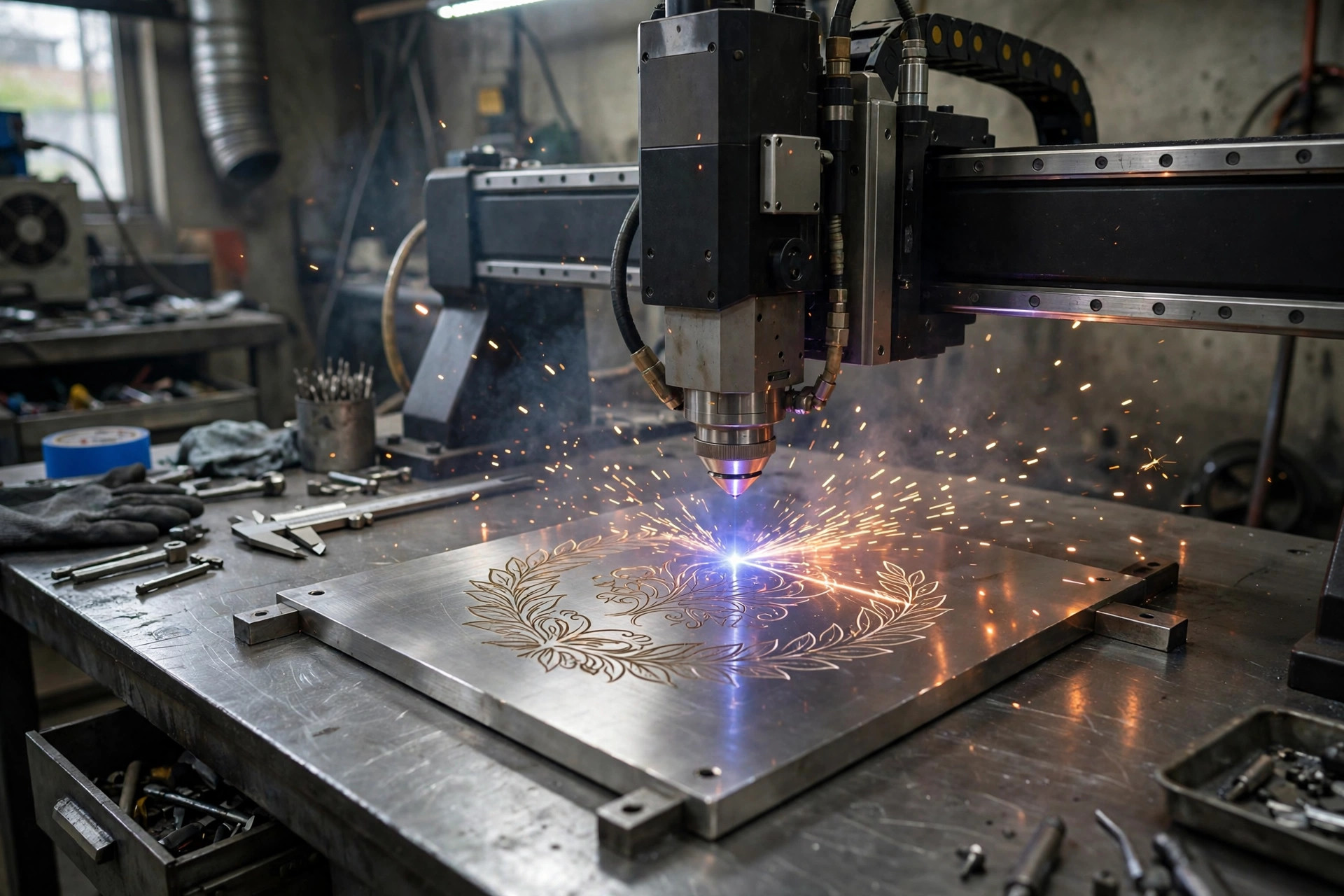
- Mould and production. A mould or die is made from the approved artwork, pins are stamped or cast, plated, enamelled, polished and fitted with backings.
- Quality check and packing. Pins are inspected, and packed individually — commonly in small poly bags, with velvet pouches or presentation boxes available for award and gift use.
- Delivery. Finished pins are delivered to your office or event venue in Dubai or elsewhere in the UAE.
Minimum Quantities and Timelines — What to Expect
Because every custom pin begins with a mould, very small runs carry a higher unit cost, and most suppliers set minimum order quantities — commonly in the low hundreds for enamel pins, though this varies by pin type and supplier. As a planning approach: order for the whole programme (event plus spares plus reorders you can foresee) in one run, because a second run repeats setup work.
Production of custom pins is measured in weeks, not days, once the proof is approved — mould making, stamping, enamelling and plating are sequential physical processes. For event orders, work backwards from your date and add buffer for proof revisions and shipping. If you are working to a genuinely urgent deadline, say so at the briefing stage: rush options sometimes exist, but they depend on the pin type and current production load, and a simpler specification (soft enamel, standard plating) is far easier to expedite than a complex one.
Use Cases: Where Custom Pins Earn Their Keep
Staff Uniforms and Brand Identification
Hotels, clinics, real-estate agencies, car dealerships and retail chains across Dubai use logo pins to identify staff without the cost of fully embroidered uniforms. Pins are easy to issue, easy to replace, and move with the employee between garments. Colour-coded pins can even distinguish departments, languages spoken or seniority at a glance.
Events, Exhibitions and Conferences
Dubai’s exhibition calendar — from Gulfood and GITEX to Arabian Travel Market and hundreds of smaller conferences — runs on identification and networking. Pins serve as delegate gifts, exhibitor identifiers, sponsor branding and collectible souvenirs. An attendee may discard a paper programme, but a metal pin goes home in the suitcase. For events, pins work best as part of a set with promotional products in Dubai such as branded lanyards, tote bags and notebooks.
Awards and Long-Service Recognition
Few recognition items are worn as proudly as an award pin. Five-, ten- and twenty-year service pins, employee-of-the-month pins and safety-milestone pins become part of the recipient’s professional identity. Hard enamel or die-struck pins in gold plating, presented in a velvet box, carry genuine ceremony at a fraction of the cost of larger awards — and they are worn daily, long after a certificate has been filed away.
Membership, Clubs and Associations
Car clubs, golf clubs, professional associations, alumni groups and school houses have used pins as membership tokens for generations. Tiered designs — bronze, silver, gold for ascending membership levels — create aspiration and belonging. In the UAE, school and university pins are also popular for graduation years and house systems.
National and Commemorative Occasions
UAE National Day (Eid Al Etihad) creates strong seasonal demand for flag pins and emblem pins, worn by staff and given to clients throughout late November and early December. Company anniversaries, product launches, Ramadan and Eid corporate gifting programmes, and milestone celebrations are other natural moments for a commemorative pin — especially when the design is dated, making it a genuine keepsake rather than a generic giveaway.
Choosing a Supplier for Custom Lapel Pins in Dubai
The difference between a smooth order and a frustrating one usually comes down to the supplier’s process. Look for a partner who will:
- Show you real samples or a clear portfolio of previous pin work.
- Provide a proper digital proof at actual size before production, and welcome revisions at that stage.
- Advise honestly on pin type — including telling you when a cheaper option suits your artwork better.
- Confirm Pantone matching, plating and backing in writing on the quotation.
- Give a realistic timeline and flag deadline risks early rather than at the last minute.
- Be locally reachable in the UAE for delivery coordination and after-sales questions.
You can learn more about who we are at Vision Advertising — a Dubai-based supplier of corporate gifts and promotional products serving companies across the Emirates.
How Enamel Lapel Pins Are Made
Both pin types start the same way: your logo is stamped or cast into a metal base (usually brass, copper, or iron), creating recessed areas and raised metal outlines. Coloured enamel is then filled into the recessed areas by hand, and the pin is baked to harden the colours. The difference between soft and hard enamel is what happens after the baking.
Soft enamel pins
After the enamel is fired, the pin is left as-is. The enamel sits below the raised metal lines, so the surface feels textured — you can run your fingernail over it and feel the ridges. The raised metal borders catch the light and frame each colour block sharply. Most soft enamel pins are then plated (gold, silver, nickel, or antique finishes) and can be given an optional clear epoxy dome for protection.
Hard enamel pins (cloisonné)
The pin is fired multiple times, and after each firing the surface is polished flat until the enamel and the metal lines are perfectly level. The result is a glass-smooth, almost jewellery-like surface with no ridges at all. Hard enamel is the traditional cloisonné technique, and it takes more labour and more kiln time — which is why it costs more.
One practical consequence: because hard enamel is polished repeatedly, colours can shift slightly during production, so precise colour matching needs an experienced maker and a good digital proof. With soft enamel, what you see in the enamel fill is closer to the final look.
Hard Enamel vs Soft Enamel: The Key Differences
| Soft enamel | Hard enamel | |
|---|---|---|
| Surface feel | Textured — raised metal lines, recessed colours | Perfectly smooth — enamel and metal polished level |
| Look | Bold, dimensional, high contrast between metal and colour | Sleek, premium, jewellery-like |
| Durability | Good for daily wear; colour sits below the metal, protected | Excellent — polished surface resists scratches and fading |
| Detail capability | Strong for bold logos and shapes | Better for fine detail and small text (with silk-screened elements) |
| Cost | More budget-friendly | Typically 20–30% more due to extra labour and firings |
| Production time | Usually faster | Slightly longer |
| Best for | Giveaways, events, merchandise, bulk orders | Executive branding, awards, VIP gifts, long-term wear |
Which Should You Choose? A Decision Guide
Choose soft enamel when…
- You are ordering for events or giveaways. The textured, colourful look photographs well and reads clearly at a distance — ideal for trade shows, conferences, and brand activations.
- Budget matters. For large quantities (a few hundred pins and up), the per-piece saving on soft enamel adds up meaningfully, and the visual impact is still strong.
- Your logo is bold and simple. Large colour blocks framed by metal outlines look their best in soft enamel.
- You want speed. Soft enamel pins generally move through production a little faster, which helps when an event date is approaching.
Choose hard enamel when…
- The pin represents senior leadership or recognition. For director-level name badges, years-of-service awards, or chairman’s pins, the smooth polished finish communicates prestige.
- Pins will be worn daily for years. Hard enamel’s flat, scratch-resistant surface holds up better to constant handling — think uniforms, security staff, or airline crew.
- Your design has fine detail. Small text, thin lines, and intricate patterns reproduce more cleanly on a flat polished surface. Silk-screen printing can also be added over hard enamel for very fine wording.
- The pin must look premium next to other metal items. If it will be presented in a gift box with cufflinks or a coin, hard enamel matches that jewellery standard.
When either works
Many corporate logo pins look excellent in both finishes. If you are undecided, ask your supplier for a digital proof rendered in both styles — a reputable Dubai supplier will show you mockups free of charge before production, and comparing them side by side makes the decision easy. Our custom lapel pins in Dubai service includes free artwork proofing, so you can see both finishes on your actual logo before committing.
Other Pin Types Worth Knowing
Enamel is the most popular route, but a full corporate gifting services partner should talk you through the alternatives:
- Die-struck pins (no enamel): the design is struck into bare metal with no colour fill — classic for military-style insignia, memberships, and formal crests. Gold or antique finishes look superb.
- Printed / offset pins: your artwork is printed directly onto the metal base, then sealed with an epoxy dome. This is the only good option for photographic images, gradients, or very complex multi-colour artwork that enamel cannot reproduce.
- Soft enamel with epoxy dome: combines the dimensional soft-enamel look with a smooth protective coating — a smart middle ground for pins that will see heavy handling, such as school or youth event pins.
- Glitter enamel and 3D cast: specialty options for festive or mascot-style designs.
Finishes, Backings, and Presentation
Two details buyers often overlook:
Metal plating. The exposed metal lines can be finished in polished gold, silver, nickel, black nickel, copper, or antique (aged) versions of each. Antique finishes give a heritage feel popular with awards; polished gold suits executive and government-style pins. Pick the plating that matches your brand palette and the pin’s purpose.
Backings. The standard butterfly clutch is fine for suits and lanyards. For delicate fabrics (abaya, silk ties), a magnetic backing avoids pin holes entirely. Safety-pin or screw backs suit heavier pins. Mention the garment when ordering — a good supplier will recommend the right backing.
Packaging. For awards and VIP gifts, individual poly-bags are not enough; ask for velvet pouches or presentation boxes. Packaging is where a reasonably priced pin starts feeling like a proper award.
Frequently Asked Questions
What is the minimum order quantity for custom lapel pins in Dubai?
Minimums vary by pin type and supplier, but enamel pins commonly start in the low hundreds because each design needs its own production mould. Smaller quantities are sometimes possible for printed pins or repeat orders. The most cost-effective approach is to consolidate your requirement — event stock, uniform issue and spares — into one run.
How long does production take?
Once artwork is approved, production generally takes a few weeks, depending on pin type, finish complexity and quantity. Hard enamel and 3D cast pins sit at the longer end; straightforward soft enamel designs are quicker. Always share your event date at the briefing stage so the timeline can be planned backwards with buffer.
What is the difference between soft enamel and hard enamel pins?
Soft enamel sits below the metal lines, giving a textured feel and a lower price; hard enamel is polished completely flat and smooth, giving a premium, jewellery-like finish that resists scratches better. Both use the same colour system — the choice is about finish, feel and budget rather than colour quality.
Can you match my logo colours exactly?
Enamel colours are mixed against Pantone references, which gets brand colours very close and keeps reorders consistent. Colours that rely on gradients or photographic effects need printed pins instead. Providing your brand’s Pantone codes with your artwork is the single best step you can take for colour accuracy.
Which backing is best for staff uniforms?
For all-day wear, rubber clutches are comfortable and kind to skin, while deluxe locking clutches suit valuable pins that must not come off. Magnetic backings are the right choice when garments must not be pierced. Most uniform programmes in the UAE use butterfly or rubber clutches as standard.
Order Custom Lapel Pins in Dubai with Confidence
A well-specified pin is a small object that does long-term work: it brands uniforms, honours service, marks membership and turns event attendees into ambassadors. Choose the type that fits your artwork, keep the design bold, allow proper time for production, and your custom lapel pins in Dubai will come back looking exactly as intended.
When you are ready to start, send your logo and requirements to Vision Advertising via our contact page or email [email protected] — we will advise on the right pin type, prepare your artwork proof, and manage production through to delivery anywhere in the UAE. You can also call us on +971 50 970 9564 to discuss your design.