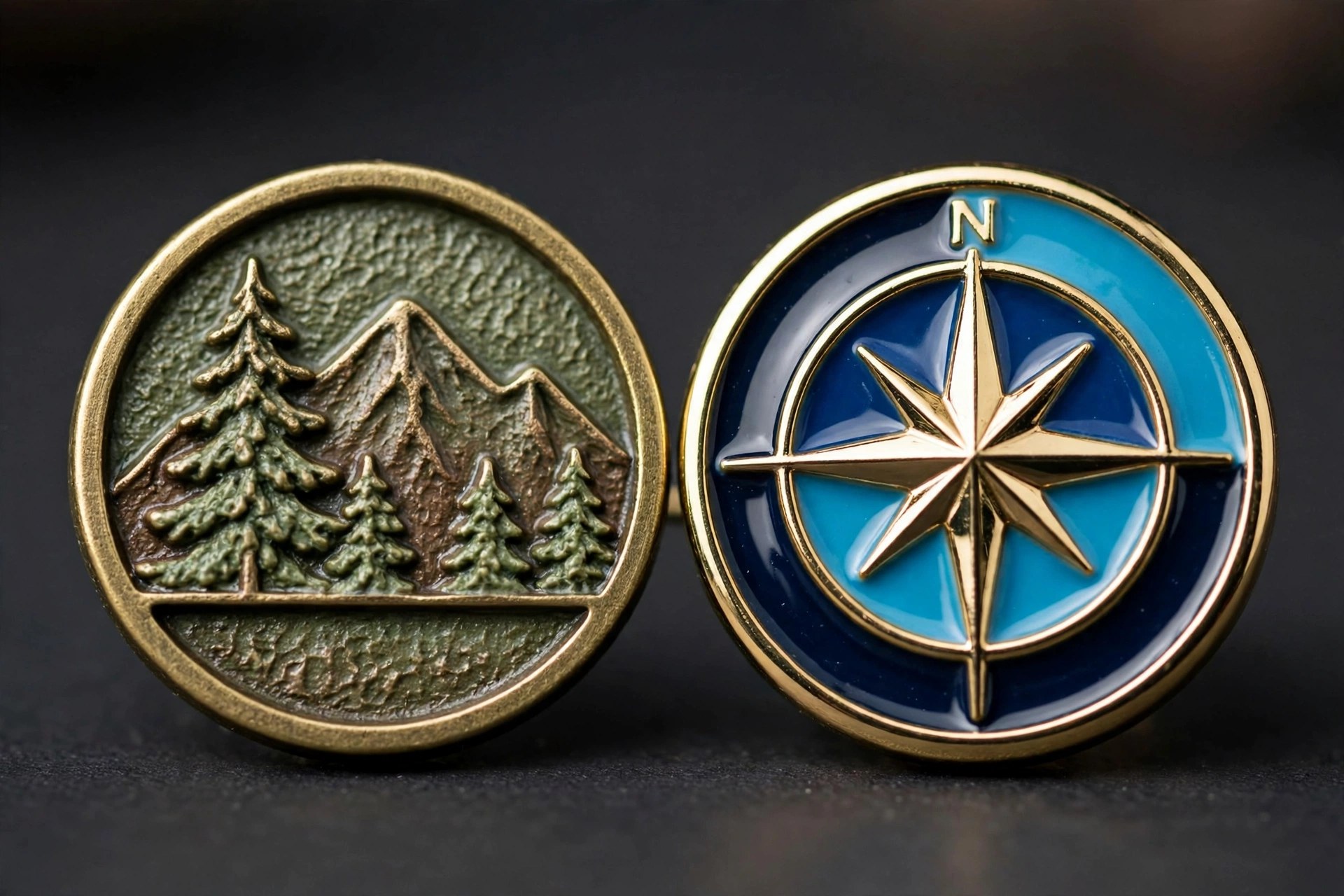
If you have ever requested a quotation for logo pins, you have almost certainly been asked one question early in the conversation: soft enamel or hard enamel? For buyers comparing pin types for the first time, the soft enamel vs hard enamel pins decision can feel like guesswork — the two look similar in catalogue photos, yet they differ in price, production method, durability and the impression they create.
This guide removes the guesswork. It explains exactly how each pin is made, how the finished surface looks and feels, how much fine detail each process can hold, how the two compare on durability and cost factors, and — most usefully — which one to choose for specific jobs: staff uniforms, event giveaways, executive awards, membership pins and retail merchandise. By the end, you will be able to specify your next order of pins with the same confidence as someone who has been buying them for years.
If you are still at the research stage for the wider topic, our complete guide to custom lapel pins in Dubai covers materials, platings, backings and the full ordering process, and this comparison zooms in on the single decision that guide points you towards.
How Soft Enamel Pins Are Made
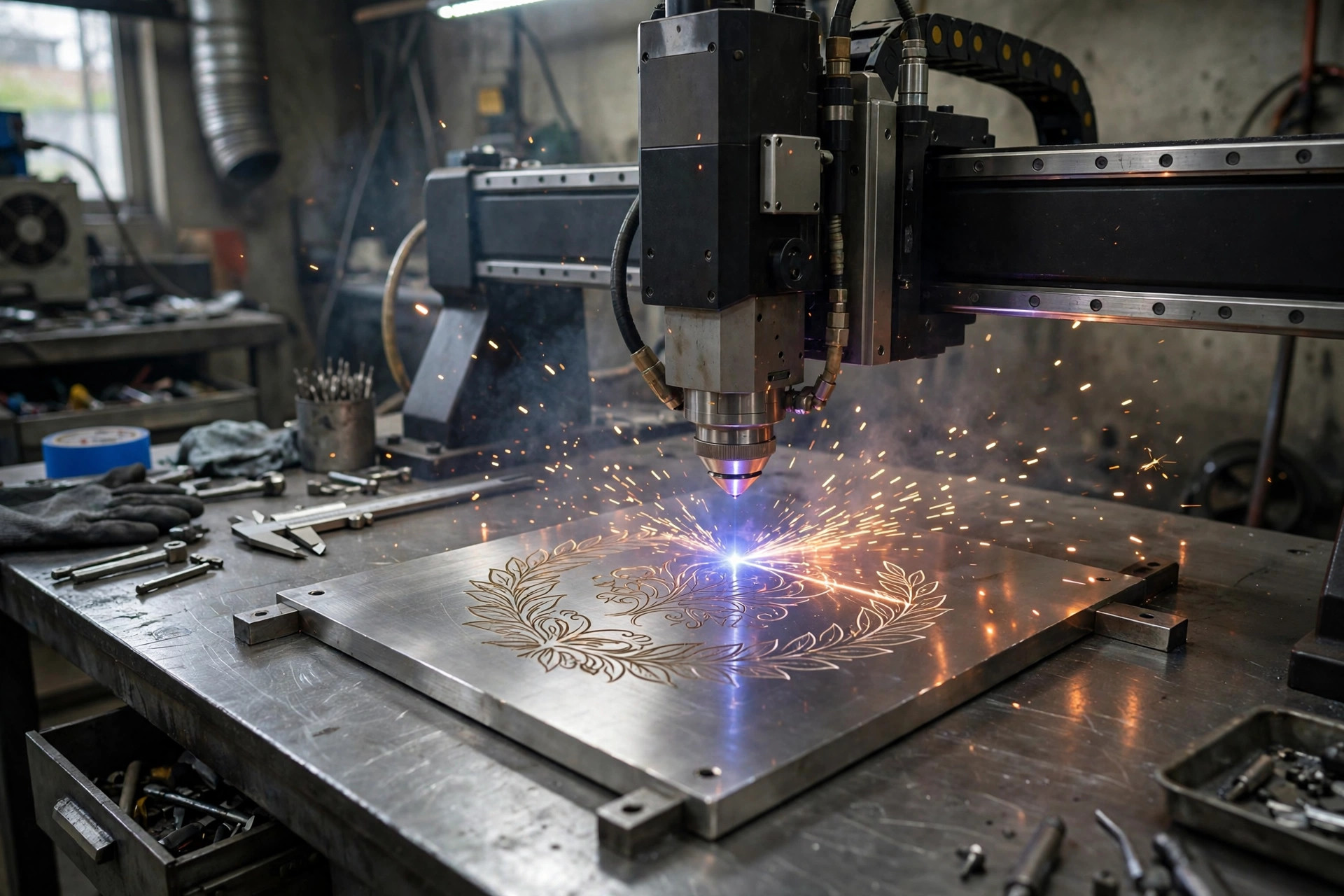
Both pin types begin the same way: your artwork is converted into a metal design, and a die stamps the outline into a metal base (commonly iron, brass or copper), raising thin metal walls that separate each colour area. The processes diverge at the filling stage.
For a soft enamel pin, coloured enamel is applied into the recessed areas once, at a level slightly lower than the metal walls around it. The pin is then baked to harden the enamel. Because the enamel sits in shallow “valleys” between raised metal “ridges”, the finished pin has a distinctly textured surface — you can feel the design when you run a fingertip across it.
Key characteristics of the soft enamel process:
- One fill, air/bake cured — quicker and simpler than multiple fills.
- Textured surface — the raised metal lines are a genuine design feature, giving crisp definition between colours.
- Epoxy option — a clear epoxy dome can be added over soft enamel to create a smooth, glossy surface and extra protection, which changes both the look and the price calculation.
- Wide colour range — enamel colours are mixed to Pantone references, and soft enamel accepts a broad palette including bright, saturated colours.
How Hard Enamel Pins Are Made
Hard enamel — often described as cloisonné-style, after the traditional technique it imitates — takes the same stamped base and fills it differently. Enamel is added in several layers, with each layer baked before the next is applied, until the enamel builds up to the same height as the metal walls. The whole surface is then ground and polished completely flat, producing a smooth, even plane where metal and colour sit flush together.
The result feels like polished stone or glass inlaid in metal: no ridges, no texture, and a deep, glossy shine. The polishing stage also means hard enamel pins are handled more times during production, which is one reason they take longer and cost more.
Key characteristics of the hard enamel process:
- Multiple fills, each baked — slower, more labour-intensive production.
- Perfectly flat, smooth surface — colours and metal lines are flush; the pin feels like one polished piece.
- Jewellery-like finish — the polish gives a premium appearance associated with awards and executive gifts.
- Excellent colour depth — layered enamel gives rich, slightly translucent depth to colours.
The Look and Feel: Texture vs Polish
The fastest way to understand soft enamel vs hard enamel pins is to imagine holding them:
- Soft enamel has visible dimensionality. Light catches the raised metal lines, colours sit in slight shadowed recesses, and the pin feels crafted and tactile. Bold logos with strong outlines look fantastic in soft enamel because the metal separation is part of the design’s impact.
- Hard enamel is sleek and refined. The flat, polished face reflects light evenly, small details feel integrated rather than outlined, and the pin reads as a premium object — closer to a piece of jewellery than a badge.
Neither look is “better” in the abstract. A playful mascot pin for a festival looks right in textured soft enamel; the same design polished flat in hard enamel would lose some of its punchy character. Conversely, a chairman’s twenty-year service pin in soft enamel can look underwhelming next to the ceremony it belongs to. The finish should match the message: energetic and accessible, or formal and prestigious.
Durability: How Each Finish Handles Real Life
Both pin types are made of metal and baked enamel, so both are far more durable than printed paper, plastic badges or stickers. The differences show up over years of wear:
- Scratch resistance. Hard enamel’s polished, flush surface is harder and more resistant to scratches and abrasion. Soft enamel sits in recesses — which actually protects most of the colour — but the raised metal lines can show wear over long periods, and the enamel surface itself is slightly softer.
- Colour stability. Both hold colour well indoors and in normal use. Hard enamel’s denser, layered construction has a modest edge in harsh conditions (constant sun, friction, frequent cleaning).
- Impact. The enamel in both types can chip if struck hard against a sharp surface. An epoxy dome over soft enamel adds a sacrificial protective layer and closes much of the durability gap for pins that will be handled roughly — for example, pins issued to schoolchildren or field staff.
- Cleaning. Both wipe clean with a soft cloth. Hard enamel’s flat surface is the easier of the two to keep looking new.
Practical verdict: for pins worn daily for years — uniform pins, long-service pins — hard enamel (or soft enamel with epoxy) has the edge. For event pins, campaign pins and merchandise that will be worn occasionally, soft enamel’s durability is more than sufficient.
Detail Level: Fine Lines, Small Text and Complex Artwork
Both processes share the same fundamental constraint: every colour region must be enclosed by metal walls, so artwork needs bold shapes and clear separation regardless of which enamel you choose. Within that shared limit, there are differences:
- Fine detail. Soft enamel is slightly more forgiving of intricate designs because the stamped recesses define detail naturally, and most detailed stock-style designs (thin spokes, small stars, dense patterns) are produced as soft enamel. Hard enamel’s filling-and-polishing process can soften the very finest details, so extremely fine lines may need to be thickened a little more for hard enamel.
- Small text. Text is a challenge for both — letters need enough width to hold enamel. If your design includes wording, enlarge the pin or simplify the text; do not assume either process will rescue tiny lettering.
- Colour effects. Neither process does gradients. If your artwork depends on shading or photographic detail, neither enamel is the right tool — a printed pin with an epoxy dome is the correct specification instead, a point covered in our main guide to ordering pins.
- Plating interplay. In soft enamel, the raised metal lines are prominent, so your plating choice (gold, silver, black nickel, antique) shapes the design strongly. In hard enamel, plating appears as fine flush lines, so the colours carry more of the visual weight.
As a working rule: the bolder and more graphic the design, the happier it will be in either enamel. The more prestigious the presentation needs to feel, the more hard enamel’s polish earns its premium.
Cost Factors: Why Hard Enamel Costs More
In the soft enamel vs hard enamel pins comparison, hard enamel almost always carries the higher unit price, and the reasons are structural rather than arbitrary:
- Labour. Hard enamel requires multiple fill-and-bake cycles plus a grinding and polishing stage. Each step is hands-on work.
- Time. More process stages mean a longer production schedule, which factories price accordingly.
- Material loss. Polishing removes material; a proportion of output is refined further or remade to reach the flawless flat finish buyers expect.
- Perceived tier. Hard enamel is positioned as the premium product, and pricing reflects that tier across the industry.
Soft enamel’s simpler single-fill process keeps both unit cost and lead time lower, which is why it dominates high-volume orders: exhibition giveaways, campaign pins, school pins and merchandise runs where the quantity is in the thousands.
Two important nuances before you decide on price alone:
- Quantity changes the maths. The mould/setup cost is shared across the run, so per-pin differences narrow as quantities rise. For a small run of important pins, the hard enamel premium per pin is modest in absolute terms.
- Epoxy changes the comparison. Soft enamel plus an epoxy dome adds cost and a production step. If you were choosing soft enamel purely for price but adding epoxy for protection, compare that total against hard enamel before deciding — sometimes the gap nearly closes.
And a caution in the other direction: never let a supplier talk you down to a cheaper finish for a pin whose whole purpose is prestige. An award pin that looks ordinary undermines the recognition it is meant to deliver — the same principle applies across your corporate awards in Dubai programme.
Side-by-Side Summary
| Factor | Soft Enamel | Hard Enamel |
|---|---|---|
| Surface | Textured; enamel sits below metal lines | Completely smooth and flat, polished |
| Feel | Tactile, dimensional | Sleek, jewellery-like |
| Production | Single enamel fill, baked | Multiple fills, baked, ground and polished |
| Detail | Excellent for bold, intricate designs | Excellent; very finest lines may need thickening |
| Durability | Very good; epoxy dome adds protection | Excellent scratch and wear resistance |
| Colour depth | Bright, clearly separated colours | Rich, deep, slightly translucent colour |
| Cost | More economical, faster to produce | Premium pricing, longer production |
| Best for | Events, uniforms, campaigns, merchandise | Awards, executives, membership, gifts |
Which Should You Choose? Recommendations by Use Case
Staff Uniform Pins
Choose soft enamel for most uniform programmes: it is economical at quantity, reads clearly at small sizes, and stands up well to daily wear — add an epoxy dome for roles where pins get knocked or handled constantly. Airlines, hotel groups and security firms that want a more prestigious staff image sometimes step up to hard enamel for senior ranks, which also creates a subtle visual hierarchy.
Event and Exhibition Giveaways
Choose soft enamel, almost without exception. Events need volume, speed and bold visibility; soft enamel delivers all three. Event pins are usually worn for a day or kept as souvenirs, so the extreme longevity of hard enamel is wasted budget. Put the savings into a slightly larger pin size or a second design instead.
Awards and Long-Service Recognition
Choose hard enamel. Award pins are kept, worn with pride and often presented formally in a box. The polished finish, weight and depth of hard enamel match the significance of five, ten or twenty years of service. Pair with gold plating and presentation packaging for the full effect — and coordinate with the rest of your recognition programme, from trophies to certificates, so everything feels like one system.
Membership and Club Pins
Choose hard enamel for permanent membership tiers, where the pin is a badge of belonging worn for years, and soft enamel for annual or seasonal membership designs that change each year. Many associations run both: a polished hard enamel pin for life members, economical soft enamel for yearly renewals.
Retail and Merchandise Pins
Choose based on your price point and design. Soft enamel suits playful, colourful designs sold at accessible prices; hard enamel suits collector-grade merchandise where buyers expect a premium object. If your pins will sit in a shop display under bright lights, hard enamel’s even reflection looks particularly good.
Executive and Client Gifts
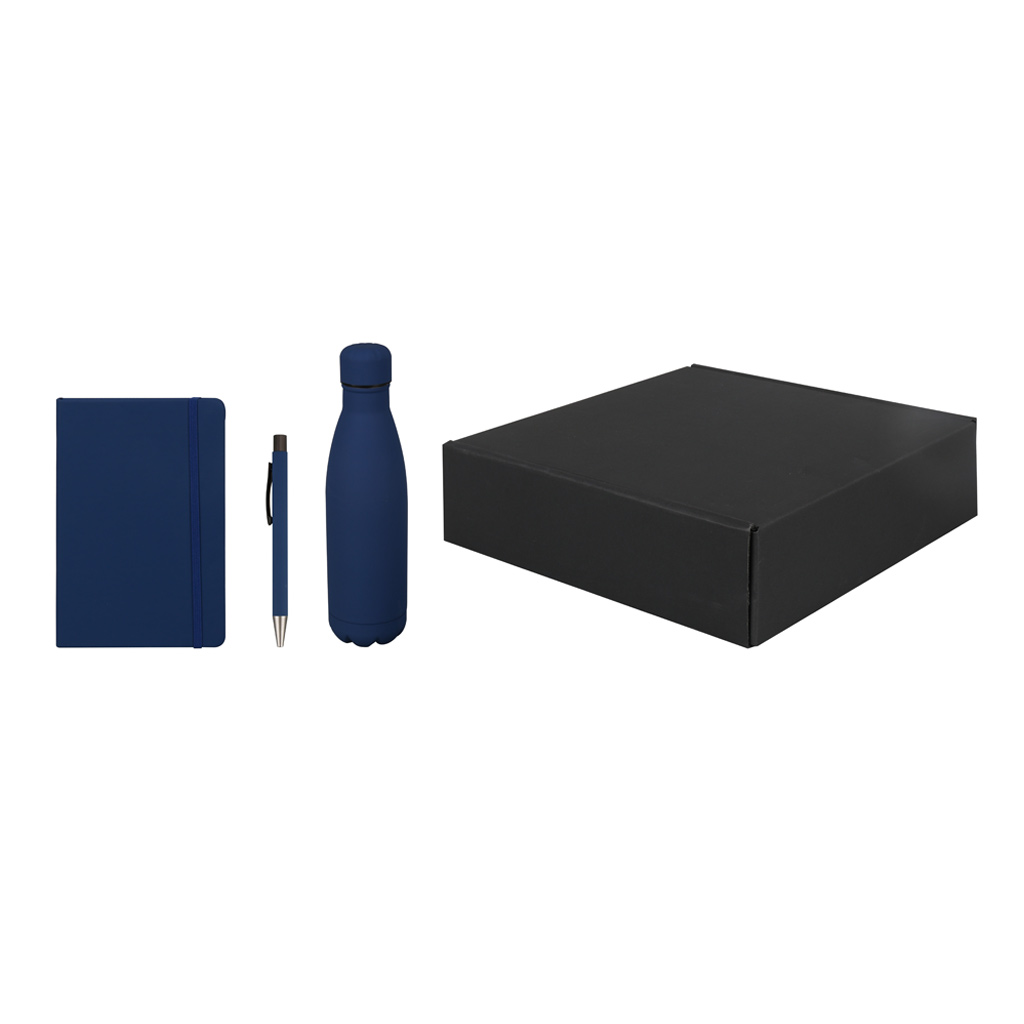
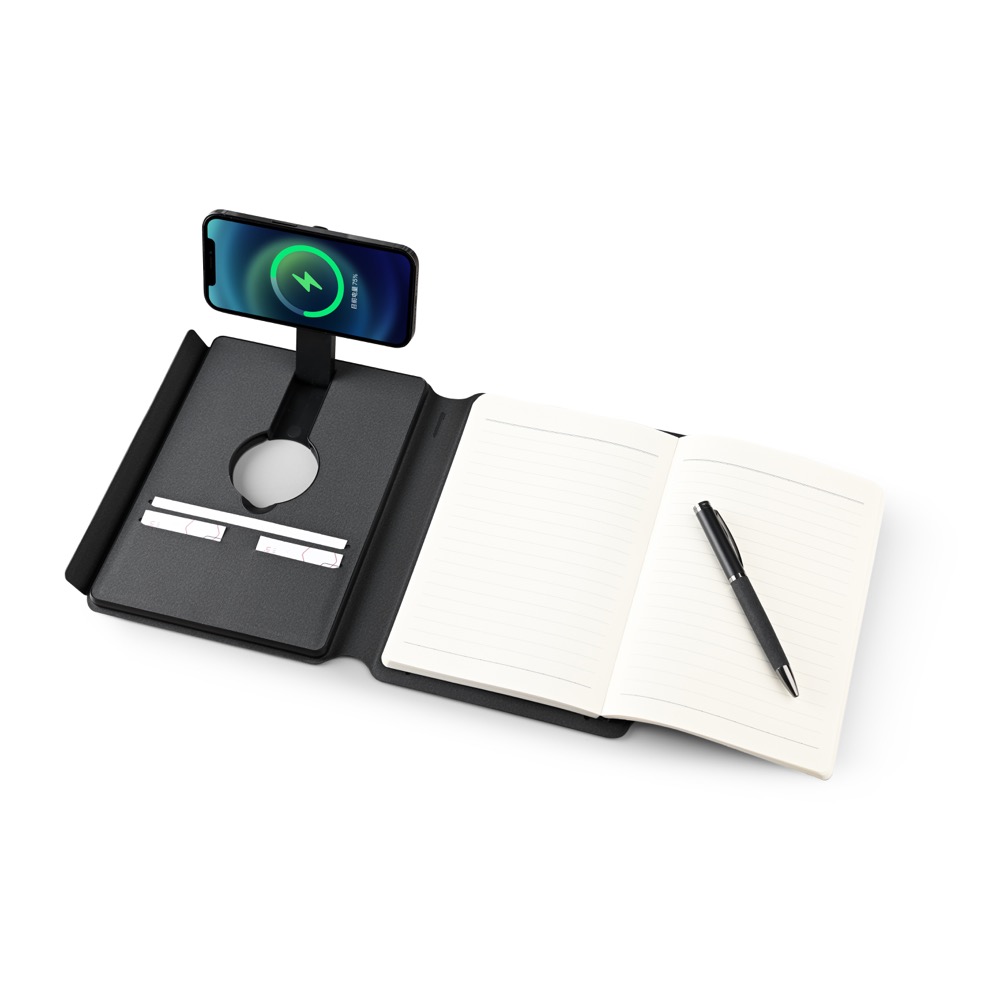
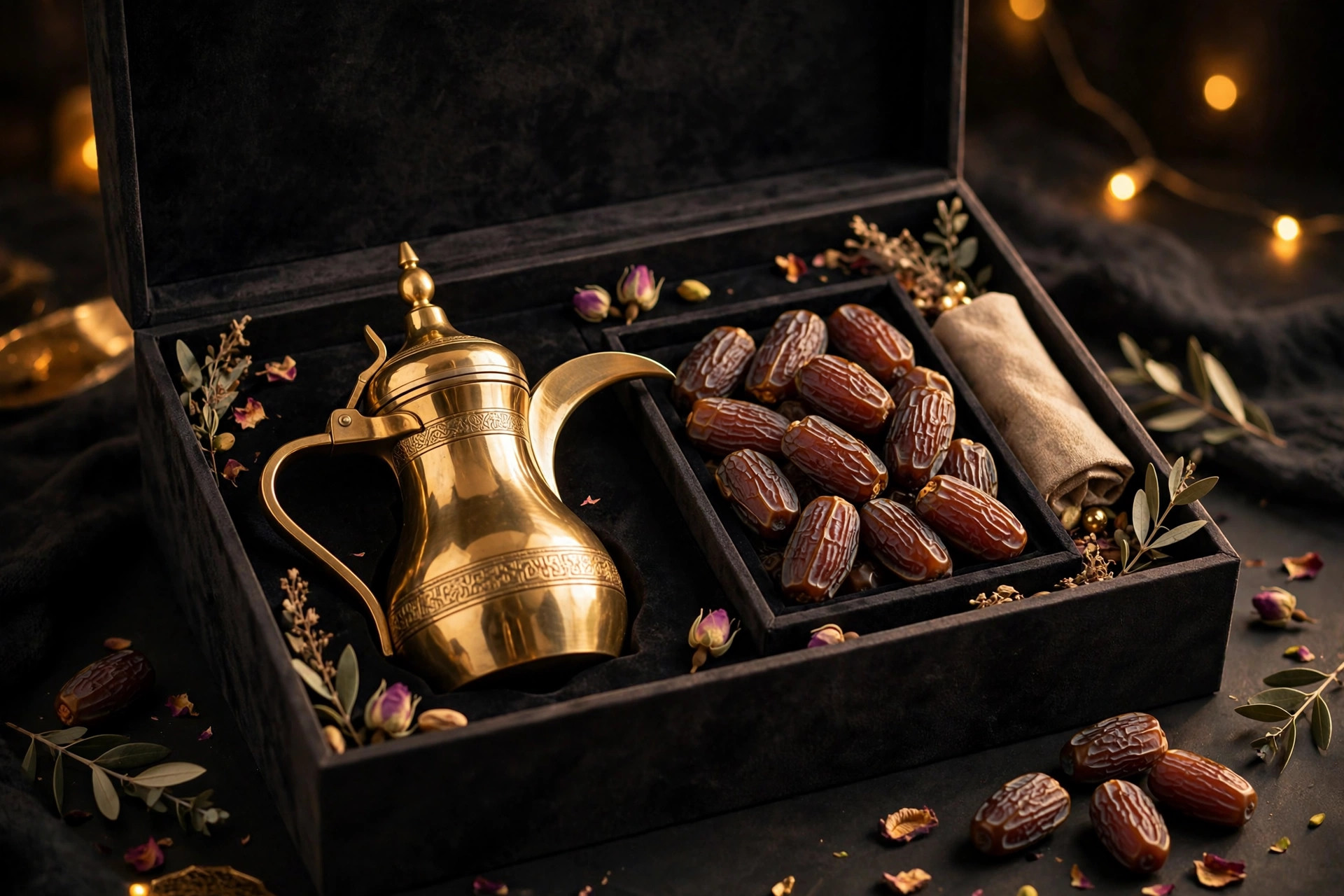
Choose hard enamel, presented in a velvet pouch or gift box, possibly as part of a wider gift set. In client gifting, the pin is rarely the whole gift — it accompanies items such as notebooks, pens or promotional products in Dubai like premium drinkware — and its finish should match the quality of everything around it.
Common Mistakes When Choosing Between Soft and Hard Enamel
- Deciding from photos alone. Catalogue images flatten the very difference you are paying for. If the order matters, ask for physical samples of both finishes.
- Choosing hard enamel for a design with hairline detail and then being disappointed when lines are thickened for production. Simplify first, then choose the finish.
- Choosing soft enamel for a formal award to save a small amount per pin, and undermining a ceremony built around recognition.
- Forgetting the epoxy option, which can give soft enamel a smooth look and extra protection when budget rules out hard enamel.
- Ignoring the timeline. Hard enamel’s extra stages take extra days. If your event date is close, confirm production time before committing to the premium finish.
A Note on Timelines and Ordering in Dubai
Whichever finish you choose, custom pins are manufactured to order: mould making, stamping, enamelling, plating and assembly happen in sequence. Soft enamel generally moves through production faster; hard enamel adds time at the filling and polishing stages. Share your deadline when you brief your supplier, order for the full programme in one run where possible, and approve the digital proof promptly — proof approval is the point the production clock starts from.
For orientation on how pins fit into a wider branding programme, see how Dubai companies build their corporate gifts in Dubai ranges, or browse the full catalogue at Vision Advertising, where our team advises on finish selection for every pin order as part of the quotation process.
How Plating Choice Interacts With Each Finish
The enamel decision does not stand alone — the metal plating you choose behaves differently on each finish, and the combination determines the pin’s final character.
On soft enamel pins, the metal lines sit proud of the colour, so plating is highly visible. High-polish gold or silver gives the design a bright, defined outline and a traditional badge feel. Antique platings settle into the design elegantly, emphasising the dimensional texture, which is why antique gold and antique silver are such popular partners for heritage-style soft enamel designs. Black nickel creates a dramatic frame that makes saturated colours appear to glow — a favourite for entertainment, esports and youth-brand pins.
On hard enamel pins, the plating lines are polished flush with the colour, so they read as fine, precise inlay rather than bold outlines. This makes hard enamel the better canvas when your brand look is minimal and refined: thin silver lines between deep colours have a genuinely luxurious effect. It also means very light platings can nearly disappear against pale enamel colours on hard enamel — if your palette includes whites and pastels, choose a plating with enough contrast, or the design’s structure will be hard to read at arm’s length.
One more practical point: plating durability interacts with finish too. On both types the plating is a surface layer over the base metal, and on soft enamel the raised lines receive the most friction in daily wear. For pins destined for heavy daily use on uniforms, antique and matte platings hide micro-wear more gracefully than mirror-polish finishes, whichever enamel you select.
Caring for Enamel Pins So They Keep Their Finish
Whichever finish you choose, a little care keeps pins looking new — worth knowing if you are issuing care guidance with a uniform programme or selling pins as merchandise:
- Wipe, don’t scrub. A soft, dry or slightly damp cloth removes fingerprints and dust from both finishes. Avoid abrasive pads, which will eventually dull even hard enamel’s polish.
- Keep chemicals away. Perfume, hand sanitiser and cleaning solvents can cloud epoxy domes and, over time, affect enamel surfaces. Pins worn on uniforms that are laundered should be removed before washing — the clutch and post will not survive industrial laundry kindly either.
- Store flat and separated. Pins stored loose in a drawer scratch each other. Presentation boxes, velvet pouches or simply the individual poly bags they arrive in all prevent metal-on-metal contact.
- Check the clutch. Most “lost pin” stories are actually lost-clutch stories. For valuable hard enamel pins, a locking deluxe clutch is cheap insurance.
Frequently Asked Questions
Which lasts longer, soft enamel or hard enamel pins?
Hard enamel has the edge: its dense, polished, flush surface resists scratches and wear better over years of use. Soft enamel is still very durable, and adding a clear epoxy dome protects it further — for most event and merchandise uses, both finishes will outlast the purpose they were made for.
Why do hard enamel pins cost more?
Because they take more work: several fill-and-bake cycles, then grinding and polishing the whole surface flat. The extra labour, time and material refinement are built into the price. The premium is most noticeable on small orders and narrows per pin as quantities increase.
Can soft enamel pins look premium too?
Yes — especially with the right plating and design. Black nickel or gold plating, a bold well-spaced design, and an epoxy dome for a smooth glossy face can make a soft enamel pin look strikingly smart. What it will not replicate is hard enamel’s perfectly flat, inlaid feel in the hand.
Which is better for very detailed logos?
Both need bold, separated colour areas, but soft enamel is generally a little more forgiving of intricate detail. If your logo depends on gradients or photographic elements, neither enamel is suitable — choose a printed pin with an epoxy dome instead, which reproduces the artwork directly.
How do I decide if I am ordering pins for the first time?
Match the finish to the pin’s job. High-volume, fast-turnaround, bold designs: soft enamel. Low-volume, prestigious, kept-for-years designs: hard enamel. If you are genuinely torn, order the design in soft enamel with epoxy — or ask your supplier for samples of both finishes before committing the full run.
Still Deciding? Get Advice Before You Commit
The soft enamel vs hard enamel pins choice is ultimately about the job the pin has to do — be seen, be kept, or be treasured. Tell us the purpose, quantity and deadline, and we will recommend the finish that fits, prepare your artwork proof, and produce your pins to the standard your brand deserves. Visit our shop to see the wider range, or contact Vision Advertising at [email protected] or +971 50 970 9564 to start your order.