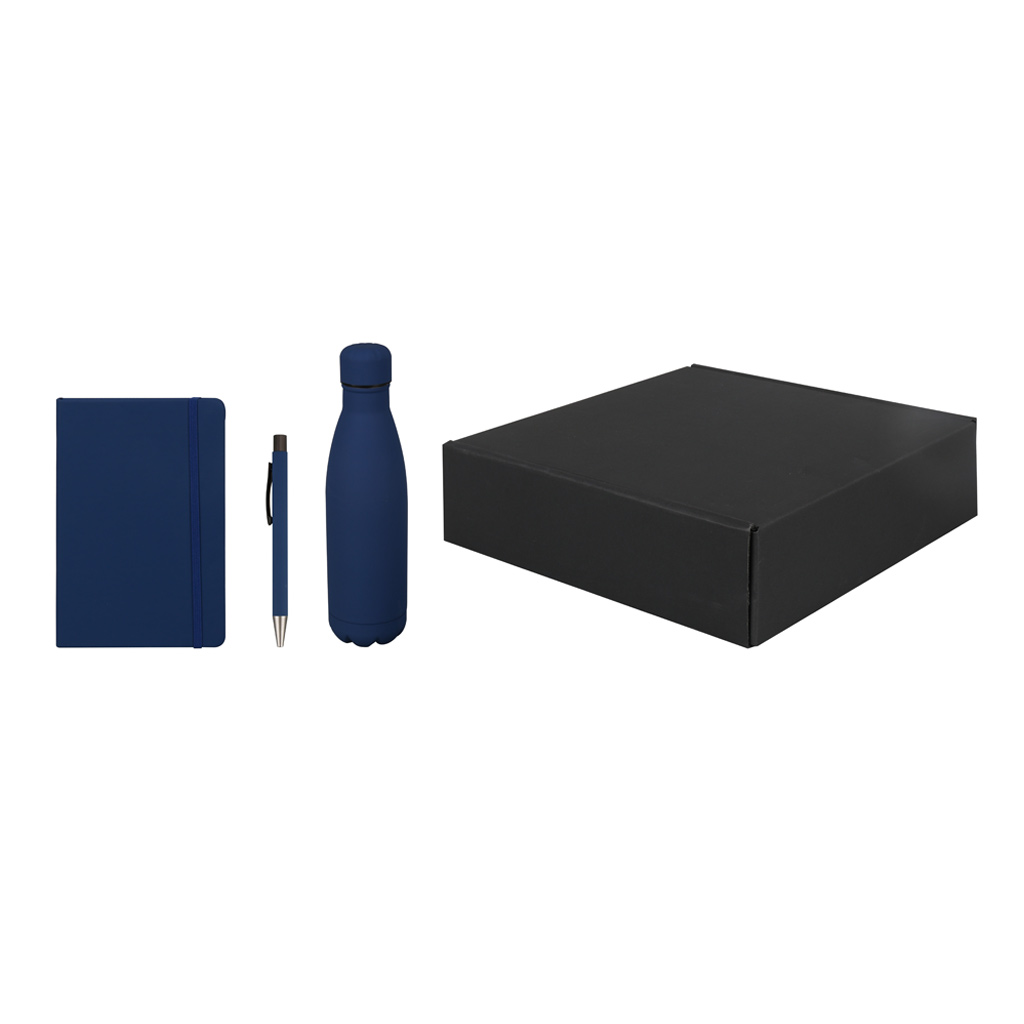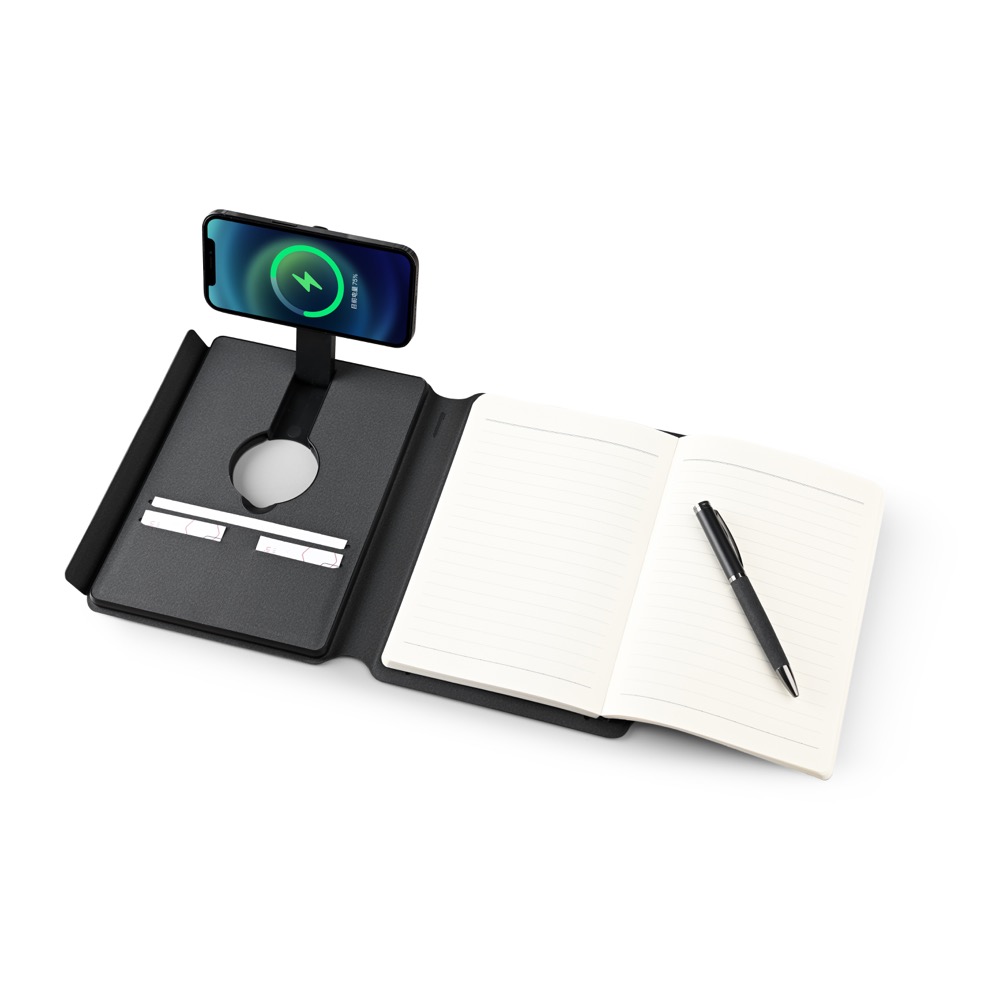
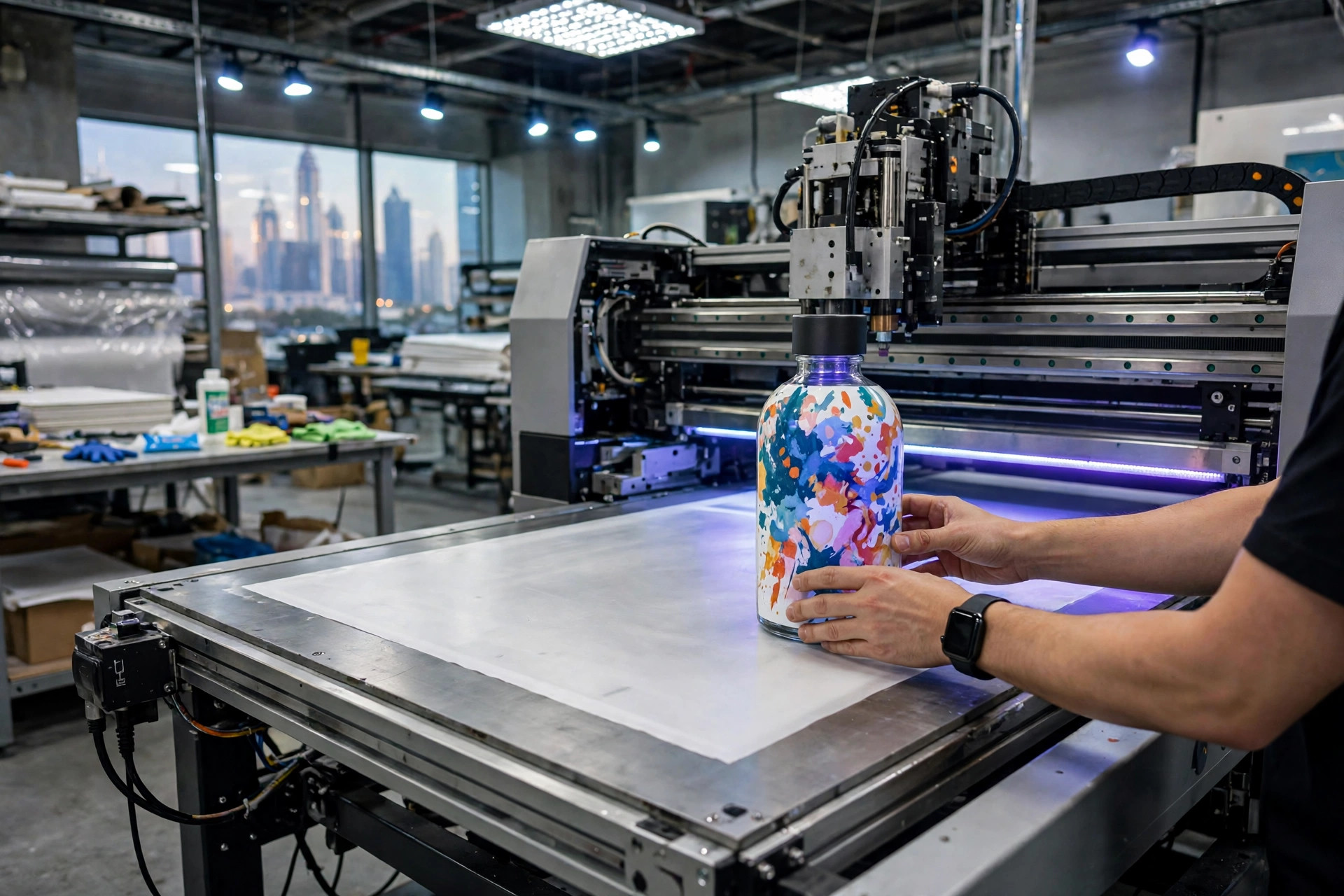
If you have received a corporate gift in Dubai recently with a sharp, full-colour logo that looks almost photographic — on a bottle, a power bank, a notebook, or a gift box — there is a good chance it was produced with UV printing. Over the past few years, UV printing has become one of the most important branding methods in the UAE’s corporate gifting industry, and understanding it will help you brief suppliers better, choose the right method for each item, and avoid costly mistakes.
This guide explains what UV printing is, how it works, what it can and cannot do, how it compares with laser engraving and screen printing, and what to expect on pricing, minimum orders, and timelines when you order UV-printed corporate gifts in Dubai.
What Is UV Printing?
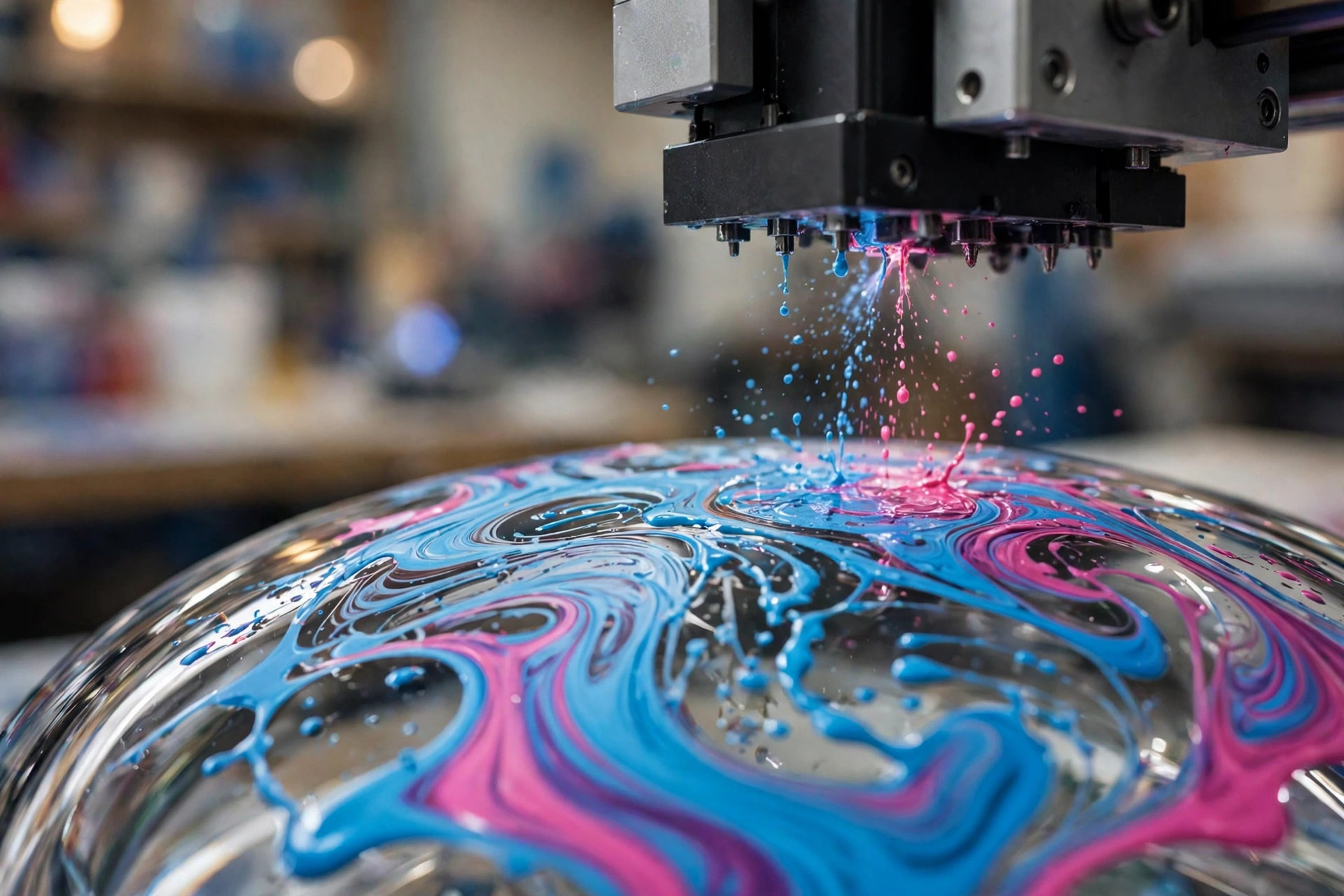
UV printing is a digital printing process in which ultraviolet light instantly cures (dries) specially formulated inks as they are applied to a surface. Unlike conventional printing, where ink dries through evaporation or absorption into the material, UV ink hardens the moment it is exposed to UV light — which happens inside the printer, fractions of a second after the ink lands.
This instant curing is what makes UV printing special for corporate gifts. Because the ink does not need to soak into the surface, it can be printed on materials that conventional printing cannot handle well: glass, metal, plastic, acrylic, wood, leather, and coated surfaces. The result is a vivid, full-colour print with sharp detail that sits on the surface as a thin, durable layer.
For corporate buyers in Dubai, the practical translation is simple: UV printing lets you put complex, colourful artwork — gradients, photographic elements, multiple colours, fine detail — directly onto hard gift items, with excellent colour accuracy and a professional finish.
How UV Printing Works: The Process Step by Step
Understanding the process helps you understand its strengths, its limits, and why suppliers ask for certain artwork formats.
1. Artwork preparation. Your logo or design is prepared as a digital file — ideally vector artwork or a high-resolution raster file. White ink capability is a notable feature of UV printers: because many gift items are dark (black bottles, navy notebooks), the printer first lays down a white ink base layer so colours print vividly on top. Your supplier’s designer handles this layering.
2. Surface preparation. The item is cleaned and positioned in the printer. For flat items (notebooks, boxes, phone cases), this is straightforward. For cylindrical items like bottles and tumblers, a rotary attachment rotates the item so the print wraps correctly. Proper positioning is critical — a millimetre of misalignment shows on a finished gift.
3. Printing and instant curing. Print heads jet tiny droplets of UV ink onto the surface while UV lamps cure each pass immediately. Multiple passes build up colour density and detail. The whole print for a single item typically takes seconds to a couple of minutes depending on size and complexity.
4. Quality check. Each item is inspected for colour accuracy, alignment, and adhesion. Reputable suppliers in Dubai check every piece or sample-check production runs, because a misprinted batch of 500 bottles is an expensive problem.
5. Optional finishing. Some jobs add a varnish or textured layer — UV printers can build up clear ink to create raised, tactile effects (sometimes called spot UV or embossed UV), adding a premium feel to gift boxes and premium items.
The digital nature of the process is a key advantage: there are no screens to burn or plates to make, so setup is fast and economical even for small runs. This is why UV printing has become the go-to method for short and medium corporate runs in the UAE.
What Materials Can Be UV Printed?
One of UV printing’s biggest selling points is versatility. Common corporate gift items successfully UV printed in Dubai include:
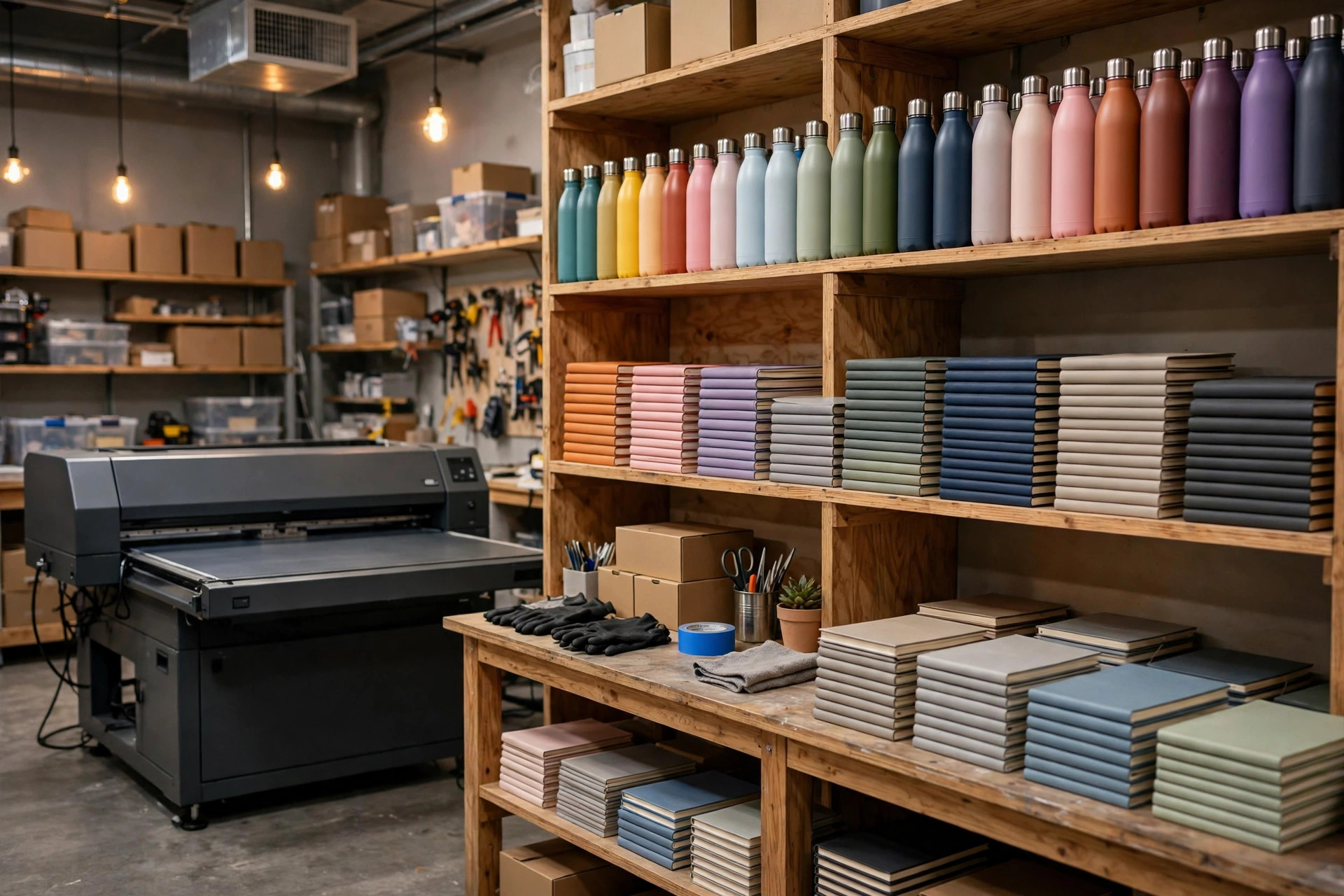
- Drinkware: stainless steel bottles, tumblers, mugs (ceramic and metal), travel cups, glass bottles
- Tech accessories: power banks, Bluetooth speakers, wireless chargers, USB drives, earbud cases, phone stands
- Stationery: notebooks and diaries (hard covers), pens (barrels and clips), desk organisers, mouse pads
- Bags: the printable panels of backpacks, tote bags (coated fabrics), laptop sleeves
- Gift packaging: rigid gift boxes, sleeves, magnetic-close boxes, paper bags with coated finishes
- Awards and display items: acrylic awards, crystal (with limitations), metal plaques, wooden boxes
- Miscellaneous: keychains, coasters, luggage tags, badge holders, table stands
Materials that need care: very flexible or stretchy surfaces, untreated raw fabrics (ink sits on fibres rather than bonding — textile printing uses different methods), and extremely curved or irregular shapes. Items with heavy texture can also be challenging, as the print heads need a consistent distance from the surface.
Adhesion promoters: for some plastics and metals, suppliers apply an adhesion promoter (a primer) before printing to ensure the ink bonds properly. This is standard professional practice — if your supplier mentions priming, it is a sign they know what they are doing, not a cause for concern.
UV Printing on Bottles: A Dubai Corporate Gifting Staple
UV printing on bottles deserves its own section, because branded drinkware is one of the most-ordered corporate gift categories in the UAE — and UV printing is arguably the best branding method for it.
Why bottles and UV printing are a natural pair: bottles are cylindrical, often dark-coloured, and made of stainless steel or coated metal — exactly the combination UV printing handles best. The rotary attachment rotates the bottle during printing, producing a wrap-around or front-panel design with photographic quality. White ink underlay makes colours pop on black, navy, or forest-green bottles.
Design considerations for bottles: keep critical text and logos within the printable area (your supplier will provide a template showing safe zones); remember that extreme curvature near the top and bottom of a bottle distorts artwork; and consider how the design reads when the bottle is held — a wrap design looks impressive, but a clean front logo with a tagline is often more legible.
Durability: properly cured UV prints on bottles are scratch-resistant and waterproof for normal use — hand washing is fine. They are not indestructible: aggressive scrubbing with abrasive pads or repeated dishwasher cycles will eventually wear any print. Including a small care note with gifted bottles (“hand wash recommended to preserve the print”) is a thoughtful touch that extends the gift’s life.
Alternatives for bottles: laser engraving gives a permanent etched mark (elegant but single-colour); screen printing works for simple one- or two-colour designs at high volumes. For full-colour, detailed branding at typical corporate quantities, UV printing usually wins. Our comparison of branded drinkware for corporate gifting covers bottles, mugs, and tumblers in detail.
UV DTF Printing: The Newer Option Explained
You may hear suppliers mention “UV DTF” — it is worth understanding, because it is increasingly offered alongside conventional UV printing in Dubai.
What it is: DTF stands for “direct to film.” In UV DTF printing, the design is printed onto a special adhesive film, which is then transferred (applied like a high-tech sticker) onto the item. Think of it as UV printing with an extra transfer step.
When UV DTF makes sense: irregular shapes and hard-to-print items where direct printing is difficult; items that cannot fit in the printer; multi-location production (films can be printed centrally and applied elsewhere); and very small runs where setting up direct printing is inefficient. It also allows slightly raised, textured finishes that some buyers like.
Trade-offs: the transferred film has a very thin edge that can be felt (and, under close inspection, seen) — direct UV printing generally looks more integrated with the item. Durability is good but typically a touch below direct UV printing on the same surface. For most standard corporate gifts — bottles, boxes, tech items — direct UV printing remains the cleaner choice; UV DTF shines for awkward shapes and special cases.
What to ask your supplier: whether they offer both, which they recommend for your specific item, and to see physical samples of each. The difference is easier to feel than to describe — run your thumb across a sample of each and you will understand immediately.
UV Printing vs Other Branding Methods
Choosing the right branding method is one of the highest-leverage decisions in corporate gifting. Here is how UV printing compares with the main alternatives used in Dubai:
UV Printing vs Laser Engraving
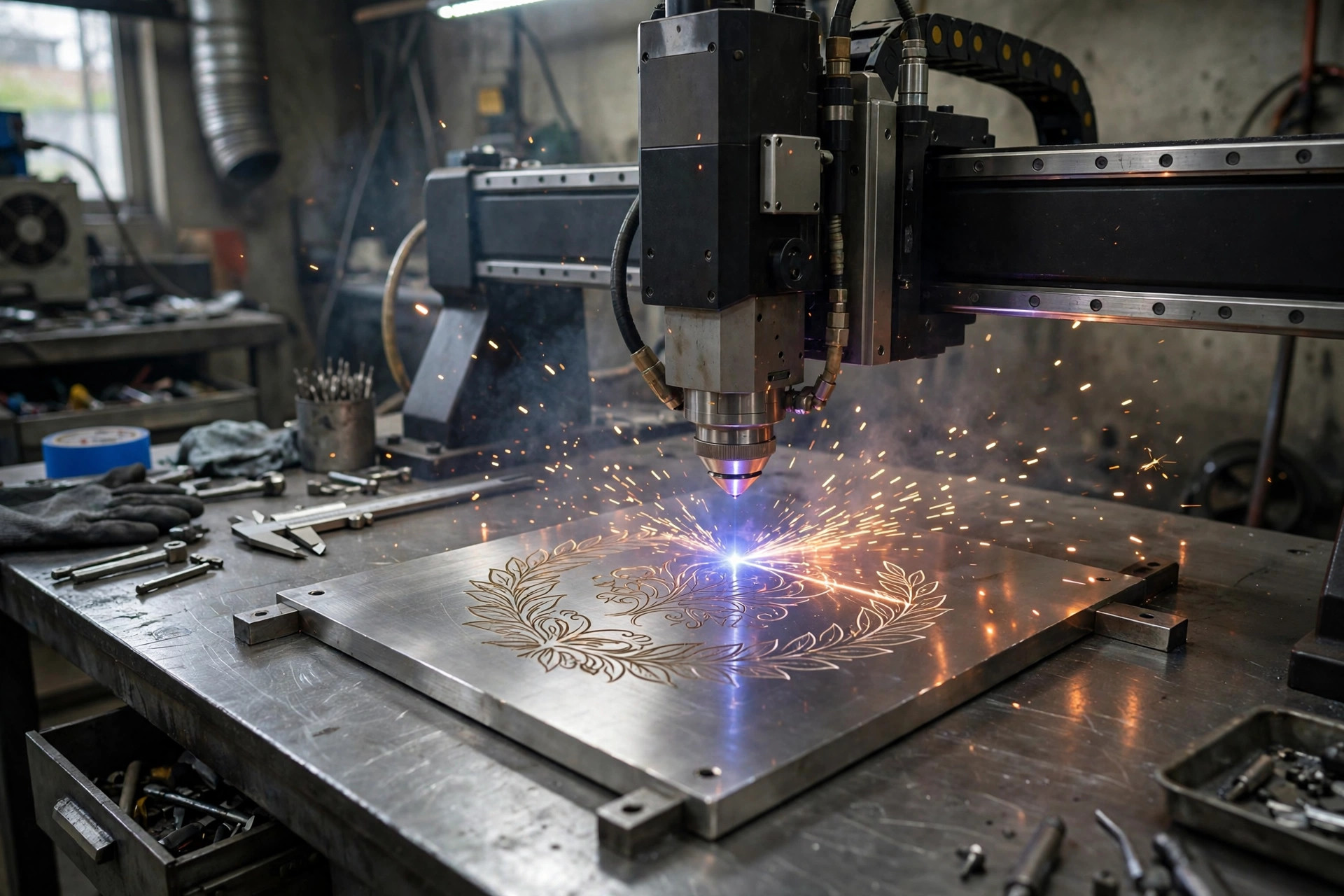
Laser engraving burns or etches the design into the material itself — no ink involved. The result is permanent, elegant, and impossible to peel or fade. It is the premium choice for metal pens, stainless steel bottles, wooden boxes, and leather goods.
Choose laser engraving when: the item is metal, wood, or leather; you want a subtle, premium, single-tone mark; permanence matters more than colour; the recipient tier is executive or VIP.
Choose UV printing when: the design needs multiple colours, gradients, or photographic detail; the item is dark and you want vivid colour; you want the logo to be visually prominent rather than subtle.
Many premium gifts actually combine both — for example, a bottle with a UV-printed full-colour design on one side and a laser-engraved name on the other. Our dedicated guide to laser engraving in Dubai covers that method’s specifics.
UV Printing vs Screen Printing
Screen printing pushes ink through a mesh stencil — excellent for simple one- or two-colour designs at high volumes, on flat or gently curved surfaces (tote bags, t-shirts, some drinkware).
Choose screen printing when: the design is simple (1–3 solid colours), quantities are large (typically 500+), and the item surface suits it. Per-unit costs at high volumes can be very economical.
Choose UV printing when: the design is complex or full-colour, quantities are small to medium, or the item material does not suit screens. UV printing has minimal setup cost, so it wins decisively below the volumes where screen printing’s setup pays off.
UV Printing vs Pad Printing
Pad printing transfers ink via a silicone pad — the classic method for small, curved items like pen barrels, USB drives, and keychains. It handles small logos on awkward shapes brilliantly but is generally limited to one or two colours per impression.
Choose pad printing when: the item is small with a curved or irregular printable area and the logo is simple.
Choose UV printing when: you need full colour or fine detail, or the item is large enough for direct printing.
UV Printing vs Digital/Full-Colour Paper Printing
For paper and card items — gift box sleeves, paper bags, insert cards, notebook covers — conventional digital printing (the same technology as a high-end commercial printer) is often the right choice. UV printing overlaps here mainly for rigid boxes and coated stocks where instant curing gives an edge in durability and finish.
The practical rule: describe your item, your design, and your quantity to your supplier, and ask which method they recommend and why. A supplier who explains the trade-offs is more trustworthy than one who simply says yes to whatever you suggest. For broader context on how branding choices affect perceived value, see our article on branded vs unbranded corporate gifts and ROI.
Artwork Requirements: Getting Your Files Right
Most UV printing delays and disappointments trace back to artwork problems. Getting this right saves everyone time:
Preferred formats: vector files (AI, EPS, SVG, or vector PDF) are ideal — they scale to any size without losing sharpness. High-resolution raster files (PNG, TIFF, or PSD at 300 DPI at actual print size) work for photographic designs. Avoid low-resolution images pulled from websites; a logo that looks fine on screen at 200 pixels wide will look blurry printed at 10 centimetres.
Colour mode: supply artwork in CMYK for the most predictable colour matching. If your brand has specific Pantone colours, mention them — experienced operators can get close, though exact Pantone matching in UV CMYK printing has limits. Always approve a printed proof or sample for colour-critical jobs.
The white ink layer: on dark items, the printer lays white ink beneath colours. Your supplier’s designer prepares this, but you should know it exists — very fine white text on dark backgrounds, for example, needs enough stroke weight to print cleanly.
Safe areas and bleed: for gift boxes and flat items, keep important elements away from edges and folds; your supplier should provide dieline templates. For bottles, respect the printable-area template — designs that creep into curved zones distort.
Proof approval: always review and approve a digital proof before production, and for important orders, a physical printed sample. Check spelling, alignment, colours, and scale. The few days a proof takes are cheap insurance against a misprinted bulk run.
MOQs, Timelines, and Costs for UV Printing in Dubai
Minimum order quantities: one of UV printing’s advantages is low setup cost, so MOQs are modest compared with screen printing. Many Dubai suppliers handle UV printing runs from around 50 units for standard items, though this varies by item and supplier — some accommodate smaller runs, and complex multi-position prints may have higher minimums. Below the MOQ, the per-unit cost rises steeply because setup time is spread across fewer pieces.
Timelines: for straightforward jobs with approved artwork, UV printing production in Dubai typically takes a few working days to about two weeks depending on quantity and the supplier’s schedule. Add time for artwork preparation, proof approval, and any personalization (individual names add handling time). During peak seasons — Ramadan, Eid, and December — book earlier, as print capacity fills up.
Cost structure (what drives the price): the item itself is usually the largest cost component; printing cost depends on print size, number of print positions (one side vs wrap), colours (full-colour vs simple), and quantity (per-unit cost falls as volume rises). White ink underlay on dark items and special effects (raised/spot UV) add modest cost. When comparing quotes, make sure you are comparing like with like — same item quality, same print size, same number of positions.
Getting accurate quotes: provide the item (or ask the supplier to recommend one), quantity, artwork, number of print positions, and delivery deadline. Vague briefs produce vague quotes; precise briefs produce comparable ones. And as with all corporate gifting, order a sample before committing to bulk — our guide on why smart buyers always order samples first applies doubly to printed items, where colour and finish must be seen in person.
Durability and Care: How Long Does UV Printing Last?
Buyers often ask whether UV prints peel, fade, or wash off. The honest answer: properly executed UV printing is durable for normal corporate-gift use, with some sensible caveats.
What it handles well: everyday handling, light abrasion, water exposure (hand washing), indoor display, and sun exposure through windows. On drinkware, tech items, and boxes, a quality UV print lasts for years of normal use.
What shortens its life: aggressive abrasion (scouring pads, keys scraping in the same pocket), harsh chemical solvents, prolonged direct outdoor sun, and repeated machine dishwashing at high heat. None of these are normal for most gift items, but they are worth knowing.
The supplier’s role in durability: proper surface preparation, correct ink curing (under-cured ink is the main cause of premature wear), and adhesion promoters where needed. This is why the cheapest quote is often the most expensive mistake — proper curing takes time and equipment maintenance that cut-rate operators skip.
Care guidance for recipients: for printed drinkware, “hand wash recommended” preserves the print indefinitely; for tech items, normal use is fine; for gift boxes, they are keepsake packaging by nature. A tiny care note included with the gift shows thoughtfulness and protects your investment.
Choosing UV Printing Services in the UAE: What to Look For
Not all UV printing services in the UAE are equal. When evaluating a supplier for UV-printed corporate gifts, assess these points:
In-house vs outsourced printing. Suppliers who print in-house control quality and timelines directly; those who outsource add a layer of risk and delay. Neither is automatically bad, but you should know which you are dealing with — ask directly.
Equipment and experience. UV printers range from desktop units to industrial machines. For corporate volumes, you want a supplier with production-grade equipment and operators who understand corporate artwork — colour management, white ink layering, and rotary printing for bottles.
Sample policy. A confident supplier offers printed samples (sometimes free, sometimes at a nominal cost credited against the bulk order). Refusal or reluctance to sample is a red flag.
Artwork support. Good suppliers have in-house designers who prepare your files for print — setting up white ink layers, checking resolution, advising on safe areas. If a supplier asks you to “just send anything” with no artwork guidance, expect problems.
Proof process. Insist on approving a digital proof at minimum, and a physical sample for significant orders. Professional suppliers build proofing into their workflow without being asked.
Timeline honesty. A supplier who promises an impossibly fast turnaround is either cutting corners or planning to disappoint you. Realistic timelines, confirmed in writing, are worth more than optimistic ones.
Portfolio and references. Ask to see examples of UV-printed corporate gifts they have produced — ideally items similar to yours. Physical examples tell you more than any brochure.
As a Dubai-based corporate gifts supplier offering UV printing services among our branding options, we apply these standards to our own work — and we encourage buyers to hold every supplier, including us, to them. You can read more about our company on our about page.
Common Mistakes to Avoid
Supplying low-resolution artwork. The single most common problem. That logo from your website header is not print-ready. Ask your marketing team for the vector master files — they exist, and using them makes an enormous difference.
Approving proofs carelessly. Proof approval is your last line of defence. Check spelling (especially Arabic text and transliterations), alignment, colours, and scale. Have a second person check — fresh eyes catch what tired ones miss.
Choosing UV printing for the wrong item. UV printing is versatile but not universal. Very flexible materials, untreated fabrics, and extremely textured surfaces need different methods. Trust your supplier’s recommendation when they suggest an alternative — it usually means they want the job to succeed.
Ignoring the white ink factor. On dark items, colours print over white ink. Designs with subtle transparencies or very fine detail behave differently than on white backgrounds. Your supplier’s designer should flag this; if they do not, ask.
Last-minute ordering. UV printing itself is fast, but artwork preparation, proofing, sampling, and production scheduling still take time. “The printer is fast” does not mean “we can start tomorrow.” Build in the full timeline, especially in peak season.
Judging only on price. Two quotes for “UV printing on 500 bottles” can describe very different realities — different bottle quality, different print sizes, different curing standards. Compare specifications, not just numbers, and always evaluate a physical sample.
Frequently Asked Questions
What is UV printing, in simple terms?
UV printing is a digital printing method where ultraviolet light instantly dries special inks as they are printed onto an item. Because the ink cures immediately on the surface rather than soaking in, it works on materials like metal, glass, plastic, and wood — producing sharp, full-colour, durable branding on corporate gifts such as bottles, power banks, and gift boxes.
How much does UV printing cost in Dubai?
The printing cost depends on the item, print size, number of print positions, colours, and quantity — the gift item itself is usually the largest part of the total. Per-unit printing costs fall as quantities rise, and UV printing is particularly economical for small to medium runs because setup costs are low. For an accurate figure, request a quote with your specific item, quantity, artwork, and deadline.
What is the minimum order for UV printed corporate gifts?
Many Dubai suppliers handle UV printing from around 50 units for standard items, though minimums vary by supplier and item complexity. UV printing’s low setup cost makes it one of the most small-run-friendly branding methods available — considerably more accessible than screen printing for modest quantities.
Is UV printing durable? Will the logo peel off?
Properly cured UV printing is durable for normal use — it resists water, light abrasion, and everyday handling for years. It will not peel like a sticker because the ink bonds to the surface during curing. Durability depends heavily on correct curing and surface preparation, which is why supplier quality matters more than the method itself.
UV printing or laser engraving — which should I choose?
Choose UV printing for full-colour, detailed, visually prominent branding; choose laser engraving for subtle, permanent, premium single-tone marks on metal, wood, or leather. For executive gifts, engraving often feels more luxurious; for promotional items and colourful designs, UV printing usually delivers more impact. Many premium gifts combine both.
Can you UV print on dark-coloured items?
Yes — this is one of UV printing’s strengths. The printer lays down a white ink base layer first, then prints colours on top, so designs appear vivid even on black, navy, or dark green items. Your supplier’s designer prepares the white layer as part of artwork setup.
Conclusion
UV printing has earned its place as a cornerstone of corporate gift branding in Dubai because it solves real problems: full-colour quality on hard materials, economical short runs, fast turnaround, and durable results. Like any tool, it works best when matched to the right job — which is why understanding the method, its alternatives, and its requirements pays off in better briefs and better gifts.
When you are ready to brand your next run of corporate gifts, bring your supplier clear artwork, a realistic timeline, and an open mind about method recommendations. And always — always — approve a sample first.
Vision Advertising — 38A St, Hor Al Anz, Deira, Dubai, UAE | +971 50 970 9564 | [email protected] — explore our corporate gifts collection for UV-print-ready bottles, tech accessories, gift sets, and more.