Every procurement manager, HR lead, and marketing head in Dubai eventually faces the same question: should the company logo go on the gift, or should the gift stand on its own? It sounds like a small design decision, but it shapes everything — what you spend, how the recipient feels, and what your company gets back. A water bottle with a giant logo is an advertisement. The same bottle with a discreet engraved monogram is a gift. Both cost roughly the same to buy. They do not do the same work.
This guide breaks down the branded versus unbranded debate honestly: what each option actually returns, when each one wins, how costs differ in the UAE market, and how to measure the result instead of guessing.
What “ROI” Actually Means in Corporate Gifting
Return on investment in gifting is not measured the way it is in advertising. Nobody expects a branded pen to generate a trackable sale the next morning. The returns show up differently, and you need to name them before you can compare options:
- Brand impressions: how many times people see your brand because of the item. A tote bag carried through Dubai Mall generates impressions for years. A gift box is seen once.
- Brand recall: does the recipient remember who gave it, months later? This is where most cheap giveaways fail — the item survives but the brand association dies within weeks.
- Recipient action: did the gift move a relationship — a renewed contract, a referral, a candidate accepting an offer, an employee staying another year?
- Employee engagement: for internal gifting, does the welcome kit or appreciation gift make people feel they belong?
- Cost per impression: the total cost divided by the number of times the brand is seen. This is the metric where quality branded items quietly beat almost everything else in marketing.
Once you frame it this way, the branded-versus-unbranded question stops being about taste and starts being about matching the tool to the job.
The Case for Branded Corporate Gifts
Branded gifts have one superpower: they keep working long after the handover. A well-chosen branded item becomes a small, durable piece of your marketing that the recipient voluntarily carries, wears, or displays.
Long-lived impressions. A quality insulated bottle, a sturdy tote, or a good backpack can be used daily for two to five years. Every commute, every gym visit, every office desk is another impression — not just for the recipient but for everyone around them. Few marketing channels deliver that kind of lifespan at that cost per impression.
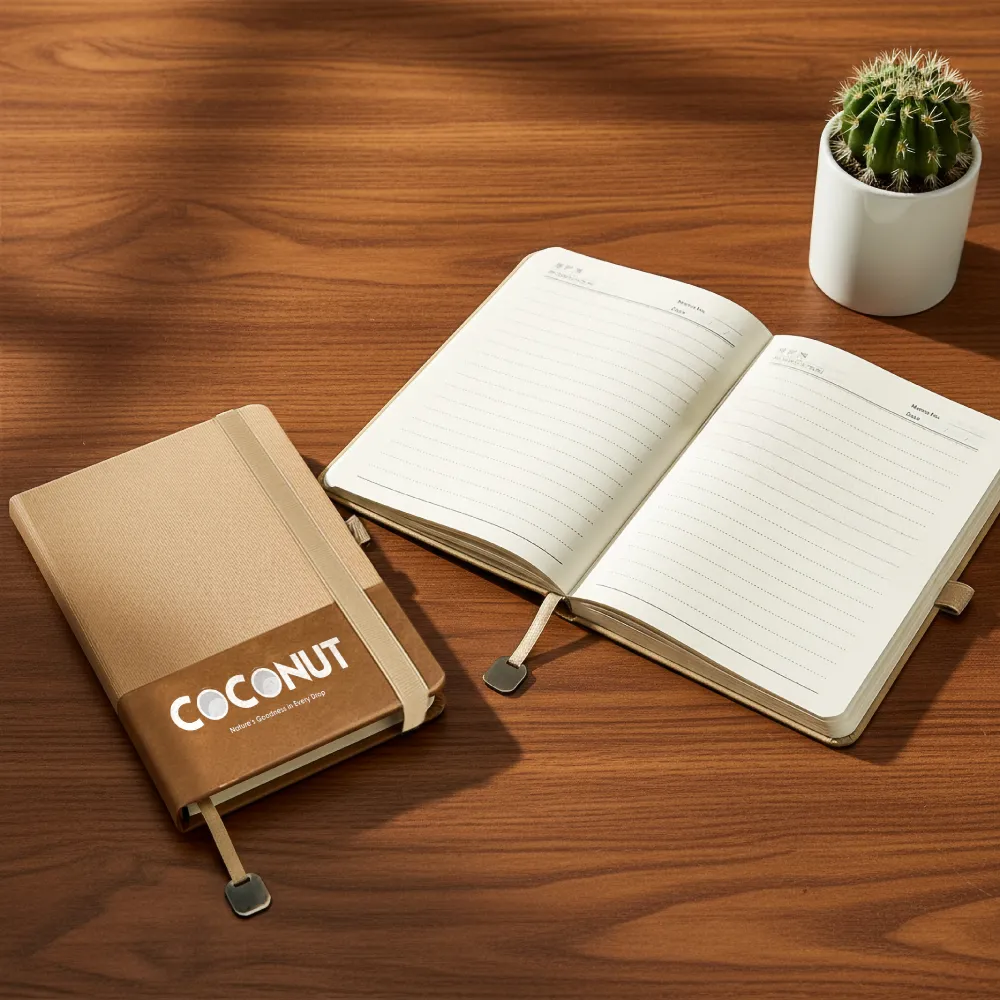
Proof of effort. Customising an item signals that the gift was chosen, not grabbed off a shelf. When a client receives a notebook with their own name foil-stamped beside your logo, the message is “we prepared this for you” — which is a stronger relationship signal than the monetary value of the item.
Team identity. For employee gifting, branding does something unbranded gifts cannot: it builds belonging. A welcome kit with the company logo — a bottle, a notebook, a T-shirt — tells a new hire on day one that they are part of something. Companies across Dubai’s free zones use branded onboarding kits precisely for this reason.
Event visibility. At exhibitions and trade shows, branded giveaways are the point. Nobody walks the halls of a major expo collecting anonymous items; the logo is the currency of attention, and the items that travel furthest are the useful ones — bags, bottles, and tech accessories.
The Case for Unbranded (or Near-Invisible) Branding
And yet, walk into any luxury hotel suite in Dubai and look at the welcome gifts: rarely a logo in sight. There is a reason for that, and it is not snobbery.
A gift should feel like a gift. The moment a recipient feels they are holding an advertisement, the emotional value drops. Research on gifting consistently shows the same pattern: recipients keep and appreciate items more when the branding is absent or tasteful, and they quietly discard items that feel like marketing material. A big chest logo on a polo shirt reads as a uniform, not a present.
Luxury positioning. Premium and executive gifting follows the rules of luxury brands themselves: restraint signals confidence. Nobody needs a giant logo to know where a beautiful leather desk set came from if the quality and the accompanying note do the talking. In the UAE’s executive and government-adjacent circles especially, understatement is read as respect.
The daily-use test. Ask yourself: would the recipient use this in front of their own clients? A consultant will happily carry a superb unbranded leather portfolio into a boardroom. The same portfolio with a large supplier logo stays in the drawer — or worse, gets re-gifted. If you want your gift used rather than stored, minimal branding often wins.
Cultural fit. In the UAE’s business culture, generosity is valued and the gesture matters more than the label. During Ramadan and other festive gifting seasons, the spirit of giving takes centre stage; an elegant unbranded gift with a thoughtful card frequently lands better than a heavily branded box, because the occasion is about the relationship, not the marketing calendar.
When Branded Clearly Wins: Five Scenarios
1. Trade shows and exhibitions. At events like GITEX, the branded giveaway is the strategy. Choose useful, visible items — tote bags, bottles, power banks — because the items that leave the venue with visitors are the ones that keep advertising.
2. Employee onboarding. Welcome kits should be branded. The goal is belonging, and the logo is the point. A new joiner’s first-day kit in a Dubai office almost always includes branded essentials.
3. Internal team events and milestones. Company anniversaries, project completions, and team offsites are internal celebrations — branding reinforces shared identity, and nobody minds a logo on a gift from their own employer.
4. Mass brand-awareness campaigns. When the objective is reach — a product launch, a mall activation, a community event — cost per impression rules, and branded items in volume are unbeatable.
5. Channel and partner programmes. When you gift distributors, resellers, or affiliates, your logo carries credibility. Partners often display branded items proudly because the association benefits them too.
When Unbranded (or Subtle Branding) Wins: Five Scenarios
1. VIP and C-suite executive gifts. Senior recipients notice quality, not logos. A premium unbranded gift with a handwritten note outperforms a mid-range branded one at the same budget.
2. High-value client appreciation. When thanking a client who just signed a major contract, the gift should honour them — not market to them. Keep branding off the item itself.
3. Festive and cultural gifting. For Ramadan, Diwali, or UAE National Day gifting, the occasion leads. Elegant, culturally thoughtful gifts with minimal or no branding respect the spirit of the season. (If you are planning seasonal campaigns, our range of UAE National Day giveaways is designed around exactly this balance.)
4. Luxury hospitality and real estate. Welcome gifts, handover gifts, and concierge gestures should feel personal. A discreet engraving is fine; a billboard is not.
5. Peer-to-peer and sensitive relationships. When the recipient is a fellow executive, a regulator, or someone in a conservative sector, restraint avoids any hint of impropriety or cheapness. When in doubt, go quiet.
The Smart Middle Path: Branding That Doesn’t Look Like Branding
The best corporate gifting in Dubai rarely chooses between “giant logo” and “no logo.” It uses techniques that carry the brand without cheapening the gift:
- Tone-on-tone laser engraving. A logo etched in the same colour as the product — on a matte black bottle, a steel pen, a wooden box — is visible up close and invisible from across the room. This is the single most popular branding method for executive gifts in the UAE, and our laser engraving and branding services handle it routinely.
- Blind embossing and debossing. Pressing the logo into leather or thick card without ink or foil gives a tactile, premium mark. It photographs beautifully and never looks like an ad.
- Logo inside, not outside. A small logo printed on the inside lid of a box, the inner tag of a bag, or the base of a mug keeps the brand present for the owner while the item looks clean to the world.
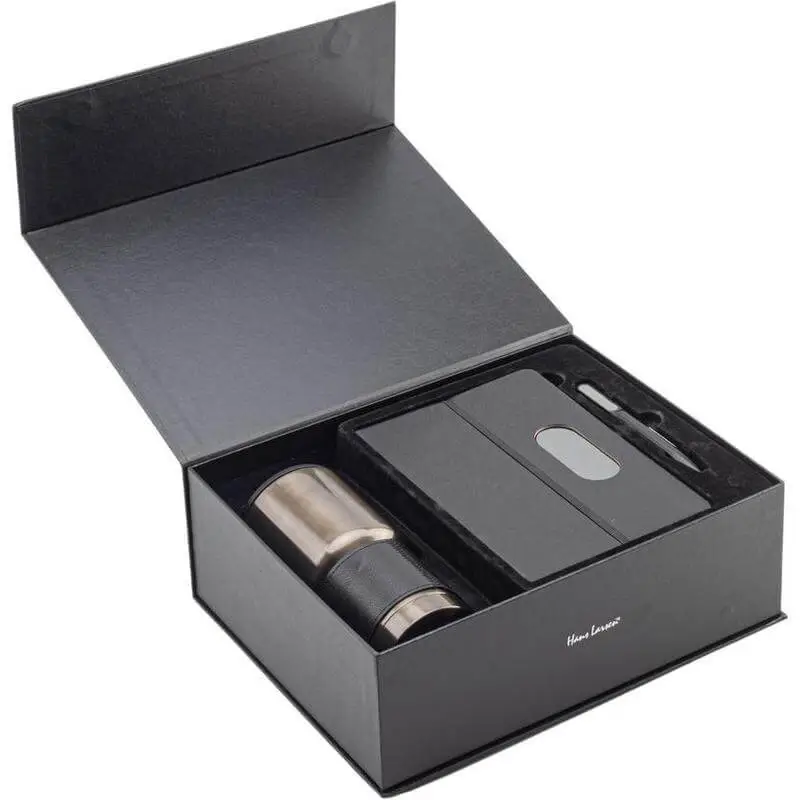
- Branded packaging, unbranded product. Put the full brand experience on the box — sleeve, ribbon, card — and leave the item itself pristine. The unboxing carries the marketing; the product carries the relationship.
- Recipient personalisation. Adding the recipient’s name or initials beside (or instead of) your logo flips the psychology: it becomes their item that happens to come from you, rather than your item that happens to be with them.
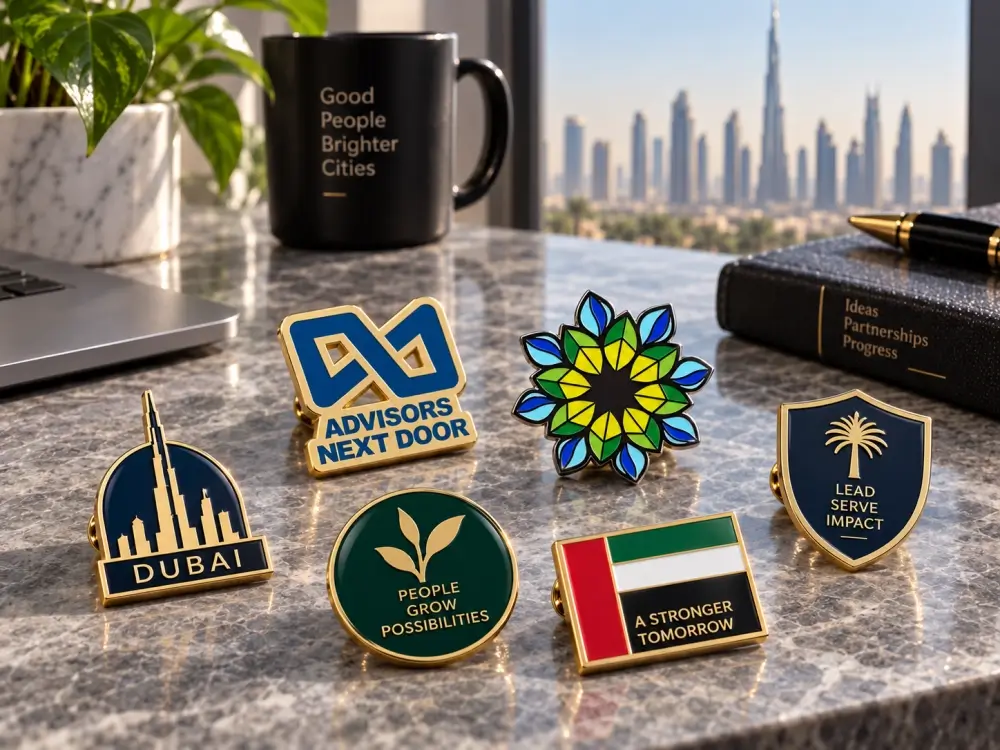
Small, well-crafted branded details — like custom lapel pins in Dubai made in hard enamel with a subtle finish — show how far craftsmanship goes: the branding becomes part of the object’s beauty instead of an imposition on it.
What Each Option Costs in the UAE
Cost is where the decision gets practical, and Dubai buyers should know the mechanics:
Unbranded gifts cost exactly what the product costs. No setup fees, no artwork preparation, no minimums beyond the supplier’s stock policy. They are also the fastest option — off-the-shelf items can often be gift-wrapped and delivered within days, which matters for last-minute needs.
Branded gifts add two things: setup costs and lead time. Screen printing needs screens, embossing needs a metal die, embroidery needs digitising — each carries a one-time setup fee that gets cheaper per unit as quantities rise. That is why branded gifting favours volume: at 50 units the setup cost stings, at 500 it disappears into the unit price. Expect roughly one to three weeks from artwork approval to delivery for standard branding methods in Dubai, longer for complex techniques or imported blanks.
The middle path (engraving, debossing, premium packaging) sits between the two: modest setup costs, mid-range lead times, and the highest perceived value per dirham for executive audiences.
Rule of thumb: if your budget per recipient is tight and the quantity is small, unbranded quality beats branded cheapness every time. A superb unbranded gift is remembered; a flimsy branded one is binned — taking your logo with it.
How to Measure Gifting ROI: A Simple Framework
You cannot improve what you do not measure. Here is a lightweight framework any Dubai business can run:
1. Define the goal before you buy. One gift, one primary goal: brand impressions at an event, client retention, employee morale, or lead generation. Write it down.
2. Pick one metric that matches. Event giveaways → footfall and scans. Client gifts → retention and referral rates in the following quarter. Employee kits → onboarding survey scores or early-tenure retention.
3. Build in trackability. Add a QR code linking to a landing page, include a unique offer code, or simply follow up with a short survey referencing the gift. Branded packaging is an ideal place for a QR code that an unbranded item cannot carry as naturally.
4. Compare against the alternative. The real question is never “did gifting work?” but “did this approach beat the alternative?” Split a campaign — branded for one audience segment, subtle for another — and compare the metric you chose.
Businesses that do this consistently discover something useful: the ROI gap between branded and unbranded is rarely about the logo. It is about whether the item was worth keeping.
Quick Decision Framework
| Situation | Audience | Best choice |
|---|---|---|
| Trade show / exhibition | Prospects, footfall | Branded, useful, visible |
| Employee onboarding | New hires | Branded welcome kit |
| VIP client thank-you | C-suite, key accounts | Unbranded or subtly branded, premium |
| Festive gifting (Ramadan, Diwali, National Day) | Clients, staff | Elegant, minimal branding |
| Mass awareness campaign | General public | Branded, high-volume |
| Internal milestone | Your own team | Branded, celebratory |
| Luxury hospitality / real estate | Guests, buyers | Unbranded, personalised |
| Sensitive / peer relationships | Executives, officials | Subtle or unbranded |
Frequently Asked Questions
Do branded gifts actually improve brand recall?
Yes — when the item is worth keeping. A quality branded item used daily keeps your name in front of the recipient for years, which is why durability matters more than logo size. A cheap branded item that breaks in a month produces negative recall: the recipient remembers the brand that gave them rubbish.
Is it rude to give unbranded gifts in UAE business culture?
Not at all. Thoughtfulness and quality are what count, especially for festive and executive gifting. A beautiful unbranded gift with a personalised card is entirely appropriate and often preferred at senior levels.
Should employee gifts be branded?
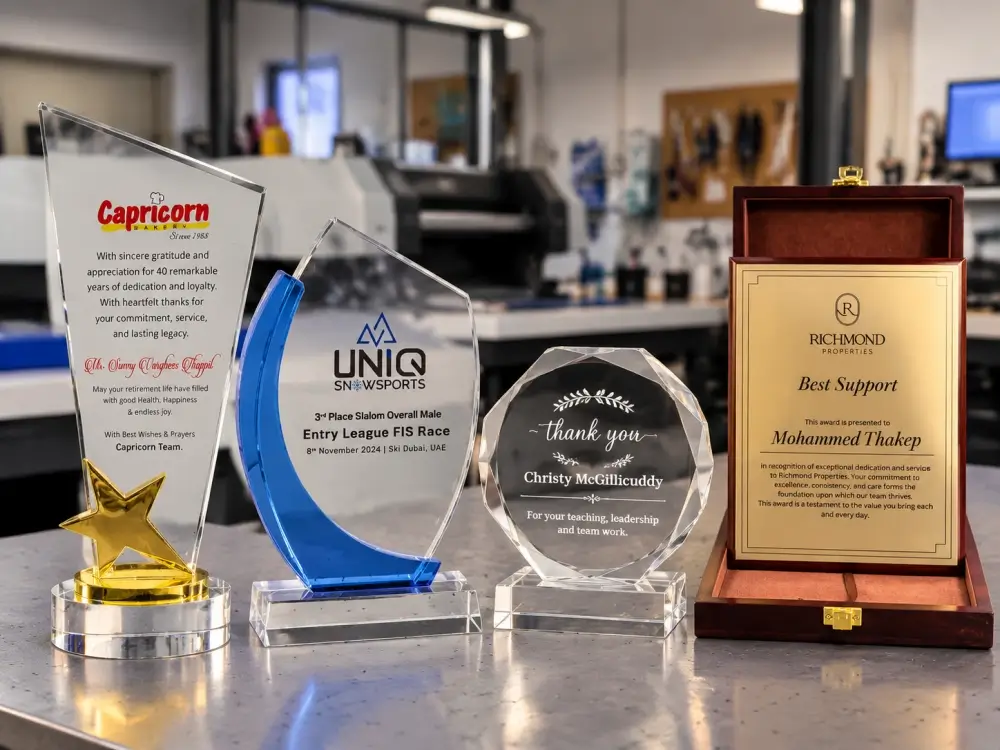
Generally yes. Employees are part of the brand, and branded welcome kits and milestone gifts build team identity. The exception is personal recognition awards, where the individual’s achievement should take centre stage — there, subtle branding or none is better.
What is the cheapest way to add branding to a gift?
Single-colour screen printing or pad printing on a suitable surface is usually the most economical, especially at volume. Laser engraving costs slightly more per unit but needs no ink-based setup and looks far more premium on metal, wood, and leather.
Can I brand only the packaging and leave the product unbranded?
Absolutely — and for executive gifting it is often the ideal compromise. A fully branded unboxing experience (sleeve, ribbon, card, QR code) delivers the marketing impact, while the pristine product delivers the emotional impact.
How far in advance should I order branded gifts in Dubai?
For standard branding methods, allow one to three weeks from artwork approval; for complex techniques, large quantities, or peak seasons like Ramadan and National Day, four to six weeks is safer. Unbranded off-the-shelf gifts can usually be turned around in days.
The Bottom Line
Branded versus unbranded is the wrong fight. The right question is: what job is this gift doing? If the job is visibility, reach, or team identity — brand it boldly. If the job is honouring a relationship, impressing a senior recipient, or marking a cultural occasion — let the gift speak quietly and keep the branding discreet or off entirely. And when you want both, use the middle path: tone-on-tone engraving, branded packaging, and personalisation that make the brand part of the experience rather than the loudest thing in the room.
Whichever route you choose, the non-negotiable is quality. A gift that gets used is a gift that works — with or without your logo on it. To explore options for either approach, browse the corporate gift catalogue or talk to our team about branding methods that fit your audience and budget.