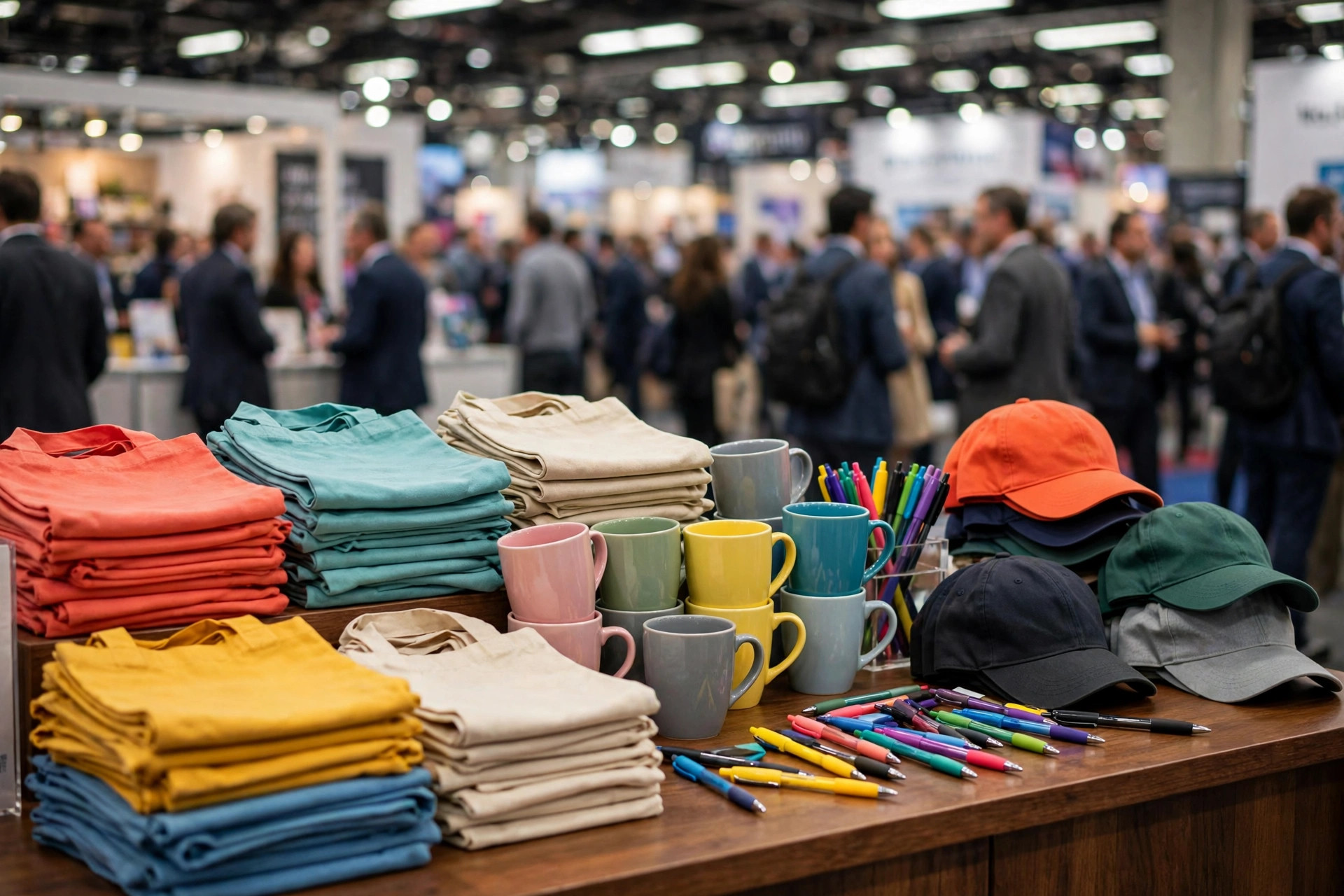
Walk the halls of any major Dubai exhibition — GITEX, Gulfood, Arab Health, Big 5 — and you will see the same scene repeated hundreds of times: booths with bowls of forgettable trinkets that visitors grab without breaking stride, and a few booths with queues of engaged prospects holding genuinely desirable branded items. The difference between those two outcomes is not budget. It is strategy.
Trade show giveaways in Dubai operate under a unique set of pressures. Your booth competes with hundreds of neighbours for attention. Visitors make split-second decisions about whether to stop. The items you hand out must work as crowd-pullers, conversation starters, brand reminders, and lead-qualification tools — often all at once, across three or four intense exhibition days.
This guide is written for exhibitors: marketing managers planning their booth, sales teams working the floor, and business owners exhibiting in Dubai for the first time. It covers the strategy behind effective exhibition gifting, tiered giveaway models that qualify leads, the items that perform best on Dubai show floors, quantity planning, venue logistics, and the mistakes that turn giveaway budgets into expensive litter.
The Real Job of a Trade Show Giveaway
Before selecting a single item, get clear on what your giveaways are actually for. A trade show giveaway has up to four jobs, and different items serve different jobs:
Attracting footfall. Some items exist primarily to stop traffic — visually striking, desirable enough that visitors cross the aisle to get one. These are your crowd-pullers, and they earn their cost in booth visits.
Starting conversations. The handover moment is a natural opening for your booth staff. A good giveaway gives staff a reason to engage (“Would you like one of our…?”) and gives visitors a reason to linger long enough for a qualifying question or two.
Qualifying and rewarding leads. Tiered gifting — where better items go to better-qualified prospects — turns giveaways into a lead management tool. The prospect who receives your premium item after a real conversation is measurably more likely to remember you than the passerby who grabbed a pen.
Extending brand presence post-show. The items visitors keep continue advertising after the exhibition closes — in offices, homes, and daily routines. Retention is the long game of exhibition gifting, and it is where quality pays for itself.
Most failed exhibition gifting programmes fail because they assign one undifferentiated item to do all four jobs. The fix is tiering.
The Tiered Giveaway Model
Experienced Dubai exhibitors structure giveaways in tiers matched to visitor engagement levels. Here is the standard model:
Tier 1: The Crowd-Puller (High Volume, Broad Appeal)
This is the item anyone can take — designed to create visible booth activity and put your brand in maximum hands. It should be eye-catching, immediately desirable, and cheap enough to give away by the thousand. The classic crowd-pullers: quality tote bags (which then carry your branding around the entire exhibition hall — every other booth’s visitors see your bag), branded caps, fans or handheld cooling items for Dubai’s climate, and distinctive items with novelty value.
The tote bag deserves special emphasis as exhibition giveaways in Dubai: a well-designed tote given at the entrance-side of your booth becomes mobile advertising throughout the venue for the rest of the day. Other exhibitors effectively pay (in lost attention) for your visibility. This is one of the highest-ROI moves in exhibition marketing, and it is why custom jute and tote bags are perennial exhibition bestsellers.
Tier 2: The Engaged Visitor Gift (Medium Volume, Qualified Interest)
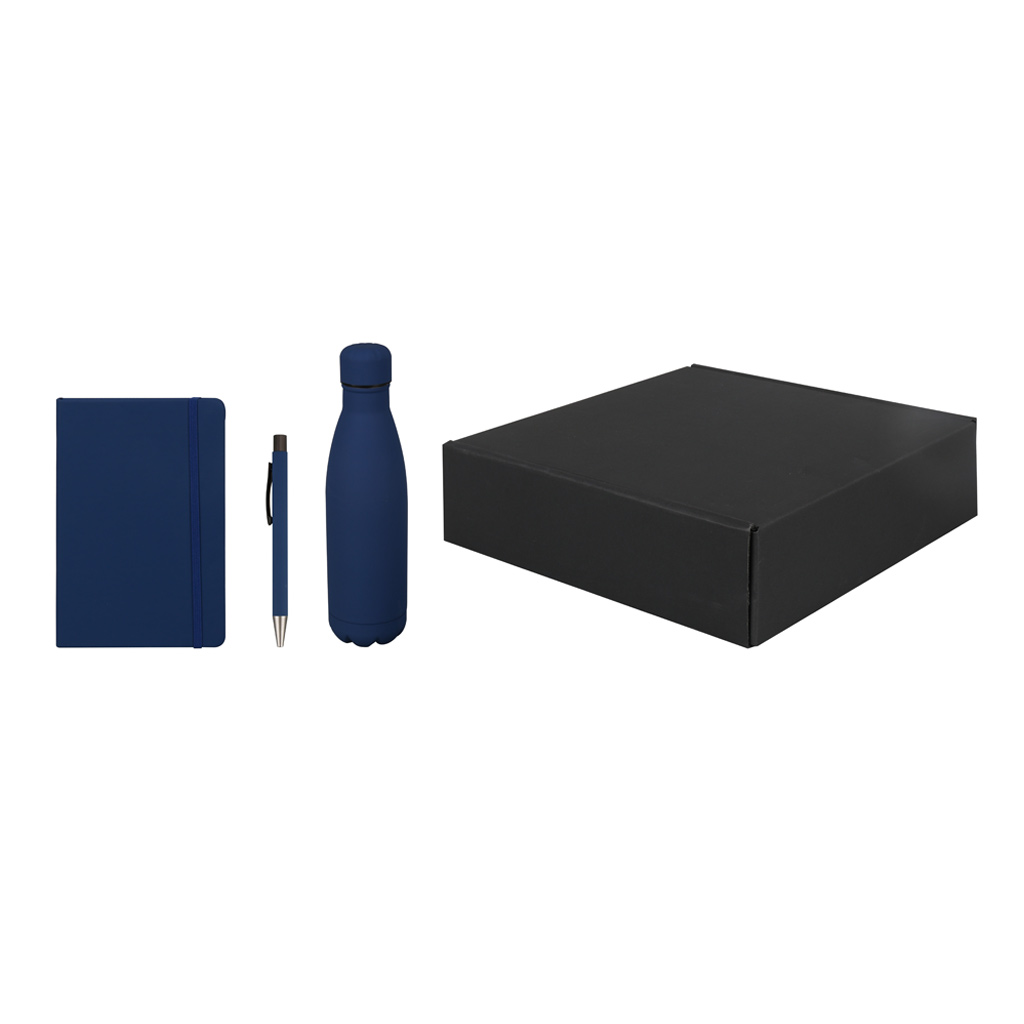
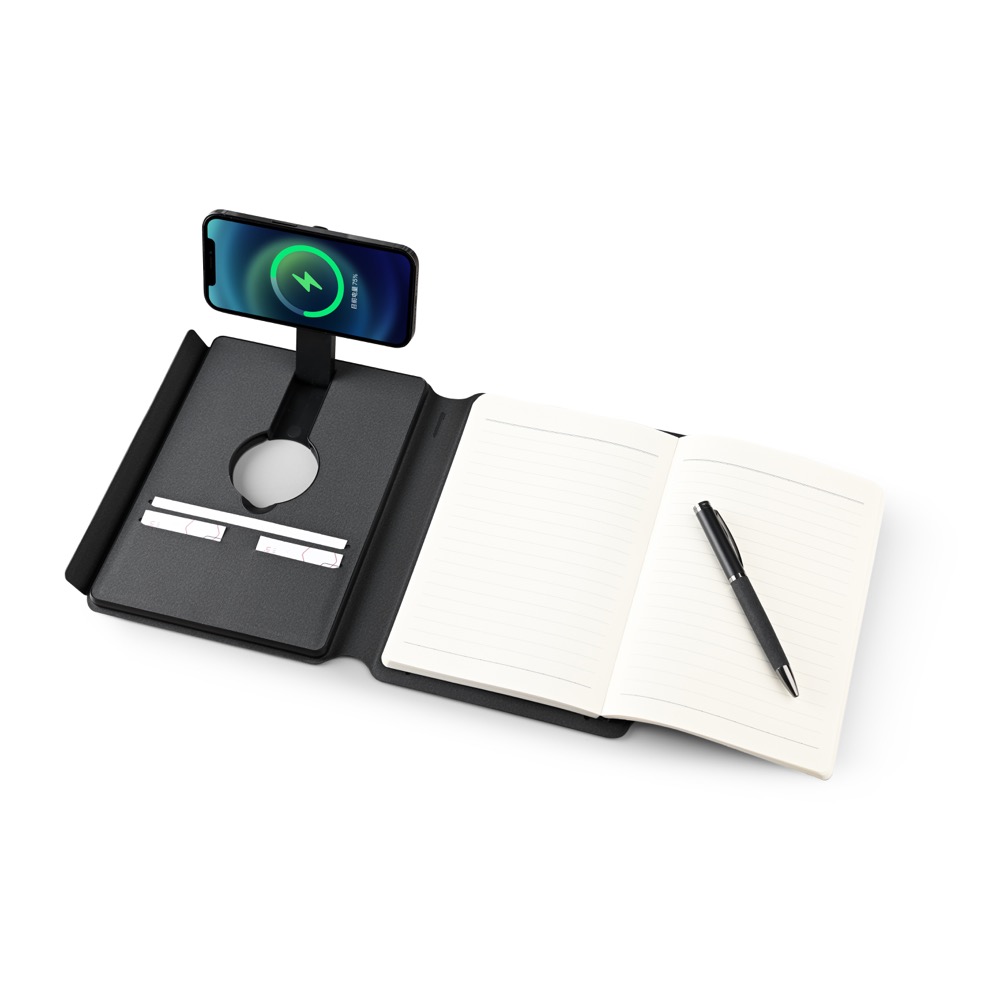
For visitors who stop, talk, and show genuine interest — the item your staff hand over personally after a conversation. This should be a clear step up in quality and usefulness: a good notebook and pen set, a tech accessory (cable set, phone stand, USB drive), quality drinkware. The personal handover matters as much as the item — it creates a moment of reciprocity and gives staff a natural bridge to qualification questions and badge scanning.
Tier 3: The Hot Prospect Gift (Low Volume, High Value)
Reserved for qualified leads — decision-makers, serious buyers, promising conversations. Premium items: executive tech accessories, quality leather goods, premium gift sets, or items specific to the prospect’s interests discovered during conversation. These are often presented after the show or at a follow-up meeting rather than on the stand, which extends the relationship beyond the exhibition. Our executive gift sets and corporate gift sets guides cover the premium tier.
The Tiering Discipline
Tiering only works with staff discipline. Brief your booth team explicitly: who gets what, and what triggers the upgrade (a scanned badge plus a real conversation, a decision-maker title, a concrete follow-up action). Without briefing, premium items evaporate into the crowd by day two — the most common and most expensive tiering failure. Some exhibitors keep Tier 3 items off the stand entirely, stored separately and distributed by senior staff only.
What Actually Works on Dubai Show Floors: Item-by-Item
Dubai’s exhibition environment — large international audiences, warm climate, multi-day events, intense competition — favours certain categories:
Tote bags and backpacks. As discussed, the premier crowd-puller. For tech and youth-oriented shows, drawstring bags and backpacks; for professional shows, structured jute or cotton totes. Print quality matters — your bag competes visually with hundreds of others.
Drinkware. Reusable bottles are ideal for multi-day exhibitions: visitors use them immediately (reducing trips to water stations), carry them visibly, and keep them afterwards. Insulated bottles and quality mugs both perform well. Our branded drinkware comparison breaks down the options.
Tech accessories. Cable sets, multi-charging cables, phone stands, USB drives, power banks, webcam covers — the exhibition workhorse category. Small, useful, brandable, and relevant to the professional audiences at B2B shows. Power banks in particular are prized during long exhibition days when outlets are scarce. See our roundup of corporate tech gifts people actually use.
Notebooks and pens. Still effective, particularly the quality end — a good hardcover notebook gets used during the show for session notes and continues afterwards. Avoid the bottom tier; cheap notebooks are the most abandoned items on show floors. Our custom notebooks and branded pens guides cover selection.
Caps and apparel. Branded caps work well at Dubai exhibitions — sun protection is genuinely useful, and caps are highly visible. Quality polos suit staff uniforms and can double as premium giveaways. See our custom T-shirts and custom polo shirts guides.
Cooling and comfort items. Handheld fans, cooling towels, and similar items suit Dubai’s climate and outdoor-adjacent venues. They stand out because relatively few exhibitors think of them, and they get used immediately — instant goodwill.
Stress relievers and desk toys. Branded stress balls, fidget items, and desk accessories are classic booth handouts — cheap, cheerful, and kept on desks where they generate ongoing impressions. They work best as Tier 1 items paired with a stronger Tier 2 offering.
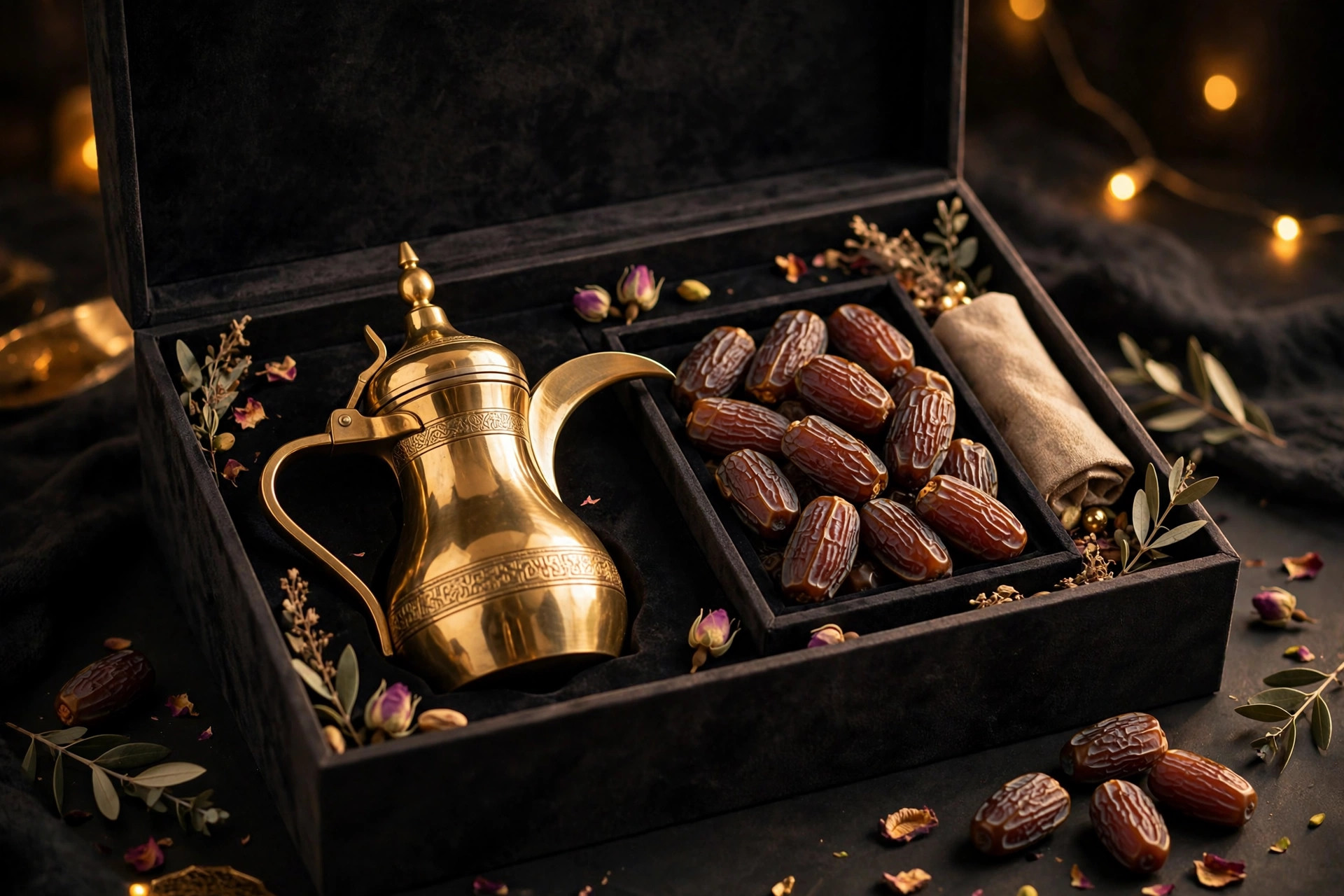
Food and local specialities. Premium dates, chocolates, or locally-themed treats in branded packaging create warm, memorable interactions — particularly effective for hospitality-led booths. Check venue rules on food distribution and be mindful of Ramadan timing.
Sustainable items. Recycled-material bags, bamboo products, seed-paper items, and plastic-free kits respond to the sustainability expectations increasingly present at international exhibitions. Our eco-friendly gifts guide covers the range.
Novelty and interactive items. Items tied to your product or industry — creative, unexpected, shareable — generate the social media moments that extend your exhibition reach beyond the hall. The best novelty items connect to your brand story; random novelty for its own sake is forgettable.
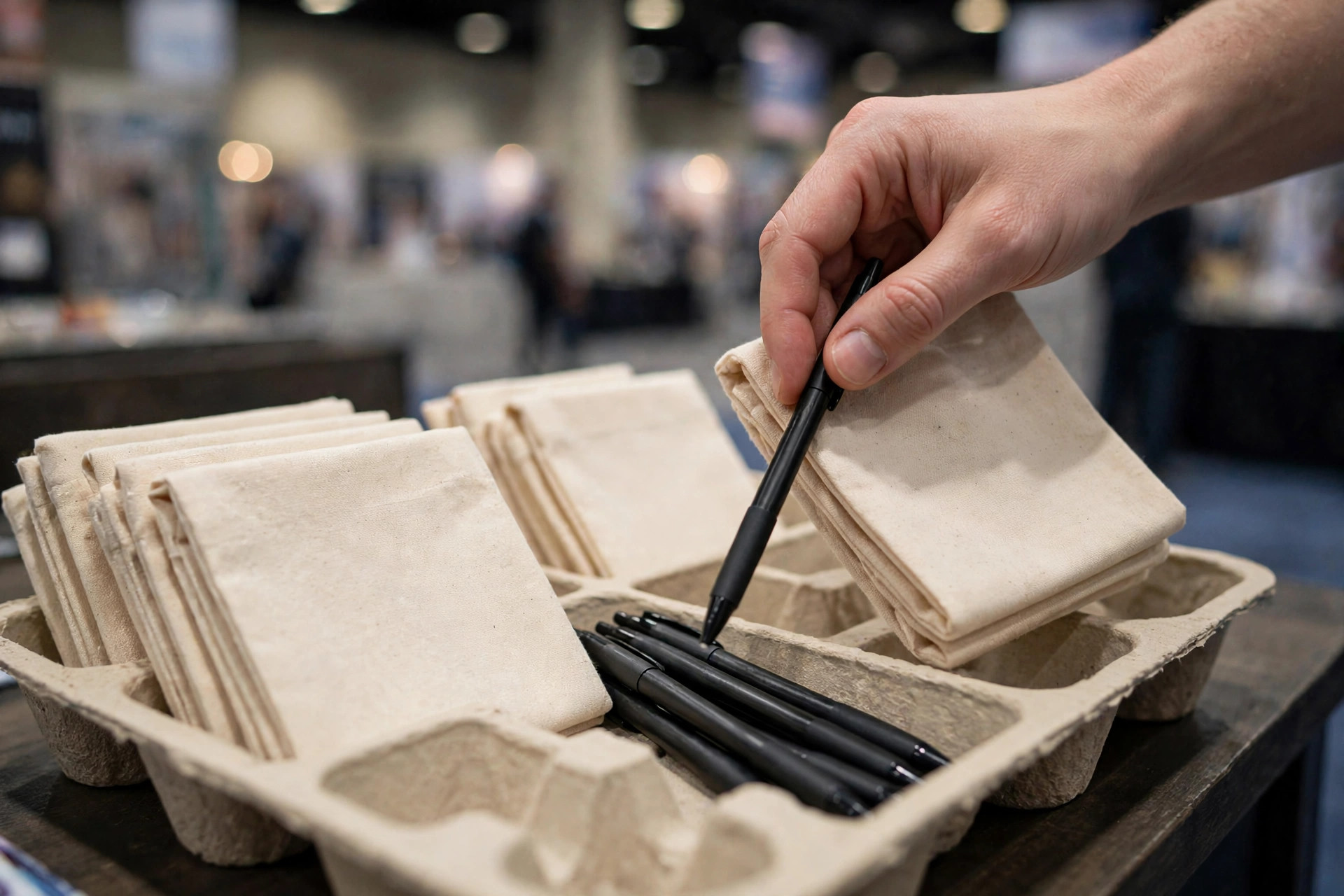
Designing Giveaways for the Booth Environment
Exhibition halls are visually chaotic. Your giveaways need to work in that specific environment:
Visibility at distance. Crowd-puller items should be recognisable from across the aisle — bold colours, large logos, distinctive shapes. A beige tote with a small grey logo disappears; a bright, boldly branded bag gets noticed.
Instant comprehensibility. Visitors decide in seconds. The item’s appeal must be immediately obvious — no explanation required, no assembly, no instructions. If your giveaway needs a demo, it is the wrong giveaway (or it belongs in Tier 2/3 with staff presentation).
Brand legibility. Logos must read clearly at arm’s length and in photographs. Test branding at realistic viewing distances, not just close-up. This is particularly important for items that will appear in visitors’ social media posts — free amplification you should design for.
Cohesion with booth design. Your giveaways should look like they belong to your booth — same colours, same visual language, same quality level. A premium booth handing out flimsy trinkets creates cognitive dissonance; a modest booth with sharp, well-chosen giveaways punches above its weight.
The unboxing moment. For Tier 2 and 3 items, packaging shapes perception. A tech accessory in a clean branded box feels like a gift; the same item loose in a plastic bag feels like swag. Packaging is a small cost with an outsized psychological return.
Quantity Planning: How Many Do You Actually Need?
Under-ordering means running out mid-show — a visible failure that also wastes the booth investment. Over-ordering means wasted budget and storage headaches. Here is how experienced exhibitors plan:
Start with expected footfall. Use the organiser’s attendance figures from previous editions, adjusted for your booth’s location, size, and profile. Entrance-adjacent and main-aisle booths draw multiples of the traffic of peripheral locations.
Apply the tier ratios. A common planning ratio: Tier 1 crowd-pullers at roughly 60–70% of expected booth visitors (not all visitors take one, but many do); Tier 2 at 20–30% (the engaged subset); Tier 3 at 5–10% (qualified prospects). Adjust based on your show experience — lead-heavy B2B shows skew toward Tier 2/3; high-traffic consumer-adjacent shows skew toward Tier 1.
Plan per day, with reserves. Multi-day shows have uneven traffic — typically building toward the middle days. Allocate daily quantities with a reserve held back for the final day, and track consumption daily so you can adjust distribution pace. Nothing is worse than a bare giveaway table on day three of four.
Add the buffer. Order 10–15% above calculated need for Tier 1 (damage, staff use, unexpected surges) and smaller buffers for higher tiers. Leftover Tier 2/3 items have easy second lives in sales follow-up and office gifting; even Tier 1 surplus can serve future events.
Consider the bag effect. If your crowd-puller is a tote bag, remember that each bag distributed continues advertising throughout the venue — front-load distribution on day one to maximise the multi-day visibility effect.
For the MOQ implications of large exhibition orders, our minimum order quantities explainer covers how suppliers handle thousand-unit runs.
Dubai Venue Logistics: DWTC, Expo City, and Beyond
Dubai’s exhibition venues have specific operational realities that affect giveaway planning:
Delivery and storage. Major venues have designated loading docks, delivery windows, and marshalled logistics. Coordinate delivery of giveaway stock with the venue or your stand contractor well in advance. Booth storage space is limited and expensive — plan how multi-day stock is stored (under counters, in lockable storage rooms) and replenished.
Giveaway restrictions. Some venues and organisers restrict certain giveaway types — food items often require approvals, and some shows limit bag distribution to control waste or for sponsor-protection reasons (an official show bag sponsor may prohibit competing bags). Check the exhibitor manual for restrictions before ordering thousands of units.
Staffing the giveaway. Giveaways need attendants. An unmanned bowl empties in minutes with zero lead capture; a staffed distribution point with badge scanning turns the same items into a lead machine. Budget staff time for giveaway management, not just the items.
Waste and sustainability. Dubai’s major exhibitions increasingly emphasise sustainability. Excessive disposable swag draws criticism; quality-over-quantity approaches and sustainable materials align with where the industry is heading — and with organiser preferences.
Post-show logistics. Plan for leftover stock: return shipping, storage for future shows, or redistribution. Build this into the budget and the operational plan rather than discovering the problem during breakdown.
Tying Giveaways to Lead Capture and Follow-Up
The most sophisticated exhibitors treat giveaways as part of a lead system, not as standalone generosity:
Badge scanning at distribution. The Tier 2 handover is the natural badge-scan moment — staff scan, ask two qualifying questions, and hand over the item. This converts giveaway cost directly into qualified lead data.
Tier upgrades as incentives. “If you’d like our premium tech kit, our product specialist can walk you through a 5-minute demo” — the Tier 3 item becomes the reward for deeper engagement, and the demo becomes the qualification mechanism. This is standard practice among experienced exhibitors and dramatically improves lead quality.
Post-show follow-up gifting. The most powerful use of premium items is after the show: sending the Tier 3 gift to hot prospects with a personalised follow-up note. The gift arrives when the exhibition noise has faded, the gesture feels personal rather than promotional, and the association is with a real conversation rather than a crowded hall. Many companies hold back a portion of premium stock specifically for this purpose.
Measuring giveaway ROI. Track what you can: items distributed per tier, badge scans per tier, post-show conversion rates for prospects who received Tier 3 items versus those who did not. Even rough data builds the case for strategic gifting budgets and refines future tier allocations. The broader ROI framework is covered in our branded vs unbranded gifts analysis.
Timelines for Exhibition Orders
Exhibition dates are immovable, and Dubai’s exhibition calendar creates demand spikes that strain supplier capacity:
16+ weeks out (major shows): Define the tiered strategy, select items, issue RFQs. For mega-shows like GITEX, this is also when to secure production slots — thousands of exhibitors order simultaneously.
10–12 weeks out: Finalise artwork and approve physical samples of every tier. Confirm quantities per tier based on registration/attendance projections.
8–10 weeks out: Place production orders. For custom-manufactured items shipping from abroad, this is the latest comfortable window.
4–6 weeks out: Production completes; quality checks; delivery to Dubai arranged.
2–3 weeks out: Stock received in Dubai. Verify quantities and quality. Prepare booth distribution plan and staff briefing.
Show week: Execute per plan; monitor daily consumption; adjust distribution pace.
The safety valve: locally branded stocked items can be produced in one to two weeks, which covers emergency top-ups — but only for items available locally. Premium and custom items have no rush option. Our gifting timelines guide details the planning logic.
Budgeting Exhibition Giveaways
Budget by tier, not by total. Allocate per-tier unit budgets × planned quantities, then add the operational costs: packaging, delivery to venue, booth storage, staff time, badge-scanning integration, and post-show follow-up fulfilment. The all-in cost per qualified lead is the metric that matters — and it is usually far more favourable than it looks when compared to other lead acquisition channels.
The cost-per-lead lens. An exhibition stand represents a massive fixed investment — space, build, travel, staff time. Giveaways are a small fraction of that total, but they directly influence its return by driving footfall and enabling lead capture. Underinvesting in giveaways while spending heavily on the stand is one of the most common exhibition budget mistakes: it is like buying a billboard and leaving it blank.
Sponsor and partner contributions. Co-exhibitors, distributors, or brand partners may contribute to or co-brand giveaway programmes. Structure these arrangements explicitly, with clear branding hierarchy.
Common Trade Show Giveaway Mistakes
The unmanned bowl. Giveaways without staff engagement generate zero leads and maximum waste. Every distribution point should be a conversation point.
Single-tier thinking. One item for everyone means overspending on passersby and underserving prospects. Tiering is the highest-leverage structural decision you can make.
Ordering too late. Exhibition deadlines do not move. Late orders mean compromised quality, limited options, and premium rush costs — or missing the show entirely.
Ignoring the venue manual. Restrictions on bags, food, or distribution methods discovered after ordering thousands of units are expensive surprises.
No staff briefing. Premium items handed out indiscriminately by uninformed booth staff is budget bonfire. Brief the team on tiers, triggers, and the lead-capture process.
Quantity miscalculation. Running out on day two wastes the remaining booth investment; massive over-ordering wastes budget. Plan per day with reserves and track consumption.
Cultural blindness. Dubai’s exhibitions draw global audiences. Avoid items with cultural or religious sensitivities, check food gift appropriateness, and default to universally appropriate choices. During Ramadan-adjacent shows, adjust accordingly — see our Ramadan corporate gifts guide.
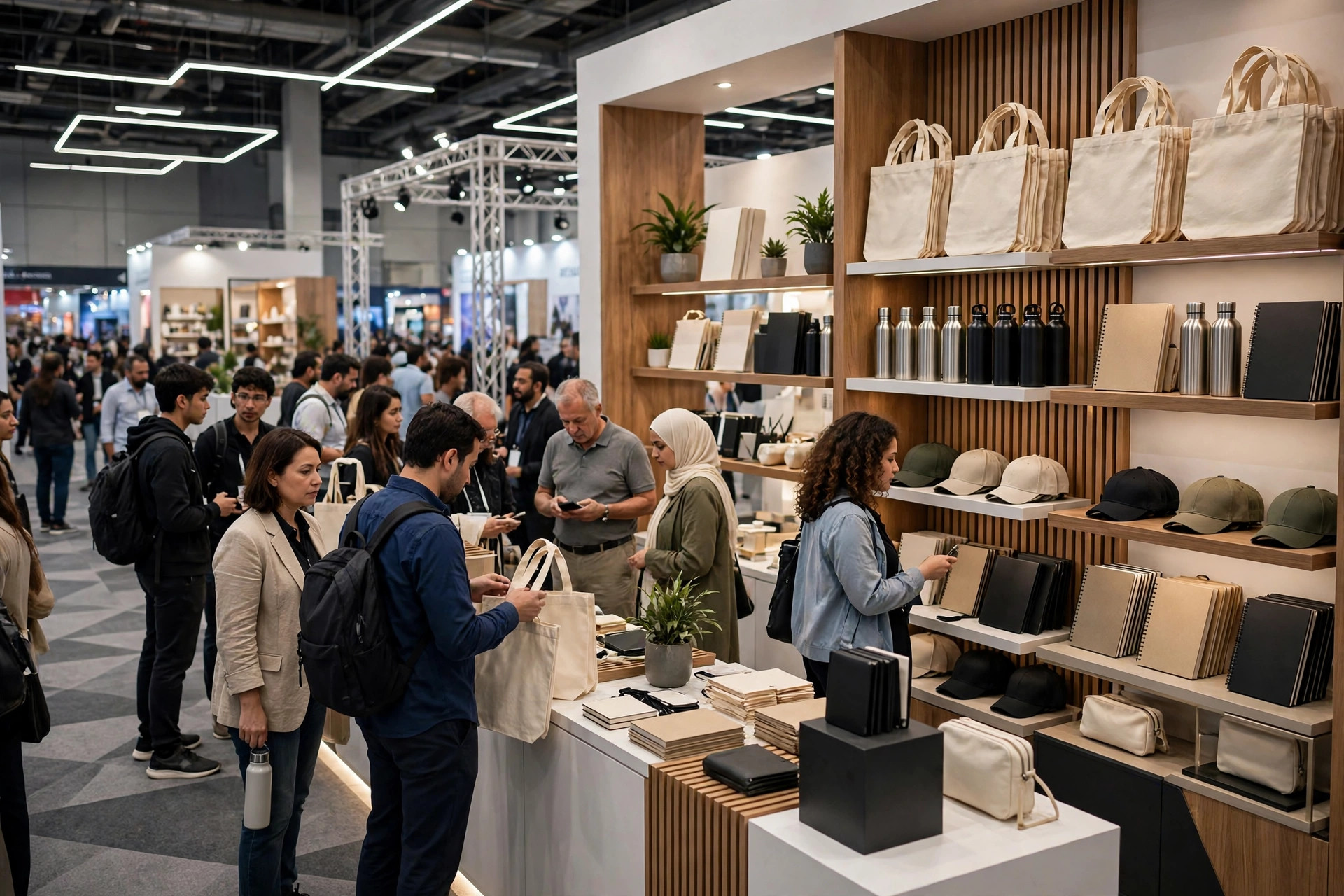
Sustainability on the Show Floor
The exhibition industry is moving decisively toward sustainable practice, and giveaways are under scrutiny:
Quality over quantity remains the core principle — a kept item generates no waste, while a thousand discarded trinkets are an environmental and reputational liability.
Sustainable materials — recycled fabrics, bamboo, wheat-straw composites — are widely available and increasingly expected by international audiences.
The bag question. Reusable tote bags are among the most sustainable crowd-pullers available — they directly replace disposable bags throughout the venue. Lead with them confidently.
Digital alternatives. QR-linked digital content, app-based engagement, and digital business card exchanges can supplement (not replace) physical giveaways, reducing material volume while maintaining engagement.
Leftover planning. Build the second life of surplus stock into the plan from the start — future shows, sales follow-up, staff gifting, donation.
Your Exhibition Giveaway Checklist
- Strategy defined — the four jobs (attract, engage, qualify, retain) assigned across tiers.
- Tiers structured — crowd-puller, engaged visitor, hot prospect — with items and quantities per tier.
- Items selected — each passing the visibility, comprehensibility, and retention tests for the booth environment.
- Branding designed — legible at distance, cohesive with booth design, optimised for photographs.
- Samples approved — physical samples of every tier with actual branding.
- Quantities planned — per-day allocation with reserves and buffers.
- Venue logistics confirmed — delivery, storage, restrictions, distribution points.
- Staff briefed — tier triggers, badge scanning, lead capture process.
- Follow-up planned — post-show Tier 3 sends and lead nurturing sequences.
- Timeline buffered — working backwards from the immovable show date.
Exhibitions are among the most expensive marketing investments companies make. A strategic giveaway programme — tiered, well-executed, and tied to lead capture — is one of the cheapest ways to multiply that investment’s return.
To build your programme, browse our range of promotional gifts for exhibitions and events, explore our promotional products guide for category overviews, or contact our corporate gifting team to discuss your show, your tiers, and your timelines. You can also browse the full catalogue in our online shop.
Frequently Asked Questions
How many giveaway items should we order for a Dubai trade show?
Start with expected booth footfall (from organiser data and your booth position), then apply tier ratios — roughly 60–70% of visitors for Tier 1 crowd-pullers, 20–30% for Tier 2 engaged-visitor gifts, and 5–10% for Tier 3 prospect gifts. Plan per day with reserves, add a 10–15% buffer, and track consumption daily to adjust pace.
What are the most effective trade show giveaways?
The most effective programmes are tiered: a high-visibility crowd-puller (quality tote bags are the classic), a useful mid-tier item handed over personally after conversation (tech accessories, quality notebooks, drinkware), and premium items reserved for qualified prospects. Effectiveness comes from the tier structure and staff execution more than from any single item.
How far in advance should we order exhibition giveaways in Dubai?
For major shows, begin 16 or more weeks out to secure production slots — thousands of exhibitors order simultaneously for events like GITEX. Custom-manufactured items need 8–10 weeks minimum for production and shipping. Locally branded stocked items can be turned around in one to two weeks as a safety valve for top-ups.
Can we distribute food items or bags at Dubai exhibitions?
It depends on the venue and the specific show — some organisers restrict food distribution (approval and hygiene requirements apply) and some limit bag giveaways where an official show bag sponsor exists. Always check the exhibitor manual for restrictions before ordering.
How do we stop booth staff giving premium items to everyone?
Keep Tier 3 items off the main stand (stored separately, distributed by senior staff only), brief the team explicitly on tier triggers (badge scan plus real conversation, decision-maker title, concrete follow-up), and consider reserving premium items for post-show follow-up sends rather than on-stand distribution.
Should our giveaways be sustainable?
Increasingly, yes — international exhibition audiences and organisers expect it. Focus on quality over quantity (kept items generate no waste), choose recycled or sustainable materials, lead with reusable bags, and plan a second life for surplus stock. Sustainability is now part of brand perception on the show floor.