The first day at a new job is a story an employee retells for years. They tell their family what the office looked like, what their manager was like, and — more often than companies realise — what was waiting on their desk. An employee welcome kit in Dubai is your chance to make that story a good one. It is a box, bag, or set of branded essentials that says, before a single meeting happens: we expected you, we prepared for you, and we are glad you chose us.
For HR teams, office managers, and founders across the UAE, this guide covers the full picture: why welcome kits work, what to put in them at different levels, how to brand them tastefully, how kitting and delivery logistics actually work in Dubai and across the Emirates, and the mistakes that turn a warm gesture into a logistical headache.
Why a Welcome Kit Matters More Than the Items Inside It
A welcome kit is rarely the most expensive line in an onboarding budget, but it punches far above its weight for three reasons.
First, it reduces first-week anxiety. A new joiner arrives not knowing the culture, the unwritten rules, or even where to get coffee. A kit containing the practical basics — a bottle, a notebook, a pen, their access-friendly essentials, a friendly guide to the office — quietly answers questions they were nervous to ask.
Second, it accelerates belonging. Humans signal group membership through shared objects. When a new hire receives the same hoodie, bottle, and notebook as everyone else, they visually join the team on day one instead of week six. This is why welcome kits sit naturally alongside broader corporate gifts for employees in Dubai programmes rather than replacing them — the kit handles arrival; the wider programme handles appreciation, milestones, and festive moments through the year.
Third, it travels. New joiners photograph welcome kits. They post them, send them to family group chats, and carry the tote bag on the Metro. In a city like Dubai, where employers compete hard for skilled people, that organic visibility is employer branding you cannot buy more cheaply.
What to Include in an Employee Welcome Kit
There is no single correct kit, but high-performing kits are built from the same building blocks. Think in layers: the container, the practical essentials, the apparel, the tech, the personal touch, and — for Dubai — the local welcome.
The container: box, tote, or backpack
The container is part of the gift. Three options dominate:
- A branded gift box feels premium and presents beautifully on a desk; ideal for office-based roles and smaller volumes.
- A quality tote bag is reusable from the first commute and doubles as everyday brand visibility. A sturdy custom tote bag in Dubai with a clean design is one of the most cost-effective containers you can choose.
- A backpack suits field teams, sales teams, and companies whose people move between sites — the container becomes daily equipment.
Whichever you choose, it should be strong enough to be kept. A flimsy container undermines everything inside it.
Desk and work essentials
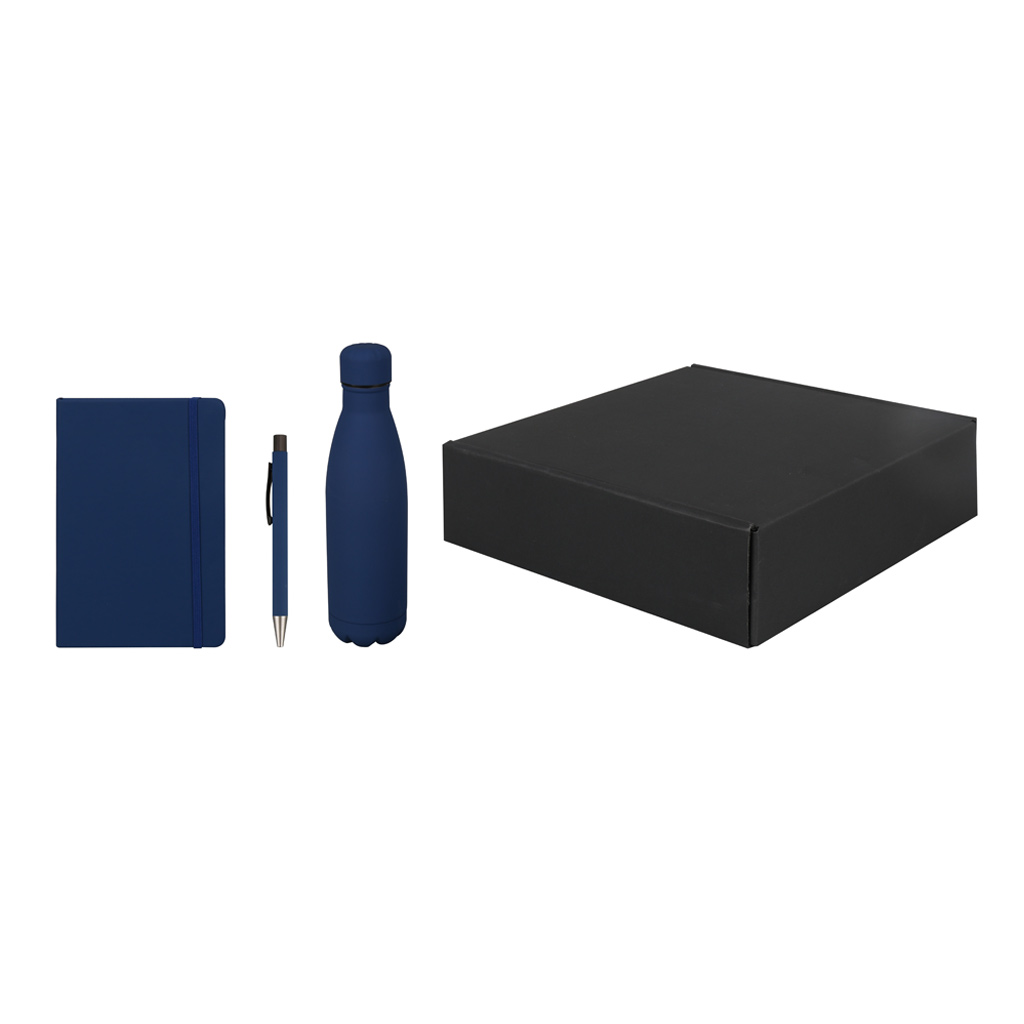
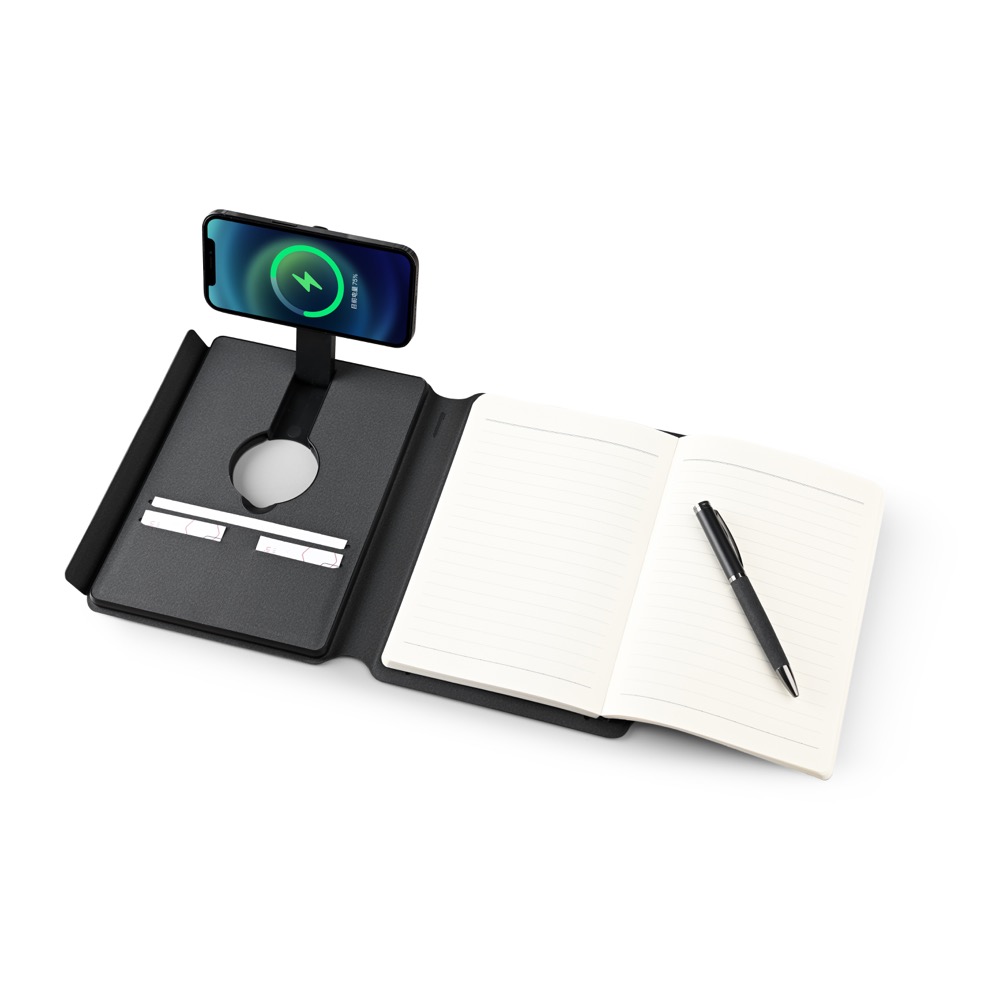
A good notebook and pen remain the backbone of most kits — people still think on paper in their first weeks, in training sessions, and in client meetings. Add a desk-friendly item or two: a cable organiser, a mouse pad, a sticky-note set, or a small desk plant for a touch of life. Keep it tight; five useful items beat ten forgettable ones.
Drinkware: the item they will use every single day
In Dubai’s climate and commute culture, an insulated bottle or travel mug is arguably the highest-use item you can give. It goes to the gym, the car, the site visit, and the desk. Choose double-wall insulation, a size people actually carry, and branding that is engraved or subtly printed rather than loud. Pair it with a quality coffee or tea element — for example, a custom mug in Dubai for the office kitchen shelf — and you cover both the desk and the road.
Branded apparel
A t-shirt, polo, cap, or hoodie is the belonging signal. Two rules make or break it: get the sizing right (collect sizes during pre-boarding, discreetly, with a simple form), and keep the design retail-quality — soft fabric, good fit, small tasteful logo. If the new hire would wear it on a weekend, you have succeeded. Many companies standardise on one core apparel piece for the kit and reserve additional apparel for team events.
Tech accessories
Tech items carry high perceived value and daily usefulness: wireless earbuds or a headset for calls, a power bank, a wireless charger, a USB hub, or a laptop sleeve. For roles that travel, a cable kit and universal adapter are genuinely thoughtful in the UAE, where people fly constantly for work and family.
The welcome message and company essentials
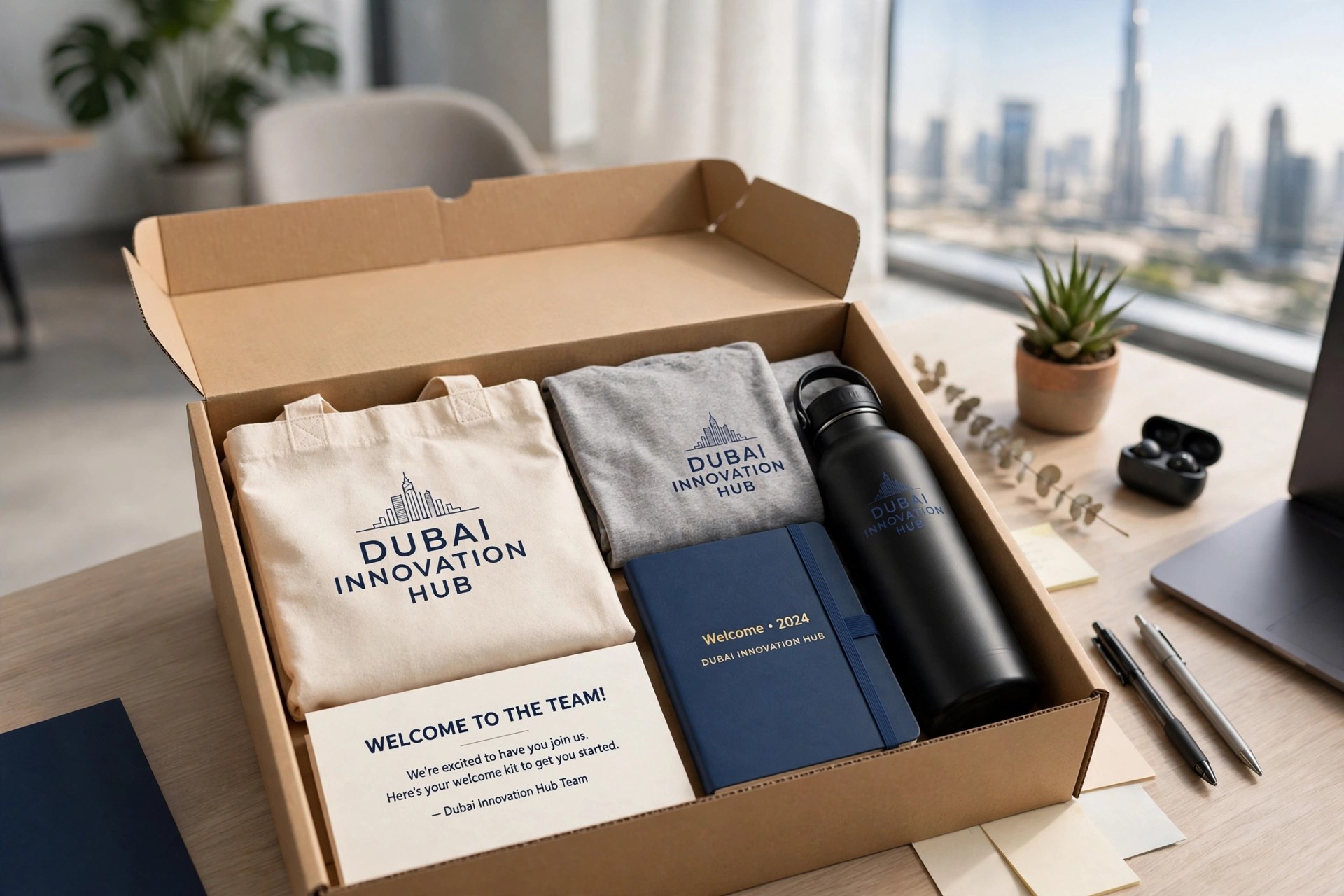
Never skip the human layer: a welcome card (ideally with a handwritten line from the manager or CEO), a short “first week” guide covering prayer room locations, pantry and coffee, parking or Metro details, key contacts, and where to get help. Some companies add their story, values, or a QR code linking to an onboarding hub. This layer costs almost nothing and is the part new joiners mention most.
A local Dubai touch
For employees relocating to the UAE — a large share of Dubai hires — a small local gesture lands beautifully: premium dates, a guide to the city, an Arabic coffee miniature, or National Day-themed items in December. It says the company knows where it lives and is proud to introduce the new joiner to it.
Welcome Kit Tiers: Matching the Kit to the Role and Budget
Most companies settle on two or three standard kit tiers so quality stays consistent and ordering stays simple. Think of them as frameworks, not fixed prices — your supplier will quote on your exact contents and quantities.
Essential kit (large headcounts, frequent hiring)
Tote or box, notebook and pen, insulated bottle, one apparel item, welcome card and first-week guide. This tier covers the vast majority of hires well and scales to hundreds of kits without losing its polish, as long as the individual items are decent quality.
Enhanced kit (skilled hires, office professionals)
Everything in Essential, plus a tech item (earbuds or power bank), a mug or premium drinkware piece, an upgraded bag such as a backpack, and one personalised element — a name-engraved pen or notebook. Personalisation is the signature of this tier and the detail new joiners photograph.
Executive and leadership kit
For senior hires: premium gift box presentation, leather notebook, quality tech, refined apparel, and a personal note from leadership. Some companies align this tier with their wider corporate gifts in Dubai standards for senior stakeholders so the internal and external gifting language feels consistent.
The tiering principle that matters: every new joiner should feel equally welcomed. Tiers should vary by role needs (a site engineer genuinely needs different gear from a designer), never by perceived importance in a way that would embarrass anyone if the kits were compared side by side.
Branding the Kit: Tasteful, Consistent, Retail-Quality
A welcome kit is a brand artefact. Everything in it should look like it belongs together and like it came from a company with standards. Practical rules:
- One logo system. Use the same logo version, colours, and placement logic across every item. Mixed old-and-new logos in one kit looks careless — audit your stock before each print run.
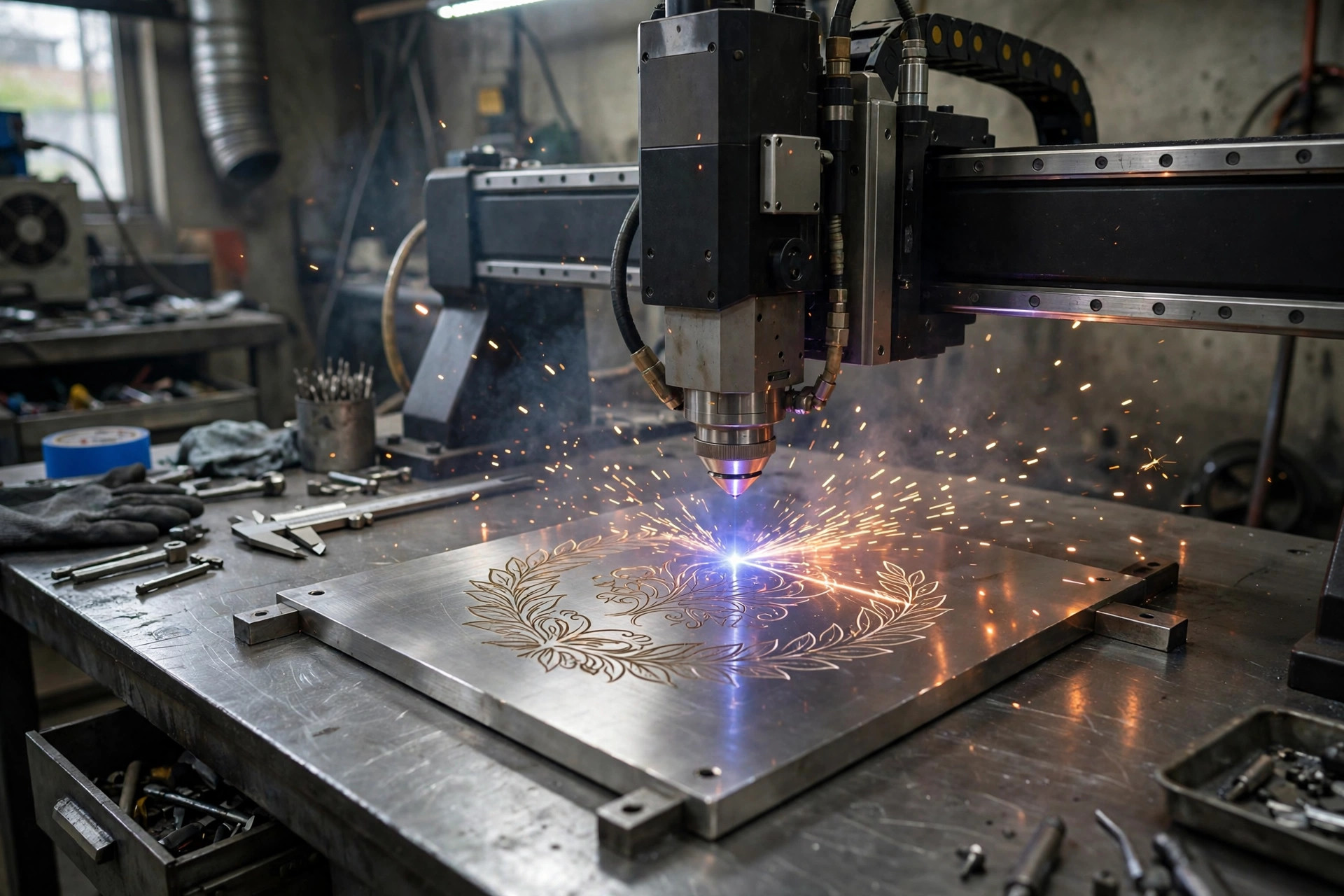
- Method matters. Embroidery for apparel, laser engraving for metal and leather-style goods, quality screen or UV printing for hard items. The right method on the right material is the difference between premium and promotional.
- Brand the packaging, spare the product. Boxes, sleeves, tissue, and cards can carry bigger brand moments; the items themselves stay subtle and keepable.
- Check Arabic carefully. If any element includes Arabic text — a welcome line, National Day greeting, Ramadan message — have it proofed by a native speaker. It is a small step that prevents the most visible kind of error.
If you are standardising kits for the first time, ask your supplier for physical samples of the core items with your branding applied. Digital proofs are necessary but not sufficient; fabric feel, print texture, and box rigidity only reveal themselves in hand. Suppliers who handle kitting regularly, including the team at Vision Advertising, are used to this sampling step and build it into the timeline.
Kitting and Delivery Logistics in the UAE
The unglamorous half of welcome kits decides whether the glamorous half ever happens. “Kitting” means assembling the individual items into finished kits — items into the box or bag, card on top, box sealed — so that what arrives at your office is ready to hand over, not a pile of components.
How a typical order flows
- Confirm contents and quantities, including a buffer (commonly around 10% extra kits) for unexpected hires, replacements, and VIP visits.
- Collect sizes and names from your pre-boarding process if apparel or personalisation is involved. Build this into your HR checklist so the data exists before you order.
- Approve proofs and samples, then production and branding of components runs in parallel where possible.
- Kitting and quality check: kits are assembled, counted, and spot-checked — personalised kits checked name by name.
- Delivery or staged storage: kits arrive at your office(s) ready to distribute, or are held and dispatched in batches if you hire in waves.
As a general guide, allow a few working days to a couple of weeks from proof approval to delivered kits depending on contents and volume; custom-manufactured items and peak seasons (the weeks before Ramadan, December) take longer. Confirm the schedule in writing with your supplier and keep a small standing stock so a surprise hire never waits for their kit.
Multi-site and remote employees
Dubai companies often hire across several locations: a head office in Business Bay, a warehouse in Jebel Ali, a branch in Abu Dhabi or Sharjah. Decide early how kits split across sites, and have cartons labelled per location. For remote hires, kits can be couriered to home addresses across the Emirates — share accurate addresses and phone numbers, and time dispatch so the kit arrives in the first week, ideally before or on day one. If you browse the wider catalogue while planning, the Vision Advertising shop is a useful way to see the range of kit components in one place.
Storage and reordering
Welcome kits consume storage space faster than people expect. If your office is tight, agree a simple model with your supplier: a buffer stock held by you for immediate hires, replenished monthly or quarterly. Track consumption per month — hiring patterns are rarely flat, and the month you double headcount is not the month to discover you have four kits left.
Mistakes to Avoid With Employee Welcome Kits
- Ordering without sizes or names. Apparel in the wrong size gets left in the box. Personalisation with a misspelled name is worse than none. Lock data accuracy before production.
- Filling the kit with cheap novelties. A box of flimsy items feels like a marketing giveaway, not a welcome. Fewer, better items win every time.
- Inconsistency between hires. If last month’s joiners got a backpack and this month’s get a paper bag, word travels. Standardise tiers and review them on a schedule, not ad hoc.
- Forgetting remote and field staff. If office staff get a desk ceremony and remote staff get nothing for three weeks, the kit has damaged the culture it meant to build. Plan distribution for every work pattern from the start.
- No first-week guide. The most useful item in many kits is the humble printed guide. Skipping it because “everything is on the intranet” misses that new joiners do not yet know how to find the intranet.
- Treating it as a one-off purchase. Companies with steady hiring save time and money by treating kits as a standing programme with a supplier who knows their specs, artwork, and quality bar.
Measuring Whether Your Welcome Kit Works
You do not need a research department to know if your kit is landing. Ask new joiners in their first-month check-in what they kept, what they used, and what they would change. Watch what shows up in office photos and on desks after three months. Track simple operational numbers: cost per kit by tier, kits consumed per month, and stock-outs. Feed the answers back into the next order — swap out the item nobody uses, upgrade the one everybody loves. Kits improve quickly when someone owns them.
Frequently Asked Questions
What should be included in an employee welcome kit in Dubai?
A strong standard kit includes a quality container (box, tote, or backpack), a notebook and pen, an insulated bottle or travel mug, one item of branded apparel, a tech accessory such as a power bank or earbuds, and a welcome card with a first-week guide. For relocating hires, a small Dubai touch such as premium dates is a warm addition. Personalised items — a name-engraved pen or notebook — are the detail new joiners remember most.
How far in advance should we order welcome kits?
Plan on a few working days to a couple of weeks from artwork approval to delivery, depending on contents, quantities, and the season. Custom items and peak periods (pre-Ramadan, December) need longer. The safest model is a standing buffer stock — order ahead of your hiring pipeline rather than reacting to each offer letter — and confirm timelines with your supplier in writing.
Can welcome kits include the employee’s name?
Yes, and it is one of the highest-impact upgrades you can make. Names can be engraved or printed on pens, notebooks, bottles, and cards. The requirement is accurate data: collect names exactly as they should appear, through your pre-boarding process, and allow a little extra production time for personalised elements.
How are welcome kits delivered to multiple offices or remote staff?
Kits can be split and labelled per location and delivered across Dubai and the other Emirates, and individual kits can be couriered to home addresses for remote employees. Share the location split and address list when you place the order so kitting and packing match the distribution plan from the beginning.
What size buffer stock should we keep?
A common approach is to hold roughly 10% more kits than your expected hires for the period, reviewed monthly against your hiring pipeline. Fast-growing teams may keep more; stable teams less. The goal is simple: no new joiner ever waits for a welcome kit because the cupboard was empty.
Give Your Next New Joiner a First Day Worth Talking About
A welcome kit is a small investment with an outsized return: a new employee who feels expected, equipped, and proud from day one. Get the contents right, brand them with restraint, personalise where you can, and build the logistics so the kit is simply always there — for every hire, at every location.
Vision Advertising helps Dubai and UAE companies design, brand, kit, and deliver employee welcome kits end to end, from essential kits for high-volume hiring to premium leadership welcomes. Tell us your headcount, roles, and timeline via our contact page, email [email protected], or call +971 50 970 9564 — and we will put together options that fit your team and your budget.
Welcome Kits by Industry: Adapting the Formula
The core formula — container, essentials, apparel, drinkware, tech, message — flexes by industry. Technology and professional-services firms lean into tech accessories and premium notebooks, because their people live in meetings and laptops. Hospitality groups add grooming-friendly practicality and durable items that survive shift work, and they re-kit seasonally as teams scale up for peak periods. Construction, logistics, and field-services companies put durability first: rugged bottles, caps, hi-vis-compatible apparel where needed, and items that make sense on site rather than at a desk. Healthcare employers often add wellness elements and strict practicality around hygiene-friendly materials. Retail and F&B brands treat the kit as part of uniform rollout, so sizing accuracy and fast replenishment for high-turnover roles matter most. The lesson is not that every industry needs a different kit — it is that one honest conversation about how your people actually work should shape the contents before anyone talks about logos.
Sustainability and the Welcome Kit
New joiners — especially younger professionals — read a welcome kit as a statement of company values. A kit built from reusable, durable items (a bottle that replaces disposable plastic, a tote that replaces carrier bags, a notebook on recycled stock) makes the sustainability message tangible instead of rhetorical. Durability is the key word: a reusable item discarded in a month is worse than none. Choose fewer, longer-lasting pieces, avoid excessive plastic packaging in the kit itself, and let the welcome card mention the choices briefly and without self-congratulation. Companies across Dubai increasingly audit their kits on exactly this basis, and suppliers can usually offer eco-conscious alternatives for most standard components without changing the overall design language of the kit.