Most people only notice a mouse pad when it is missing. The mouse scrapes, the cursor jumps, and the edge of a hard desk starts to ache against the wrist after an hour of spreadsheets. Put a decent pad back and everything settles down. That quiet usefulness is why custom mouse pads in Dubai have stayed in corporate orders long after flashier gadgets have come and gone. They cost little, store flat, hand out without drama, and sit in the one place a client or employee looks for most of the working day.
This guide is for the people who actually order them: office managers fitting out a new floor, HR teams building welcome kits, marketing staff preparing for a tech event, and founders who want a small team to look like a proper company. It covers sizes in millimetres, 3mm versus 5mm thickness, rubber, fabric, cork and PU leather, sublimation printing, typical AED price bands, minimum orders and lead times in working days.
Why a flat piece of rubber still earns its place on a modern desk
It is fair to ask whether anyone still needs one. Optical mice work on most surfaces, and plenty of people use a trackpad. Yet orders keep coming, mostly for comfort: cushioning between a hard desk edge and a wrist makes a long afternoon easier, and the pad protects the desk itself. Facilities teams in rented offices would much rather replace a worn pad than repair a scratched desktop.
A pad also gives the mouse, and often the keyboard, a defined home. When every workstation uses the same pad, in the same colours with a clean logo in the corner, visitors read it instantly: this is a business that pays attention.
The print area is generous for the price, too. A standard pad gives you roughly an A5 sheet and a half, and a desk mat several times that, enough for a photograph, a calendar or a shortcut list that would never fit on a pen. Companies browsing branded desk items for offices in Dubai and the UAE often start with notebooks and drinkware, then realise the pad is the item still on the desk six months later. Hybrid working spread them further: a pad handed out in Dubai ends up on a home desk in Sharjah or Abu Dhabi, seen daily by people who already know your name.
Choosing a size that fits the desk, not just the catalogue
Size is where disappointing orders go wrong. A pad in a sample photo looks generous until it arrives barely bigger than the mouse. Always work in millimetres, get the exact finished size in writing, and cut a paper template to those dimensions and try it on a real desk. That tells you more than any screen mockup.
The standard sizes most offices rely on
The workhorse is 220 x 180mm: big enough for normal mouse movement, small enough to sit beside a laptop in a crowded workstation, and cheap to produce in volume. Close cousins at 230 x 190mm and 240 x 200mm give a little more room and have become common for corporate orders because the extra centimetre stops artwork looking cramped. Rectangular pads with rounded corners are the default for good reason. They pack flat, stack neatly, and nobody has to think about which way round they go.
For detailed work, CAD drawings, editing timelines, trading screens, design software where the mouse moves in small precise steps, go larger, around 260 x 210mm. The hand is not forever running off the edge, the most common complaint about pads chosen purely on price. Going too small saves very little and creates a daily annoyance.
Desk mats and the XXL formats that changed the category
The biggest shift in recent years is the desk mat. Common sizes are 700 x 300mm, 800 x 300mm and the full 900 x 400mm format that sits under both keyboard and mouse. At that size it stops being an accessory and becomes part of the furniture, defining the workspace, softening keyboard noise and protecting a wide strip of desk from coffee rings and laptop scratches.
Desk mats suit senior staff gifts, tech teams and any brand that wants a large, calm print rather than a busy one. A 900 x 400mm mat in a dark colour with a restrained logo in one corner looks genuinely premium. The trade-offs are cost and logistics: rolled mats take more storage, cost more to ship across the Emirates, and need high resolution artwork because softness in the image shows at that scale. For event giveaways people carry all day, stick to a standard pad. For a fit-out or executive gift, choose the mat.
Materials and thickness: why two pads at the same price feel completely different
Two suppliers can quote for a 230 x 190mm pad and deliver products that feel nothing alike. The difference is the base material, the surface and the thickness. Understanding those three things is the fastest way to compare quotes properly, because the cheapest pad is usually cheap for a specific reason you will feel the first time you use it.
The standard build: fabric on a non-slip rubber base
Most corporate pads are a smooth polyester fabric bonded to a rubber base. The fabric gives a consistent glide and takes sublimation print beautifully; the rubber grips the desk and gives that soft, slightly springy feel under the wrist. A good base lies flat within minutes of being unrolled. A poor one keeps curling at the corners for a week, a sign the material is too thin or was stored badly. Ask about edges too. Cut edges are fine for a short campaign, while stitched, anti-fray edges cost a little more and stop the fabric lifting after a year of use. On desk mats they are worth the uplift.
Cork and PU leather, for a different kind of finish
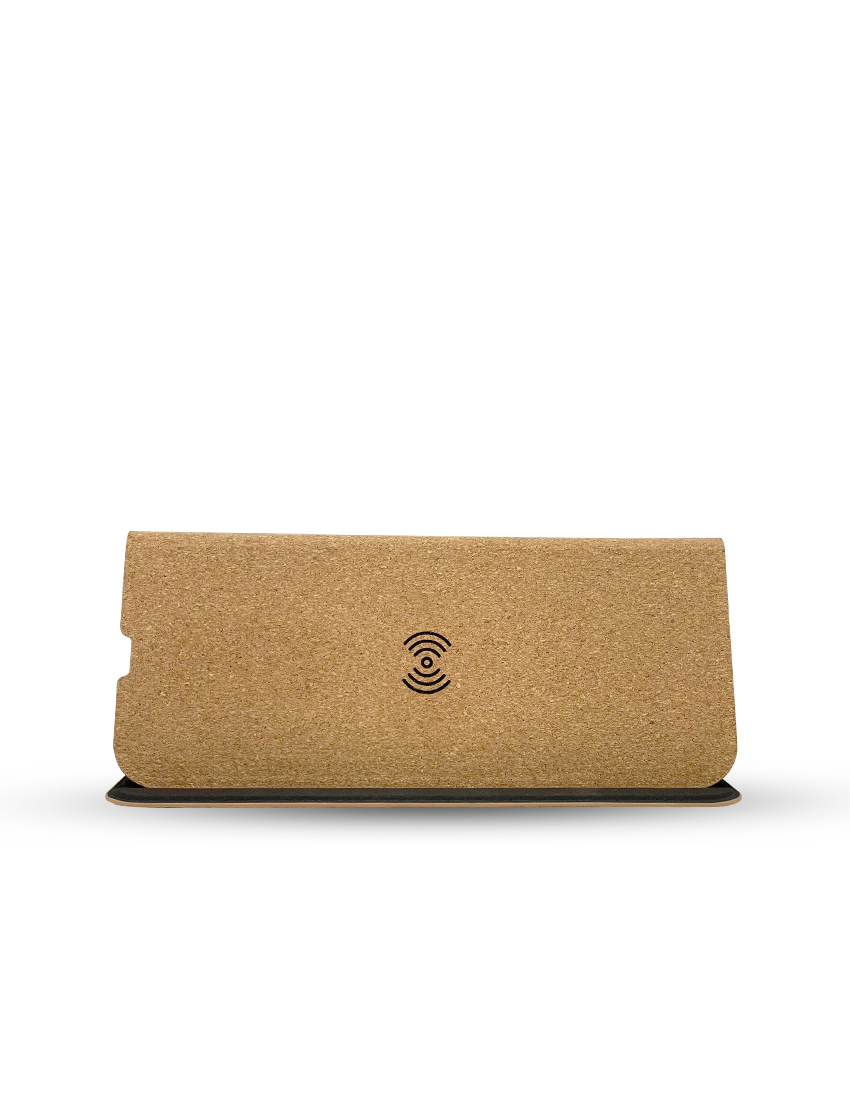
Cork pads have a loyal following among companies wanting a natural, warm finish. Cork is light, grips well and pairs naturally with bamboo and recycled ranges in a gift set. It does not take full colour photographic print like fabric, so designs stay simple: a single colour logo or a line drawing. If your identity is built on bold gradients, cork will frustrate you. If it is built on restraint, it can look better than anything else in the sample box.
PU leather desk mats sit at the other end of the range. They feel like an accessory from an executive shop, wipe clean with a damp cloth and are often reversible, with a different colour on each side. Logos are usually debossed, foil stamped or printed in one position rather than spread edge to edge. That limits the design, but suits law firms and finance companies, where a subtle debossed mark on a charcoal mat says more than a bright all-over print. Match material to setting: wipe-clean for a dusty warehouse office, fabric for a design studio, leather style for the boardroom.
3mm or 5mm: a small number that changes the whole feel
A 3mm pad is standard for volume orders. It is light, posts cheaply, slides into a welcome pack or conference bag, and feels fine for normal office work. At 1,000 pieces for an event, 3mm is the sensible choice. A 5mm pad feels more cushioned, sits flatter and is less likely to curl. For staff using it eight hours a day, that extra 2mm is the difference between merchandise and equipment. Many companies split the order: 3mm for events, 5mm for offices and client gifts.
Four types that cover almost every order we see
The classic flat fabric pad is the promotional mouse pad in its purest form: rectangular, 3mm, full colour, ordered in hundreds. Insurers hand them out with policy documents, training providers put them in delegate packs, real estate agencies leave them with new tenants. Its job is to be useful, cheap and everywhere. The extended desk mat, by contrast, has moved from gaming culture into mainstream offices, often issued as standard by tech companies.
Wrist support pads have a raised gel or memory foam section along the front edge, holding the wrist at a more comfortable angle. They suit data entry teams, service centres and employers talking seriously about ergonomics. Bulkier, so rarely used for mass giveaways, they are appreciated as a staff item because the benefit is physical and immediate.
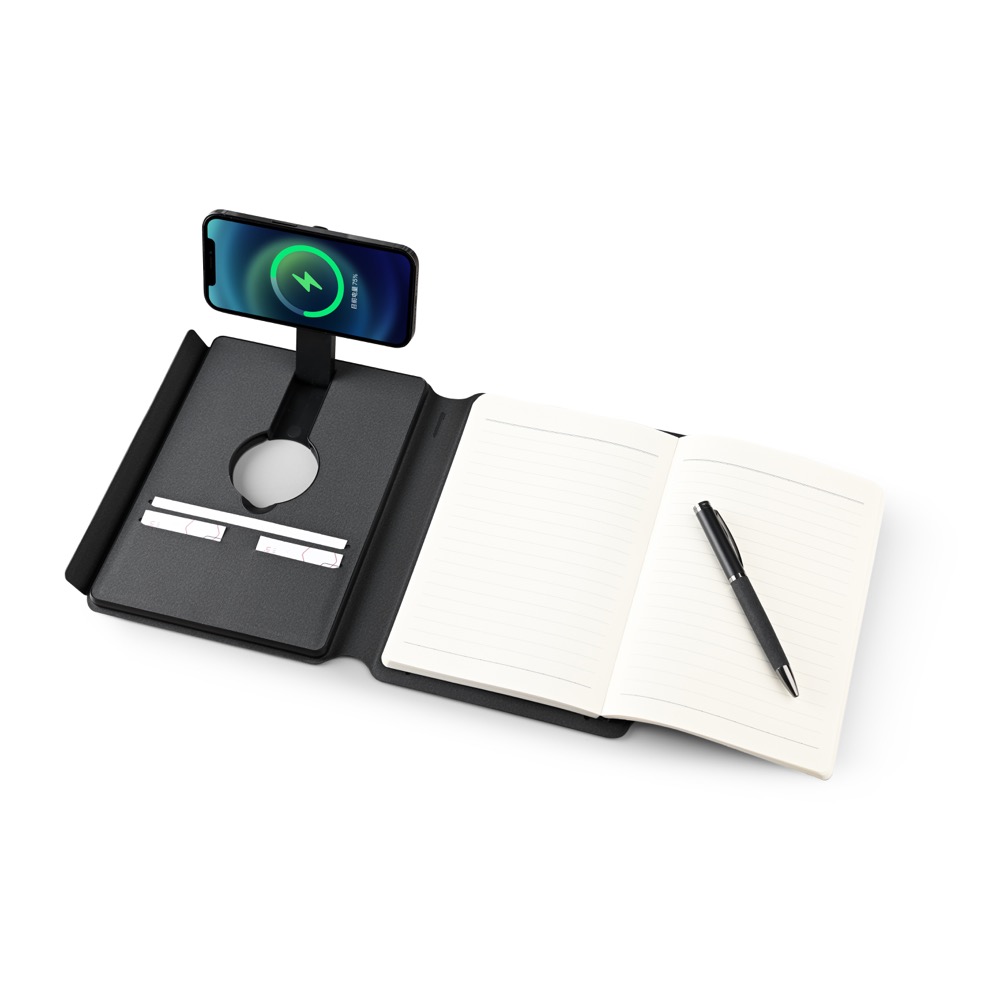
The fourth type, the wireless charging mouse pad, is part pad and part charging station, with a charging zone in one corner for a phone or earbuds, sometimes built into a larger PU leather desk mat. It suits executive sets and tech gifts in smaller quantities, not bulk event orders. If you explore that route, look at the wider choice of office and business gifts that pair well with tech desk accessories, because a charging pad boxed with a cable and a notebook looks considered, while one on its own can look odd. Order a sample and test it on the phones your team carries; compatibility is where assumptions cause disappointment.
- Flat fabric pad: best for volume, events, mailers and training packs
- XXL desk mat, 700 x 300mm to 900 x 400mm: best for fit-outs, executives and tech teams
- Wrist support pad: best for staff wellbeing and long hours at a screen
- Wireless charging pad or mat: best for premium tech gift sets in smaller quantities
- Cork or PU leather mat: best when the look matters more than a full colour print
How the artwork actually gets onto the pad
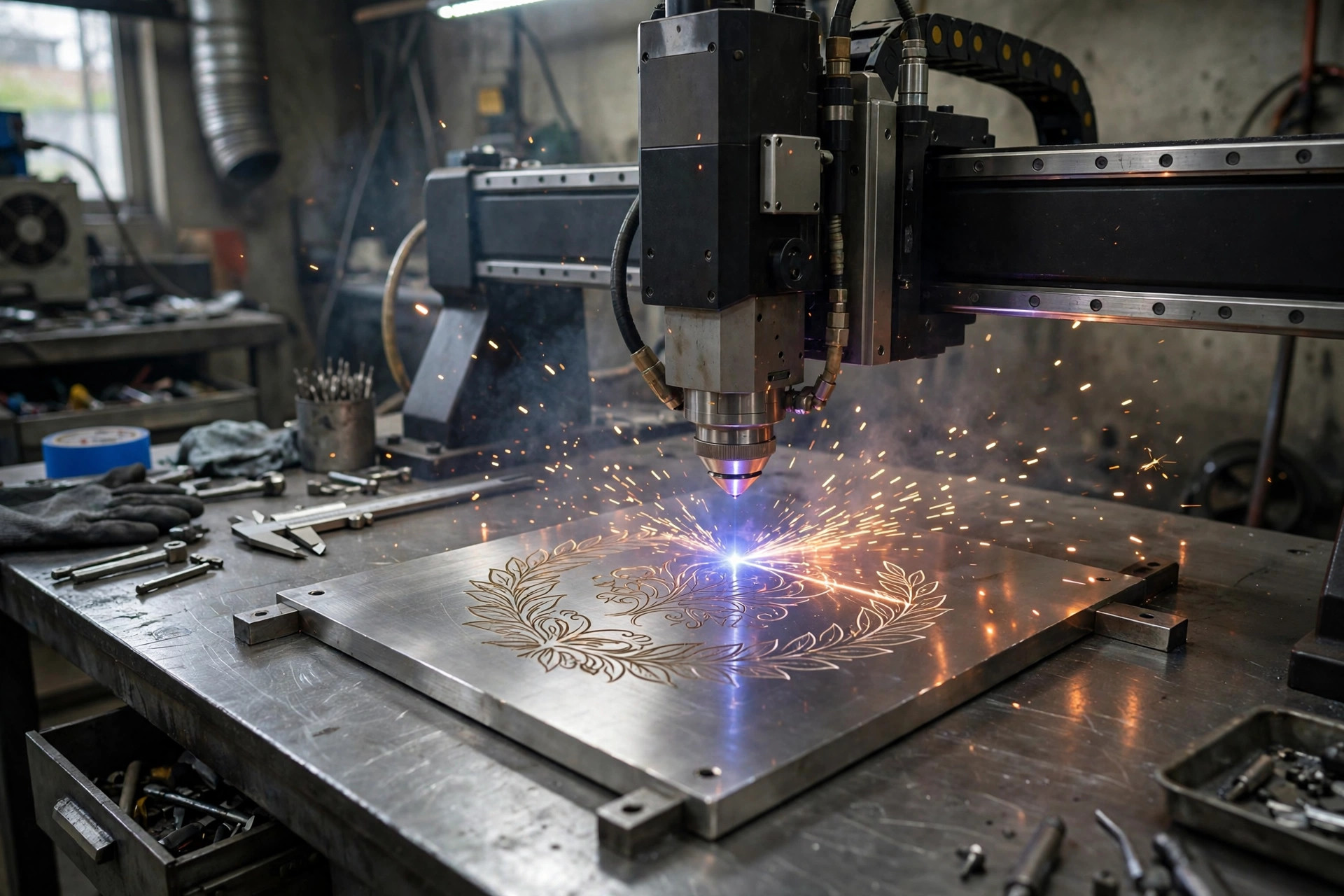
Most full colour pads are printed by sublimation. The design is printed onto transfer paper with special inks, then pressed onto the fabric with heat. The ink turns to gas and bonds inside the fibres rather than sitting on top, which is why a good sublimation print does not crack, peel or rub off when a wrist slides over it thousands of times. It is also why print can run right to the edge with no border, where the best designs in this category get their impact.
Edge to edge printing is a gift and a trap. It lets you run a skyline, a photograph or a pattern across the whole surface, but anything too close to the trim can be lost. Keep key text and logos at least 5mm inside the finished size, supply the file at actual size plus a small bleed, and use proper resolution. A logo pulled from a website will look soft stretched across 900mm of desk mat. You want vector logos and photographs at 300dpi at printed size.
What you will typically pay, and what really drives the price
Prices move with quantity, size, thickness and finish more than anything else. The bands below are typical and indicative for standard fabric pads with full colour sublimation print, of the kind buyers in Dubai usually see in quotes. They are not a fixed price list; use them to budget and to spot a quote that looks unusually high or suspiciously low.
- Standard pad 220 x 180mm or 230 x 190mm, 3mm: roughly AED 6 to 11 per piece at 500 pieces and above, AED 10 to 16 at 100 to 250 pieces, and AED 16 to 24 in small runs under 100
- Standard pad in 5mm, or with stitched edges: typically AED 3 to 6 more per piece than the 3mm equivalent
- Desk mat 700 x 300mm: roughly AED 28 to 45 per piece at 100 pieces, falling to AED 20 to 32 at 500 pieces
- Desk mat 900 x 400mm with stitched edges: roughly AED 38 to 60 per piece at 100 pieces, depending on material and packaging
- Wrist support pads: roughly AED 22 to 38 per piece at 100 to 250 pieces
- Wireless charging pads and charging desk mats: roughly AED 55 to 110 per piece at 50 to 100 pieces, with specification making the biggest difference
- Cork pads and PU leather mats: roughly AED 18 to 45 per piece depending on size, branding method and boxing
Unit prices fall steeply between 50 and 500 pieces, because setup is spread across the run. Ordering 100 in one go with spares costs less than ordering 60, then 40 more a month later. Spares are not waste: new starters arrive, coffee gets spilled, and a box in the store cupboard saves a second setup charge.
Minimums are friendlier than in many categories. Standard printed pads commonly start around 50 to 100 pieces, desk mats around 50, and wrist support or charging pads around 25 to 50 because the unit value is higher. Individual names are possible on sublimation print because each piece is printed separately, but that changes the artwork handling and should be priced as its own job. Packaging is the quiet cost: loose in a bulk carton is cheapest and fine for a fit-out, polybags add a little, and a sleeve or gift box adds more but changes how a client gift is received.
Where these pads actually get used, beyond the obvious desk
Welcome kits and first week impressions
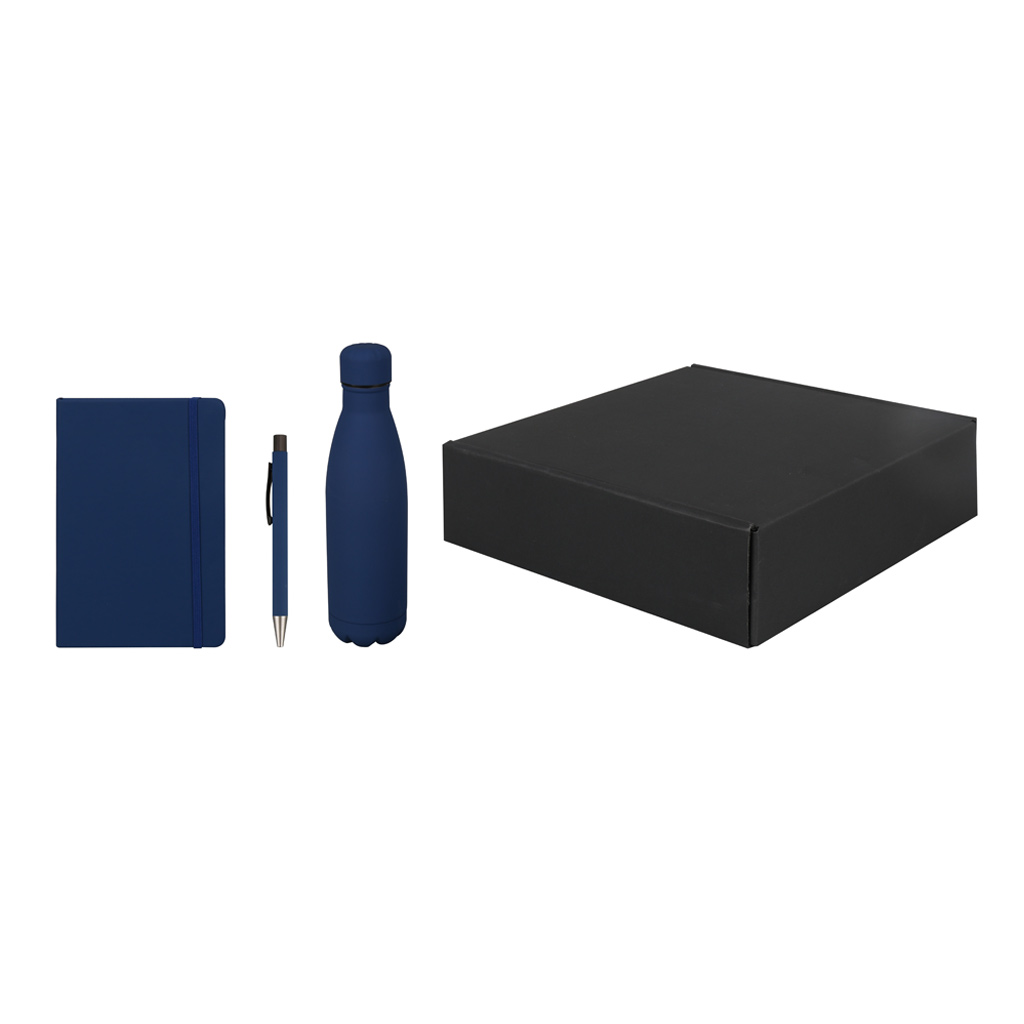
A new starter’s first morning is a blur of passwords and forms. The physical things on their desk are what they remember. A pad already in place, with the company mark and perhaps a short welcome line, tells them someone prepared for their arrival. If you are building packs like this, the planning ideas in our guide to building an employee welcome kit in Dubai are worth reading alongside this one, because a pad works best as part of a set: a notebook beside the keyboard, a pen, a bottle, and the pad underneath, in matching colours. Add a name to the design and a standard issue item becomes something they keep.
Fit-outs, office moves and rebrands
Fit-outs are the bulk use case nobody talks about. A company opens a second office in Abu Dhabi or moves to a new floor in Dubai and needs 180 identical workstations ready before staff arrive on Monday. Pads belong on that list with chairs and monitor stands, and ordering them as part of the fit-out means consistent branding from day one. Rebrands are a similar moment: when a logo changes, old pads have to go, because nothing undermines a launch like the previous identity still on every desk.
Tech events, exhibitions and training rooms
Dubai’s exhibition calendar is full of technology, property and healthcare events where the audience spends its life at a screen. At GITEX and similar shows, a pad is a smarter giveaway than another bag, because the person receiving it is exactly the person who will use it on Monday morning, and it packs flat into luggage. Keep the design bold and simple: a strong colour, a short line about what you do, and a web address in a readable size. Training providers use them more quietly, a pad at every seat with a small reference panel, in front of a delegate for six hours a day.
Getting the order right, from artwork to delivery day
Most delays in this category come from artwork, not production. A realistic timeline is a digital proof on day one or two, your approval, production over the next three to five working days, then delivery: five to seven working days from approved artwork for standard pads. Desk mats, stitched edges, special materials and charging pads usually need seven to ten working days. Individual boxing, quantities above a couple of thousand, or delivery split across several Emirates can add a few days. Rush orders in two to three working days are sometimes possible from blank stock, but they narrow your choices. For an event date, work backwards and leave a two day buffer.
- Confirm the exact size in millimetres, the thickness, and whether edges are stitched
- Supply logos as vector files and photographs at print resolution, with 5mm clear space for key text
- Approve a digital proof, and ask for a physical sample when colour or material is critical
- Confirm the quantity including spares for new starters, replacements and extra offices
- Decide packaging early: loose, polybagged, sleeved or boxed
- Give one delivery address per Emirate for split orders, with a named contact on site
When comparing suppliers, look beyond unit price. Ask whether delivery within Dubai is included, what happens if a few pieces arrive with a print fault, and how reorders are priced. A supplier who keeps your approved artwork on file and can repeat the same pad six months later is worth more than a slightly cheaper first order. That is why many buyers use the same supplier for the rest of their office corporate gifts range for UAE companies, rather than chasing four vendors.
Frequently asked questions
What is the most common size for a custom mouse pad?
The most widely ordered size is 220 x 180mm, with 230 x 190mm and 240 x 200mm also common because they give artwork more room. For detailed screen work, consider 260 x 210mm. Desk mats are a separate choice, most often 700 x 300mm, 800 x 300mm or 900 x 400mm for a full keyboard and mouse layout.
What is the minimum order quantity for branded mouse pads in Dubai?
Standard fabric pads with a full colour print usually start around 50 to 100 pieces. Desk mats commonly start at about 50 pieces, and higher value items such as wrist support or wireless charging pads may start at 25 to 50 pieces. Exact minimums depend on the product and branding method, so confirm at the quoting stage.
How long does an order take from artwork approval?
Standard printed pads typically take five to seven working days from approved artwork, including production and delivery within Dubai. Desk mats, stitched edges, cork or PU leather finishes and charging pads usually take seven to ten working days. Large runs, individual boxing and deliveries split across several Emirates can add time, so build in a buffer for a fixed event date.
Can you print a full colour photograph or a gradient across the whole pad?
Yes. Sublimation printing bonds ink into the fabric surface, so a design can run edge to edge with photographs, patterns and gradients, and will not crack or peel in normal use. Supply photographs at 300dpi at printed size and keep important text at least 5mm inside the trim. Neon colours and very pale gradients can shift slightly on fabric, so a printed sample is sensible for colour critical brands.
What is the difference between a 3mm and a 5mm mouse pad?
A 3mm pad is lighter, cheaper to post and ideal for events, mailers and welcome pack envelopes. A 5mm pad feels more cushioned under the wrist, sits flatter and reads as a higher quality item for daily use at a fixed desk. Many companies order 3mm for giveaways and 5mm for staff and client gifts. Print quality is the same; the difference is comfort and perceived value.
Are wireless charging mouse pads worth it as a corporate gift?
They can be, in the right setting. A charging pad or charging desk mat is a premium tech gift for executives, long standing clients and technology focused teams, and it works best as part of a set rather than on its own. It is not right for a bulk event giveaway because of the unit cost. Always sample one first and test it with the phones your recipients actually use, since compatibility and charging speed vary by model.
Can each mouse pad be printed with a different person’s name?
Yes. On sublimation printed pads each piece can carry a different name, department or design, because every pad is printed individually. This is popular for small teams, staff recognition and welcome kits. It adds artwork handling time, so supply names as a clean list, check spellings carefully, and allow an extra day or two in the schedule.
Talk to Vision Advertising about mouse pads and desk mats for your team
If you know your quantity and deadline, getting a quote is a short conversation. Send the size you have in mind, or ask for a recommendation based on where the pads will be used, with your logo file and the date you need them by. You will get suitable options, a realistic lead time, and a price including the finish and packaging you asked for.
Mouse pads work best as part of a wider desk set. A pad, a notebook and a pen in matching colours make a welcome pack feel finished, which is why many clients order them together with items such as customised notebooks for corporate orders instead of sourcing each piece separately and hoping the colours line up.
Think, too, about who receives them. A pad for your own staff carries a different message from one sent to a client, and design, thickness and packaging should reflect that. Our overview of corporate gifts for employees in Dubai sets out how other companies approach that balance.
Vision Advertising is based in Hor Al Anz, Deira, Dubai, and supplies custom mouse pads, desk mats and corporate gifts across the UAE, from single office teams in Dubai to multi site organisations needing the same specification delivered in Abu Dhabi, Sharjah and the Northern Emirates. Whether you need 50 desk mats for a new floor, 500 printed pads for an exhibition, or a small run of charging mats for senior clients, you will get straightforward advice on size, material and print, honest lead times in working days, and a product that still looks good on a desk a year from now.