
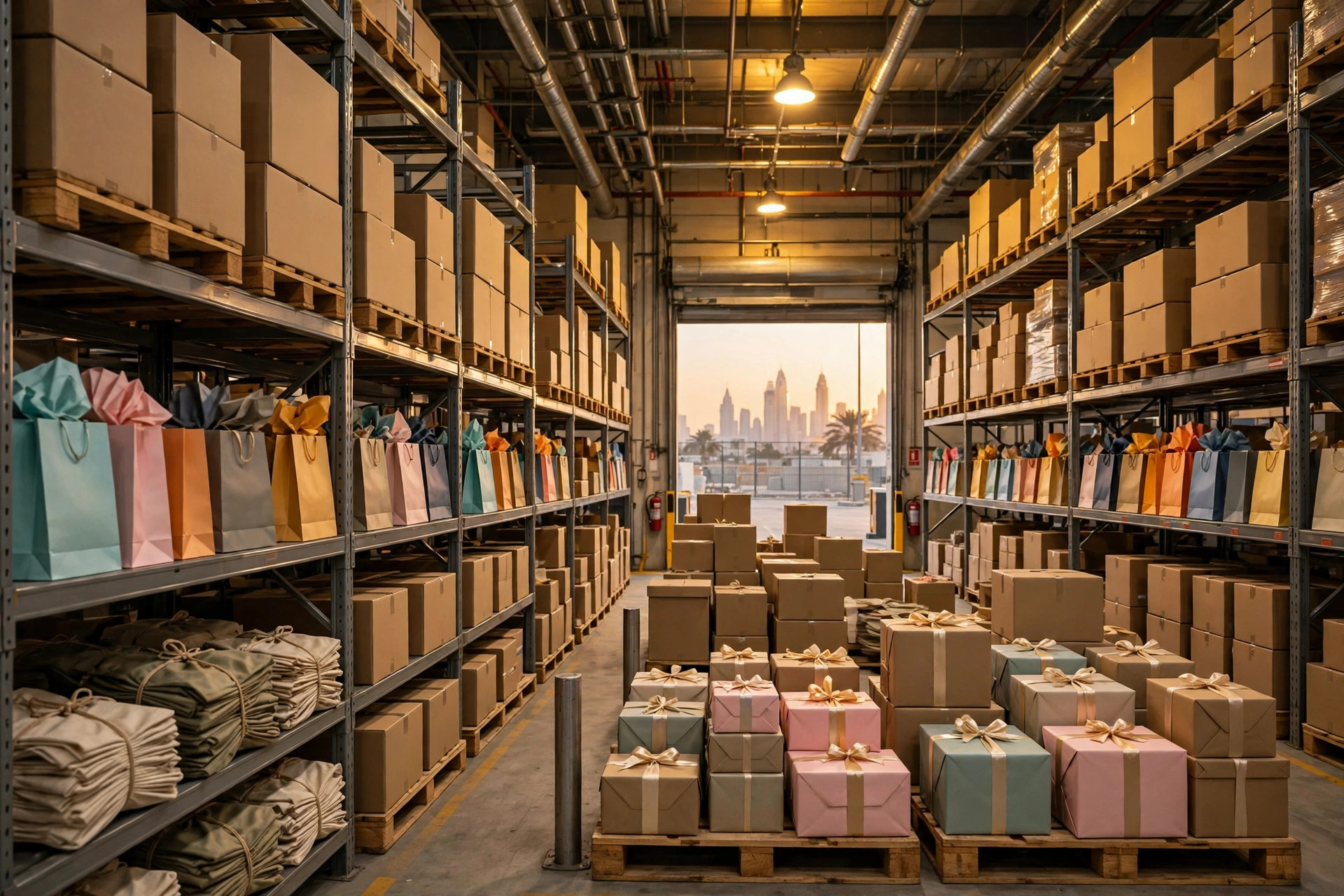
If you are planning an exhibition, a product launch, a conference, or a season-long retail campaign in the Emirates, you have probably realised something quickly: ordering branded merchandise one item at a time is painfully expensive, while buying wholesale giveaways in the UAE can cut your per-unit cost dramatically — provided you understand how the wholesale market actually works. The difference between a smart bulk order and a costly mistake usually comes down to knowledge: knowing what counts as a wholesale giveaway, what minimum order quantities are realistic, how pricing and branding charges stack up, and how production timelines differ between stock items branded locally and fully custom products sourced from overseas.
This guide walks you through all of it, with practical Dubai and UAE-specific guidance throughout. Whether you are a marketing manager ordering your first 500 branded pens or a procurement officer sourcing 10,000 trade-show items across multiple SKUs, you will finish this article knowing exactly how to buy wholesale giveaways with confidence.
What Counts as a Wholesale Giveaway?
A wholesale giveaway is a low-cost, high-volume promotional item purchased in bulk quantities at a reduced per-unit rate, branded with your company logo or message, and distributed freely to a wide audience. Think of the items visitors pick up at an exhibition booth: pens, keychains, lanyards, tote bags, fridge magnets, caps, notebooks, and water bottles. Their job is not to impress a single VIP — it is to put your brand in as many hands as possible at a sustainable cost per touch.
This is a deliberate distinction worth understanding. Premium corporate gifts — leather organizers, executive gift sets, luxury hampers — are high-value items given selectively to clients, partners, and senior executives. Wholesale giveaways are the opposite end of the strategy: affordable items with broad reach. A single campaign might combine both, using giveaways to create footfall at your stand and premium gifts to close the relationship afterwards.
Understanding this distinction matters because it shapes everything downstream: the items you choose, the branding methods available, the quality standards you apply, and the budget math. A company buying 5,000 branded pens is not looking for heirloom craftsmanship; it is looking for a reliable, good-looking item that carries its logo clearly and survives being carried in a bag. A marketing gifts supplier in the UAE that understands this difference will help you match the item tier to the audience, rather than pushing premium products where giveaway volumes are needed, or pushing flimsy items where your brand deserves better.
Giveaways vs. Premium Gifts: A Working Comparison
| Factor | Wholesale Giveaways | Premium Corporate Gifts | |—|—|—| | Typical purpose | Mass distribution, brand visibility | Relationship building, retention | | Order size | Hundreds to tens of thousands of units | Tens to low hundreds | | Audience | Exhibition visitors, event attendees, walk-ins | Clients, partners, executives | | Branding | Single-position logo, simple message | Engraved, debossed, or full-color premium branding | | Selection criteria | Cost per unit, reliability, logo visibility | Perceived value, quality, presentation |
Neither category is “better” — they simply serve different goals. The campaigns that fail are the ones that mix the two up: spending a premium budget on items that will be scattered by the thousand, or handing out visibly cheap items to a client whose contract you are trying to renew.
Why Companies Buy Giveaways Wholesale in the UAE
The UAE hosts a dense calendar of exhibitions, conferences, trade fairs, and retail activations — from mega-events at the Dubai World Trade Centre and Expo City to industry-specific shows across Abu Dhabi and Sharjah. Each of these is a distribution opportunity, and distribution at scale is exactly what wholesale buying enables.
The core logic is simple economies of scale. When a supplier produces or sources 5,000 identical pens instead of 50, the fixed costs of that run — setup, tooling, branding plates, quality checks — are spread across far more units. Your per-unit cost falls. Your per-unit branding cost falls. And because the UAE has a mature ecosystem of importers, wholesalers, and local branding workshops, that scale is accessible without shipping everything yourself from overseas.
There are three practical reasons buyers in the Emirates go wholesale rather than piecemeal. First, unit economics: at volumes of 500 to 1,000 units and above, most item categories hit meaningful price breaks that retail or small-batch orders simply cannot match. Second, consistency: a single wholesale run means one item, one color lot, one branding application — your logo looks identical on unit 1 and unit 5,000, which matters when those items represent your brand at a public event. Third, availability: stocking a wholesale quantity ahead of a campaign season means you can top up event boxes, office reception counters, and retail counters without placing a fresh order every week.
Popular Wholesale Giveaway Categories and Their Typical Uses
Not every promotional item suits every campaign. The best wholesale giveaways share a few traits: they are genuinely useful or fun to keep, they offer a clean visible branding area, they survive transport in cartons, and they cost little enough per unit to give away freely without hesitation. Here are the categories that consistently work in the UAE market:
Writing instruments. Ballpoint pens, metal pens, highlighters, and pen sets remain the undisputed champions of wholesale giveaways. They are cheap at volume, light to ship, easy to brand with a single-color imprint, and — unlike a flyer — they get kept and used. Metal pens with laser engraving sit at the premium end of this category and work well for audiences where a pen alone would feel too basic.
Drinkware. Ceramic mugs, travel mugs, sports bottles, and reusable water bottles offer large branding areas and high perceived value relative to cost. A branded mug on an office desk advertises your company for months. For outdoor events in the UAE climate, insulated bottles and can coolers are especially popular.
Bags and carriers. Non-woven tote bags, drawstring bags, and cotton shoppers are walking billboards. They are among the most cost-effective ways to get a large logo into public circulation, and they are genuinely useful at exhibitions where visitors accumulate brochures and samples.
Wearables and accessories. Caps, t-shirts, and polo shirts branded with your logo turn your team into brand ambassadors and give event attendees something they will actually wear. Keychains, lanyards, and wristbands sit in the low-cost tier of this group and are easy to distribute in bulk.
Desk and tech accessories. Notebooks, sticky notes, mouse pads, phone stands, and USB drives appeal to office audiences and conference attendees. They tend to cost slightly more per unit than pens or keychains, so they suit campaigns where each recipient matters a little more — seminar delegates, workshop participants, registered visitors.
Seasonal and event-specific items. Umbrellas, hand fans, cooling towels, and sunshades work well for outdoor activations. Eco-friendly items — bamboo pens, recycled notebooks, seed paper, reusable straws — resonate with audiences that care about sustainability and help your brand say the right thing.
When choosing among these, start from the audience and the moment of distribution, not from the catalogue. A tech conference crowd keeps USB drives and phone stands; a family mall activation burns through caps and water bottles; a B2B exhibition rewards notebooks and quality pens. The item that gets kept is the item that keeps advertising.
Realistic MOQs: How Many Units Are We Actually Talking About?
Minimum order quantity — the smallest number of units a supplier will produce or brand for you — is the single most misunderstood part of wholesale giveaway buying. Many first-time buyers are surprised in both directions: some items can be branded in surprisingly small runs, while others only make sense at true volume. For a deeper treatment of the concept, our guide on minimum order quantities explained for custom corporate gifts in the UAE covers the underlying logic in full.
Here are realistic MOQ ranges you will encounter when buying wholesale gift items in Dubai and across the UAE. These are typical market ranges, not quotes — exact minimums vary by supplier, item, and branding method:
Pens, keychains, lanyards, magnets, and other small low-cost items. MOQs commonly start around 100 to 500 units for locally branded stock items. Because these products are small, light, and quick to brand, suppliers can run them economically at lower volumes. If you need 250 branded pens for a seminar, that is usually achievable; if you need 50, you may be better off with digital printing on a stock item or accepting a higher per-unit cost.
Mugs, bottles, caps, and t-shirts. Expect typical minimums in the 100 to 500 range for standard stock items branded locally. Custom colors, all-over prints, or private-label manufacturing push minimums higher — often into the 500 to 1,000+ range — because the factory is setting up a production run specifically for you.
Tote bags, notebooks, and mid-range items. Standard stock versions usually start around 200 to 500 units. Fully custom bags (your fabric, your dimensions, your handles) are a manufacturing order and typically start at 1,000 units or more.
Tech items and higher-value products. USB drives, power banks, Bluetooth speakers, and similar electronics generally carry MOQs of 100 to 500 units for stock models with logo branding. Custom-shaped or fully customized electronics start much higher and involve longer lead times.
Fully custom manufactured products. Anything made to your specification — a custom-shaped keychain, a proprietary bottle design, an item in your exact brand Pantone — is a factory order. Minimums of 1,000, 3,000, or 5,000+ units are normal, because the factory must create molds, tooling, or dedicated production lines.
The key insight: MOQ is not an arbitrary number the supplier invents to pressure you. It reflects the point at which the fixed costs of your specific job — artwork setup, machine time, plate or screen creation, quality inspection — can be absorbed without the per-unit price becoming absurd. Understanding this helps you negotiate sensibly: asking a supplier to halve an MOQ is really asking them to double your per-unit cost, so the conversation should always be about total landed cost, not just the headline quantity.
How Wholesale Pricing Structures Actually Work
Wholesale pricing is not a single number. When you buy wholesale promotional items in Dubai, the total you pay is built from several components, and understanding each one is what separates buyers who get fair deals from buyers who get surprised by the invoice.
The blank unit price. This is the cost of the item itself before your logo goes on — the “blank” or “undecorated” price. It is where volume discounts show up most visibly: ordering 1,000 units instead of 200 typically earns you a lower per-unit rate, because the supplier’s own sourcing and handling costs per unit fall with volume.
The branding charge. Applying your logo costs money, and it is usually priced per unit per branding position (one logo on one side, for example). Different methods cost different amounts — a single-color pad print is generally the most economical, while full-color digital printing, embroidery, or laser engraving cost more per unit. Multi-position branding (logo on front and back, for instance) multiplies this charge.
Setup and origination fees. Before the first unit is branded, the supplier prepares your artwork: creating screens, plates, embroidery digitization files, or laser templates. This is typically a one-time fixed fee per design, not per unit. It is the reason small runs feel expensive — a fixed setup fee spread over 100 units adds far more per unit than the same fee spread over 2,000.
Additional finishing. Special requests add line items: individual polybagging or gift boxing, hang tags, inserted cards, shrink wrapping, or kitting multiple items into a set. Each is usually priced per unit. Decide which of these your campaign genuinely needs — a trade-show handout rarely needs a gift box, while a press kit absolutely does.
Delivery and logistics. Within Dubai, delivery of a wholesale order is often straightforward, but large or heavy orders (thousands of mugs, for example) may carry a delivery charge. If items are being split across multiple locations — your office, an exhibition stand, a warehouse — clarify handling for each drop.
When comparing supplier quotes, always compare the fully loaded per-unit cost: blank unit + branding + setup amortized over the quantity + finishing + delivery, divided by units. A supplier whose blank unit price looks cheapest can easily become the most expensive once branding and setup are added. Ask every supplier for the same itemized breakdown, and the honest ones will provide it without hesitation.
Branding Methods: How Your Logo Gets Onto the Item
The branding method determines how your logo looks, how durable it is, and how much it costs per unit. Choosing the right one for the item material and your artwork is one of the highest-leverage decisions in a wholesale order. Here are the methods most commonly used for wholesale giveaways in the UAE:
Screen printing. Ink is pushed through a mesh screen onto the item — the classic method for t-shirts, tote bags, and other flat or gently curved fabric and textile surfaces. It produces bold, opaque colors, handles large print areas well, and becomes very economical at volume because each additional unit costs little once the screen is made. Best for: apparel, bags, and flat promotional surfaces with simple bold artwork.
Pad printing. A silicone pad picks up ink from an etched plate and stamps it onto the item, conforming to curved and irregular surfaces. This is the workhorse method for pens, keychains, lighters, USB drives, and small plastic or metal items. It is typically the most economical branding method per unit for small items and handles fine detail reasonably well. Best for: small hard goods with one or two spot colors.
Digital and UV printing. Your artwork is printed directly onto the item in full color — no screens, no plates, no color limits. UV printing cures the ink instantly with ultraviolet light, producing a durable, slightly raised finish on hard surfaces like phone cases, notebooks, bottles, and awards. Digital printing shines for complex full-color logos, gradients, and photographic elements that spot-color methods cannot reproduce. Best for: full-color artwork and short-to-medium runs where screen setup would be wasteful.
Embroidery. Your logo is stitched with thread — the premium choice for caps, polo shirts, jackets, and fabric bags. Embroidery reads as higher quality than printing, survives washing well, and suits brands that want a tactile, long-lasting mark. It costs more per unit than printing and involves a one-time digitization fee to convert your logo into stitch data. Best for: apparel and headwear where perceived quality matters.
Laser engraving. A laser etches your design directly into metal, wood, or leather — no ink involved. The result is a precise, permanent, elegant mark that cannot peel or fade. It is the go-to method for metal pens, keychains, flasks, and premium desk accessories. Best for: metal and wood items where you want a refined, permanent impression.
Sublimation and heat transfer. Heat and pressure transfer dye into polyester fabrics or specially coated items (mugs, mouse pads, lanyards). Sublimation allows edge-to-edge, all-over full-color designs — ideal when your branding needs to cover the entire item rather than sit in one position. Best for: all-over prints on polyester textiles and coated drinkware.
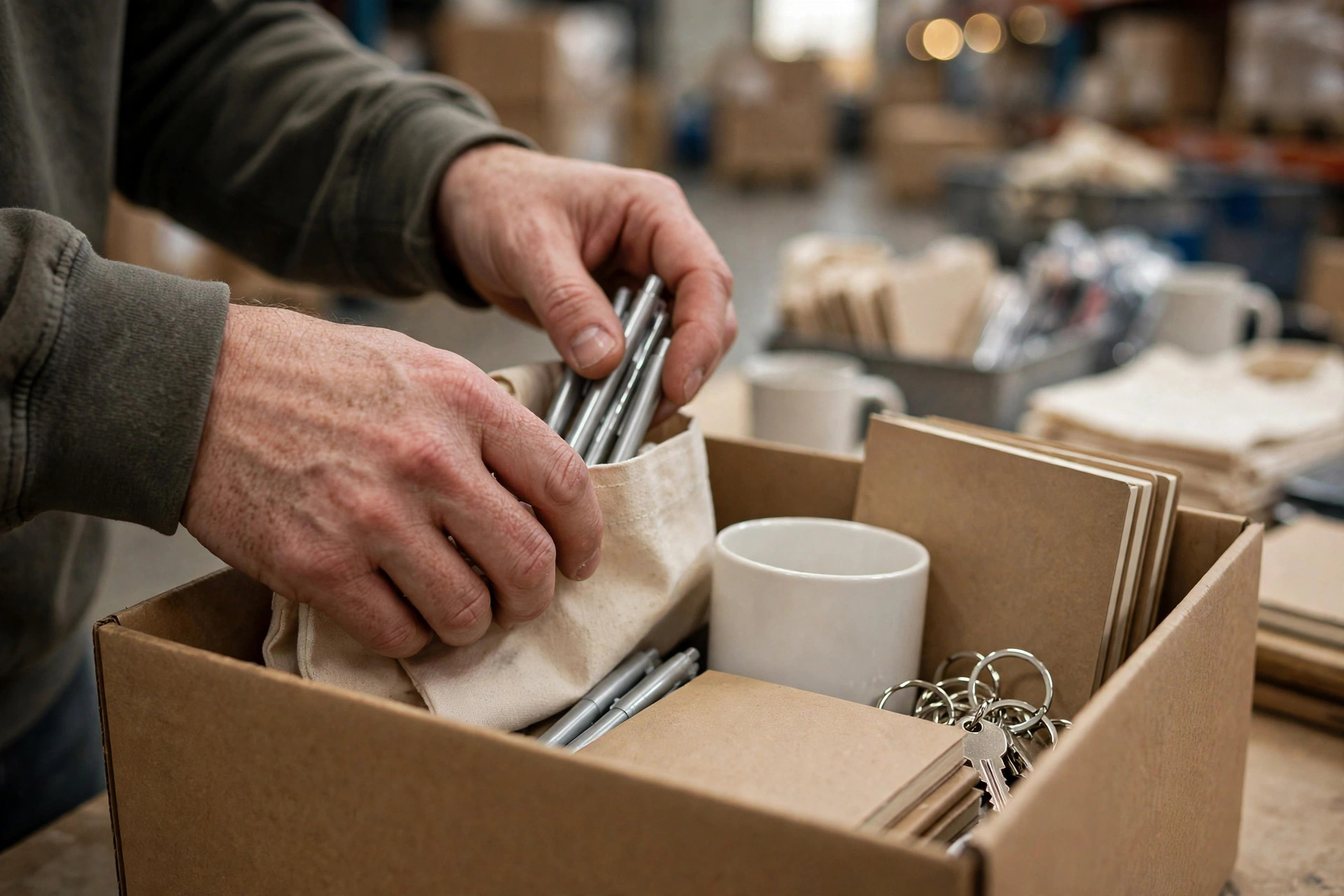
A practical rule of thumb: match the method to the material first, then to your artwork. A full-color gradient logo will not survive as a single-color pad print without being simplified; a delicate thin-line logo may disappear in embroidery but look crisp in laser engraving. A good supplier will flag these mismatches when they review your artwork — if they simply say “yes” to everything without looking at your files, treat that as a warning sign. Provide your logo in vector format (AI, EPS, or high-resolution PDF) whenever possible; it keeps edges sharp at any size and avoids the blurry results that come from stretching a small JPG.
Production Timelines: Stock Items vs. Custom Orders
Timeline is where wholesale giveaway projects most often go wrong — not because suppliers are slow, but because buyers underestimate how the production path affects delivery. There are fundamentally two paths, and you should know which one you are on before you commit to an event date.
Path 1: Stock items branded locally in the UAE. The supplier holds blank inventory in a Dubai warehouse, your artwork is applied by a local branding workshop (screen, pad, digital, embroidery, or laser), and the finished goods are delivered within the Emirates. This is the fastest path: simple one-color jobs on stock items can often be completed in a matter of days once artwork is approved, while multi-color or complex jobs take longer. This path suits the majority of giveaway campaigns — trade shows, conferences, seasonal promotions — where the item itself is standard and only the branding is yours.
Path 2: Custom manufactured or imported items. The product is made to your specification at a factory (often overseas), shipped to the UAE, cleared through customs, and then delivered or further branded locally. This path delivers the lowest per-unit cost at very high volumes and the greatest customization freedom — your exact item, your exact colors. But it adds weeks to the timeline: manufacturing, sea or air freight, customs clearance, and local handling all stack up. Air freight compresses the shipping leg at a higher cost; sea freight is cheaper but slower.
For a full breakdown of how to plan backwards from your event date, see our guide on corporate gifting timelines in Dubai. The short version for wholesale giveaways: if your event is less than three weeks away, stay on Path 1 with stock items and local branding. If you have six to eight weeks or more and volumes in the thousands, Path 2 opens up and can meaningfully reduce your per-unit cost. And whatever path you choose, get the supplier’s committed production schedule in writing with explicit milestones — artwork approval date, production completion date, delivery date — so a vague “inshallah next week” never becomes your plan.
Quality Control When Buying in Bulk
Ordering 5,000 units sight unseen is an act of faith unless you build quality control into the process. The good news: a few disciplined steps catch the vast majority of problems before they become expensive ones.
Inspect the blank item first. Before any branding is applied, the physical product should be checked: does the pen write smoothly, does the mug’s handle feel solid, does the tote bag’s stitching hold, does the cap fit true to size? Defects in the blank item cannot be fixed by good printing — they can only be hidden briefly, and your recipients will find them.
Approve a pre-production sample. For any order of meaningful size, the supplier should produce a branded sample — ideally from the actual production batch, not a one-off mockup — for your sign-off. Check logo placement, color accuracy against your brand guidelines, print sharpness, spelling, and alignment. This is your last cheap moment to catch errors; after this, corrections mean re-running the job.
Define acceptable defect rates. In any production run of thousands of units, a small number of imperfect pieces is normal — a smudged print here, a misaligned logo there. Agree upfront what happens to defective units: are they replaced, credited, or reprinted? A supplier who discusses this openly is more trustworthy than one who promises zero defects, because zero-defect promises are how disputes start.
Check the packaging and cartons. Bulk orders travel in cartons, and cartons get stacked, loaded, and unloaded. Confirm how items are packed: individually polybagged or loose, dividers between layers, carton strength, and labeling. For fragile items like ceramic mugs, inadequate packaging is the most common cause of breakage in transit — and breakage discovered at your event venue is breakage you cannot fix.
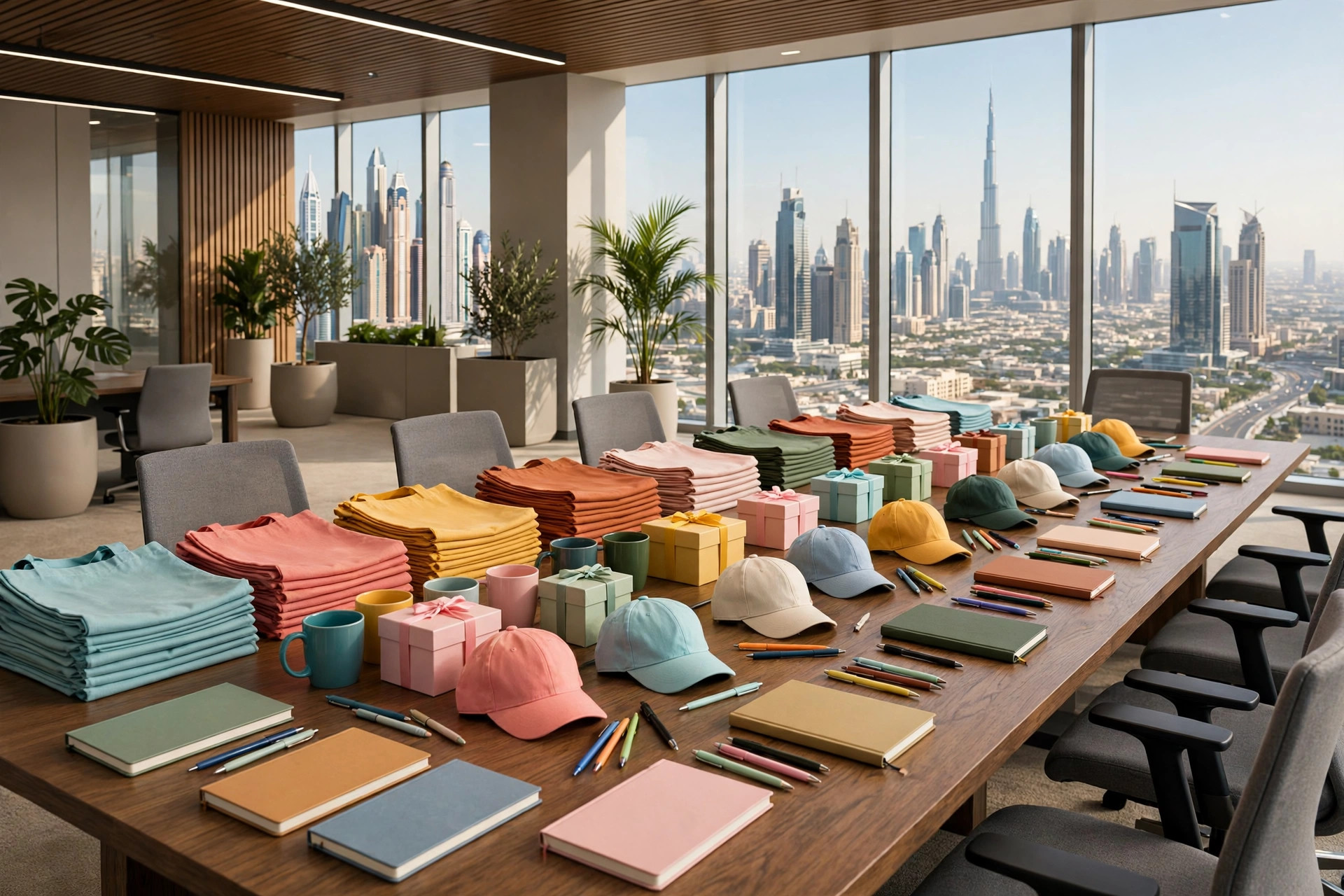
Do a receiving inspection. When the order arrives, open several cartons from different parts of the delivery — not just the top box — and spot-check branding quality, item function, and counts. Count discrepancies are far easier to resolve on delivery day than three weeks later when the exhibition is over.
Buyers sometimes skip these steps to save time on a “simple” pen order. Resist that temptation precisely on the simple orders: the simpler the item, the more likely you are to assume nothing can go wrong, and the more embarrassing it is when 2,000 pens arrive with your website URL misspelled. Our article on why smart buyers order samples before placing bulk orders makes the full case — the short version is that a sample costing a fraction of your budget is the cheapest insurance in the entire process.
Trade-Show and Event Giveaway Use Cases
Wholesale giveaways earn their keep in specific distribution moments. Planning the item around the moment — rather than ordering generic items and hoping — is what turns a box of pens into a lead-generation tool.
Exhibitions and trade shows. This is the classic use case: thousands of visitors, dozens of competing stands, and about three seconds to earn attention. Effective exhibition giveaways are visible from a distance (tote bags, caps), useful during the event itself (notebooks, pens, water bottles, phone chargers), or just fun enough to start a conversation (unusual desk toys, quality confectionery in branded packaging). Tier your giveaways if your budget allows: an open bowl of low-cost items for all footfall, and a slightly better item for visitors who leave contact details or sit through a demo.
Conferences and seminars. Delegates are a captive, relevant audience — smaller than exhibition crowds but far more qualified. Registration-desk items (lanyards with your branding, notebooks, welcome kits) get used throughout the event. Speaker and sponsor visibility matters here: your logo on the notebook every delegate writes in is worth more than a banner most of them walk past.
Product launches and press events. Attendees are journalists, influencers, partners, and early customers. Giveaways here can step up half a tier — a well-chosen branded item in proper packaging extends the event’s memory beyond the day. Kitting works well: several complementary items in a branded box or bag, each carrying your launch message.
Retail and mall activations. High footfall, broad demographics, short interactions. Items must be instantly appealing and easy to carry: caps, water bottles, tote bags, fans, and small tech accessories. If the activation involves a purchase or sign-up mechanic, the giveaway becomes the reward — and the perceived value of the reward directly affects conversion.
Employee onboarding and internal campaigns. New-joiner kits, safety-day merchandise, wellness-week items, and year-end distributions all run on wholesale economics. Internal audiences notice quality more than strangers do — these are people who see your brand every day — so this is one use case where spending slightly above the cheapest option pays off in morale.
Universities, community events, and roadshows. Student and community audiences respond to practical, fun items: notebooks, stickers, phone accessories, reusable bottles, and t-shirts. Volumes can be very large, which makes the wholesale pricing structure especially valuable — but also makes quality control critical, because a failed item distributed to 5,000 students is 5,000 negative impressions.
Dubai and UAE Wholesale Market Considerations
Buying wholesale giveaways in the UAE has its own local texture. Understanding it helps you source smarter and avoid the friction points that catch out-of-market buyers.
The local supplier ecosystem. Dubai’s wholesale gifts market includes importers who bring in container loads of blank products, branding workshops that decorate them, and full-service promotional product companies that handle sourcing, branding, quality control, and delivery as one package. When you buy wholesale gift items in Dubai through a full-service supplier, you are effectively outsourcing the coordination between these layers — which is valuable, because a delay or defect at any layer becomes the supplier’s problem to solve, not yours.
Sourcing vs. importing yourself. It is possible to import blank products directly and arrange local branding yourself. At very large volumes this can reduce costs, but it transfers every risk to you: finding reliable factories, managing freight and customs clearance, handling VAT and documentation, warehousing stock, and coordinating with a separate branding workshop. For most companies, the margin a local supplier earns is payment for absorbing exactly these risks — and for most order sizes, the all-in cost difference is smaller than buyers expect once freight, duties, warehousing, and their own staff time are honestly counted.
VAT and documentation. The UAE applies VAT to goods and services, and your supplier’s quote should make clear whether prices are quoted inclusive or exclusive of VAT so you can budget accurately and claim input VAT correctly through your own accounting. If you import directly, factor in customs duty and clearance costs alongside VAT. Keep proper tax invoices for every wholesale purchase — procurement audits and finance teams will ask for them.
Cultural and practical fit. The UAE’s business culture, climate, and demographics shape which giveaways work. Modest, professional items suit corporate audiences; high-quality dates or Arabic coffee sets suit hospitality and festive contexts; practical heat-friendly items (insulated bottles, caps, cooling towels) suit outdoor events for much of the year. During Ramadan, adjust distribution timing and consider items suited to iftar gatherings and the season’s evening events. A supplier experienced in the UAE market will raise these considerations proactively — one who doesn’t may be worth questioning.
Lead times around peak seasons. The exhibition calendar, National Day, Ramadan/Eid, and the year-end corporate gifting rush all create demand spikes for branding workshops and popular stock items. Ordering during these peaks without advance planning means competing for workshop capacity and risking stock-outs on popular items. The buyers who get the best wholesale outcomes are the ones who place peak-season orders early — sometimes months ahead — when workshops are quiet and stock is plentiful.
Avoiding Cheap-and-Nasty Pitfalls
The wholesale giveaway market has a persistent trap: the race to the lowest per-unit price, which ends with items that embarrass the brand they carry. A pen that stops writing on day two, a tote bag whose handles tear under a brochure’s weight, a mug with a logo that washes off — each of these costs you far more in brand damage than you saved on the unit price. Here is how to stay on the right side of that line.
Set a quality floor, not just a budget ceiling. Before requesting quotes, define the minimum acceptable quality: the item must function properly, the branding must survive normal use, and the item must look respectable next to your logo. Communicate this floor to suppliers explicitly. It filters out the suppliers whose business model is selling the cheapest possible version of everything.
Be suspicious of outlier quotes. If three suppliers quote in a similar range and a fourth is dramatically cheaper, the fourth is almost certainly cutting something you cannot see in a quote: thinner materials, weaker branding, skipped quality checks, or unlicensed copies of branded products. Ask what is different. Honest suppliers can explain their pricing; evasive ones cannot.
Test function, not just appearance. A product photo shows you what an item looks like; it tells you nothing about whether the pen writes, the zipper runs, the bottle seals, or the flashlight works. Physical samples exist precisely for this. Test every functional item as a recipient would, and test it more than once.
Check branding durability. Ask how the branding is applied and how it holds up: does the print survive washing (mugs, apparel), handling (keychains, pens), or sunlight (outdoor items)? A supplier confident in their process will explain curing, inks, and expected durability. If branding durability is critical — workwear, daily-use drinkware — consider upgrading the method (embroidery over printing, laser over pad print) rather than upgrading the item.
Watch for counterfeit and unlicensed goods. The wholesale market occasionally surfaces imitation branded products — tech accessories or lifestyle items copying well-known designs. Beyond the legal and ethical problems, these items carry quality risks and can associate your brand with knockoffs. Source through reputable suppliers who can speak to their supply chain.
Remember the total cost of failure. A failed wholesale order is not just the invoice amount. It is the rush re-order at premium pricing, the event you attended with nothing to give away, the staff time spent firefighting, and the quiet brand damage among recipients. Viewed against those costs, the modest premium for a reliable supplier and proper quality control is not an expense — it is the cheapest part of the campaign.
Budgeting: Per-Unit Cost vs. Branding Cost
Many buyers budget for wholesale giveaways as a single per-unit number and then feel blindsided when the quote arrives itemized. Budgeting correctly means planning for each cost layer from the start.
Start with your total campaign budget and work backwards. Suppose you have a fixed budget and need a target quantity — divide to get your all-in per-unit ceiling. Then subtract the known fixed costs: setup fees, artwork preparation, any finishing (polybagging, gift boxing), and delivery. What remains is your true per-unit allowance for the blank item plus branding. This simple exercise prevents the common mistake of selecting an item that fits the budget as a blank but breaks it once branding and setup are added.
Next, understand how quantity changes the math. Because setup fees are fixed, increasing quantity dilutes them: the same artwork setup spread over 2,000 units costs a fraction per unit of what it costs over 200. This is why suppliers encourage larger orders and why, when you are near a price-break threshold, rounding up the quantity can sometimes lower your total cost — more units for less money overall. Always ask suppliers where their price breaks fall; the thresholds are rarely round numbers you’d guess.
Then weigh branding choices against the budget honestly. A second print color, a second branding position, or an upgrade from pad print to embroidery each adds per-unit cost. Sometimes the upgrade is worth it — embroidered caps at a premium event, for example. Sometimes it is pure waste — two-sided full-color printing on a disposable event handout. Let the item’s lifespan and the audience’s value decide, not habit.
Finally, build in contingency. Wholesale orders occasionally need small top-ups (reprints of defective units, a few extra for unexpected guests), and artwork revisions can add setup costs. A contingency of around ten percent of the order value keeps small surprises from becoming budget crises. Finance teams appreciate buyers who plan for this; they do not appreciate emergency purchase orders the week of the event.
For a broader view of how bulk buying fits into an overall corporate gifting strategy, our overview of bulk corporate gifts in Dubai connects wholesale giveaway tactics to the wider gifting program — useful when your campaign spans both mass giveaways and higher-tier gifts.
Samples Before Bulk: The Step You Should Never Skip
If this guide had to be reduced to one instruction, it would be this: never place a bulk wholesale order without approving a physical branded sample first. Everything else in this article is optimization; this is protection.
A sample answers questions no quote, catalogue photo, or video call can answer. How does the item feel in the hand? Is the color what you expected or a disappointing shade off? Is your logo the right size and in the right position, or does it look lost on the item? Is the text legible at the printed size? Does the item actually work? These are five-minute checks with a physical sample and expensive discoveries without one.
Order the sample early enough that it does not compress your production timeline. Sample production and courier time should be built into your schedule from the start — treat the sample milestone the way you treat the event date, as fixed. When the sample arrives, evaluate it against a checklist: item quality and function, color accuracy, logo size/position/legibility, branding method quality, spelling and artwork accuracy, and packaging. Approve in writing, referencing the approved sample, so there is no ambiguity about what “correct” means if a dispute arises later.
Some buyers worry that sampling signals distrust to the supplier. In professional wholesale trade, it signals the opposite: it tells the supplier you are a serious buyer who understands production, and it gives both sides a shared reference point. The suppliers worth working with expect sampling as a matter of course.
How to Choose a Wholesale Giveaway Supplier in the UAE
With the mechanics covered, the final decision is who to buy from. The wholesale promotional items Dubai market has no shortage of options, from market-stall traders to full-service promotional product companies. Evaluate them on the factors that actually predict a good outcome:
Range and honesty about stock. A good supplier shows you what is genuinely available in the quantities and timelines you need — and tells you plainly when something isn’t. Be wary of anyone who promises every item in every quantity on every timeline; wholesale reality involves stock limits and workshop capacity, and honest suppliers say so.
Artwork and branding competence. Ask how they handle artwork: do they review your files and flag problems, provide digital proofs, and advise on method selection? The supplier’s pre-press competence is your safety net against the most common branding failures.
Transparent itemized quoting. As discussed, insist on the full breakdown: blank unit, branding per position, setup fees, finishing, delivery, and VAT treatment. Suppliers who itemize willingly are almost always easier to work with when anything needs adjusting mid-order.
Quality process. Ask what quality checks they perform and what happens to defective units. You are not looking for perfection promises — you are looking for a defined process: incoming inspection, in-production checks, pre-dispatch inspection, and a clear replacement or credit policy.
Logistics capability. Can they deliver to your office, your exhibition stand, or multiple locations on a schedule? For event-critical orders, delivery reliability matters as much as product quality. Confirm delivery commitments in writing with the same seriousness as production dates.
Communication and accountability. One accountable contact, clear written confirmations, and proactive updates when anything changes. In wholesale, most disasters are communication failures wearing a production disguise. Choose the supplier who communicates like your campaign depends on it — because it does.
Frequently Asked Questions
What is the minimum order for wholesale giveaways in the UAE?
It depends on the item and branding method, but typical ranges are 100–500 units for small stock items like pens, keychains, and lanyards branded locally; 100–500 for mugs, caps, and t-shirts; and 1,000+ units for fully custom manufactured products. Simpler one-color branding on stock items sits at the lower end, while custom colors, private labeling, and factory production sit at the higher end. Always confirm the MOQ for your specific item and artwork rather than assuming a standard number.
How far in advance should I order wholesale giveaways in Dubai?
For stock items branded locally, allow at least two to three weeks from artwork approval to delivery for straightforward jobs, and longer for complex multi-color branding or large multi-SKU orders. For custom manufactured or imported items, allow six to eight weeks or more. Add buffer time for sampling and for peak seasons (exhibition calendar peaks, National Day, Ramadan/Eid, year-end), when workshops and popular stock lines are under pressure. Ordering early is the single most effective way to keep costs down and options open.
What is the cheapest way to brand a logo on bulk giveaway items?
For small hard items like pens and keychains, single-color pad printing is typically the most economical branding method per unit. For apparel and bags, single-color screen printing becomes very economical at volume. The cheapest method is only the right choice if it suits your artwork and the item material — a full-color logo forced into a single-color print, or printing applied to a material it doesn’t adhere to, produces a cheap-looking result that undermines the saving.
Should I buy wholesale giveaways from a local Dubai supplier or import directly?
For most companies and most order sizes, a reputable local supplier is the better choice: you get stock availability, local branding, quality control, VAT-compliant invoicing, and delivery within the UAE, with the supplier absorbing sourcing and logistics risk. Direct importing can reduce unit costs at very large volumes, but it transfers freight, customs, warehousing, and coordination risk to you. Compare the fully loaded cost — including your staff time — before deciding.
How do I make sure the quality is good when ordering thousands of units?
Build quality control into the order: inspect the blank item, approve a physical branded pre-production sample in writing, agree upfront on how defective units are handled, confirm packaging standards (especially for fragile items), and spot-check the delivery across multiple cartons on arrival. These steps catch the overwhelming majority of problems while they are still cheap to fix.
Can I get different items kitted together as one wholesale giveaway set?
Yes — kitting (combining several items into a branded box, bag, or pouch) is common for press kits, welcome packs, and event gift sets. Each component is sourced and branded, then assembled and packed as a finished set. Kitting adds per-unit assembly and packaging cost, so budget for it explicitly, and confirm the finished set dimensions and weight early if the sets will be shipped or carried by recipients.
Getting Your Wholesale Giveaway Order Right
Buying wholesale giveaways in the UAE is one of the highest-leverage moves in event and campaign marketing: done well, it puts your brand in thousands of hands at a cost per impression that almost no other channel can match. The buyers who get the best results follow the same playbook — define the audience and the distribution moment, choose items people will keep, understand MOQs and the full pricing structure, match the branding method to the material and artwork, plan timelines around sampling and production realities, and hold a clear quality floor.
If you’d like help putting that playbook into practice — selecting items, comparing branding methods, planning quantities and timelines, or getting an itemized wholesale quote — get in touch with our corporate gifting team at Vision Advertising, 38A St, Hor Al Anz, Deira, Dubai, UAE. Call +971 50 970 9564 or email [email protected], and we’ll help you plan a wholesale giveaway order that fits your campaign, your timeline, and your budget.




