
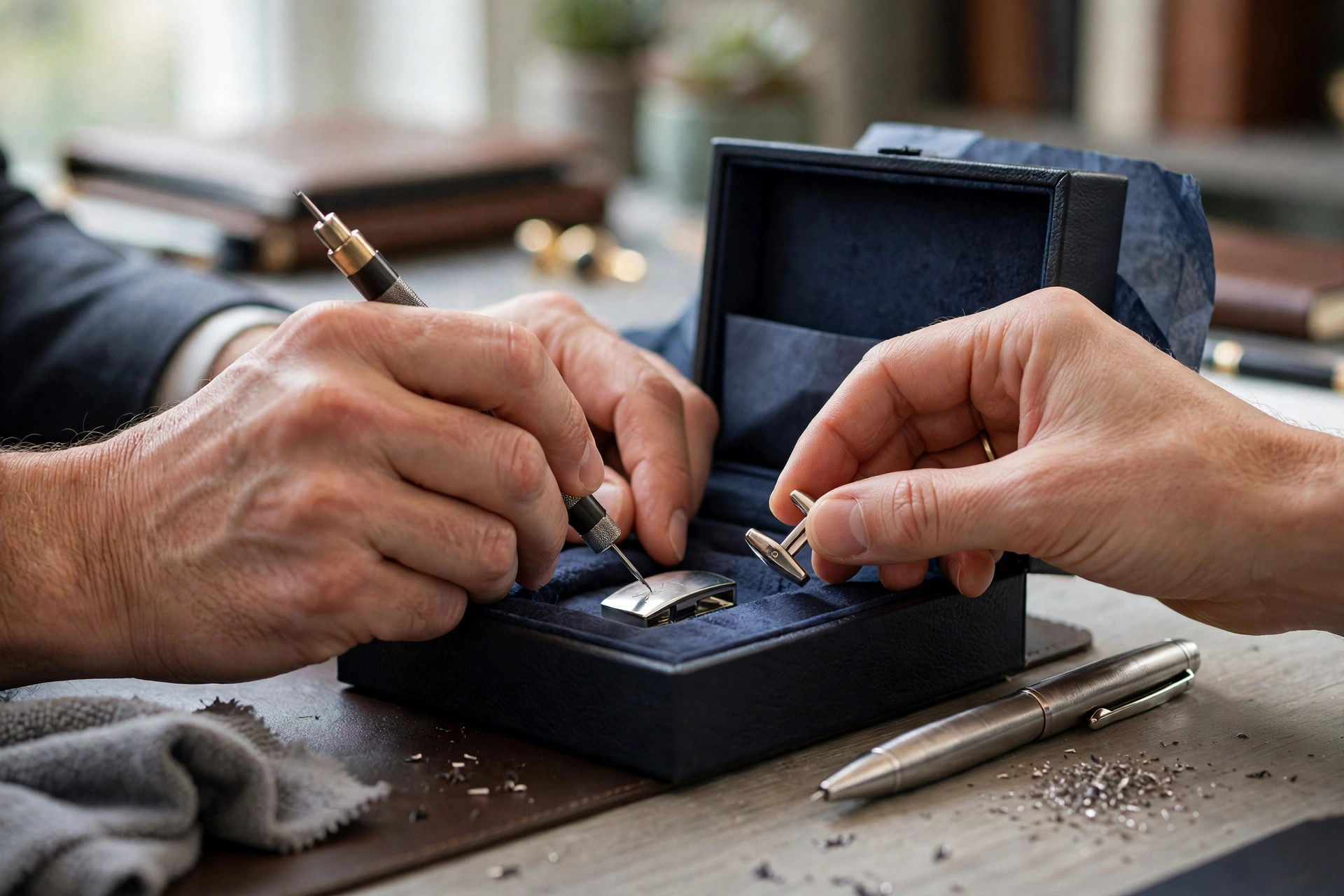
There is a moment every buyer knows: two suppliers offer you the same pen, the same notebook, the same tumbler. One will hand you a box of identical items. The other will ask for your logo file, your recipient list, and whether you’d like each piece engraved with a name. That second supplier understands something fundamental about personalized corporate gifts in Dubai — personalization is what turns a product into a gift. That is exactly why personalized corporate gifts Dubai companies give to their best clients and longest-serving staff are planned differently from standard branded merchandise — the planning starts with the person, not the product.
In a market as competitive as the UAE, where clients and employees receive branded merchandise constantly, the generic item gets forgotten. The personalized one gets kept, used, photographed, and talked about. A notebook with a debossed logo and the recipient’s initials feels commissioned. A pen engraved with a name feels chosen. The difference in cost is often modest; the difference in impact is enormous.
This guide covers everything you need to order personalized corporate gifts in Dubai with confidence: what “personalized” actually means at each level, every major personalization technique explained (engraving, embossing, monogramming, screen printing, UV printing, embroidery and more), when to lead with a name versus a logo, which products personalize best, what artwork your supplier needs, how MOQs work for personalized runs, realistic timelines, how to personalize at scale for large lists, and the mistakes that ruin otherwise good gifts.
What “Personalized” Really Means in Corporate Gifting
The word gets used loosely, so let’s define the three levels — because each one suits different goals and budgets.
Level 1: Branded. Your logo or company name applied to a product. This is the foundation of branded corporate gifts in Dubai: corporate gifts with logo printing that turn useful items into brand touchpoints. Every technique in this guide can deliver it, and it’s the right choice for welcome kits, event giveaways, staff merchandise and broad client tiers.
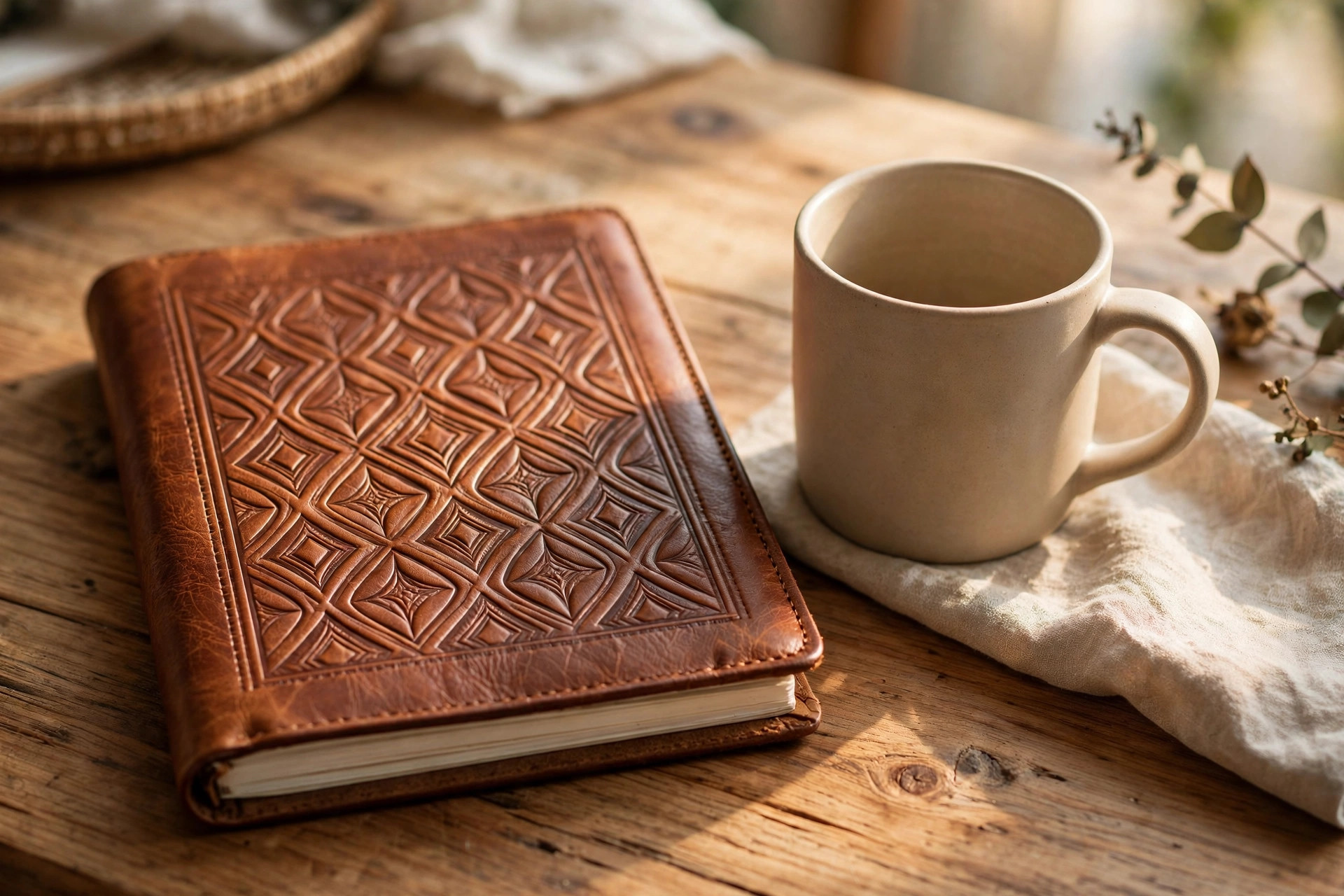
Level 2: Recipient-personalized. The individual recipient’s name, initials or monogram added to the item — sometimes alongside your branding, sometimes instead of it. This is what most people picture when they hear “personalized”: the engraved pen with the client’s name, the notebook with debossed initials, the embroidered jacket with a name on the chest. It suits VIP clients, awards, milestone gifts and executive tiers, where the message is “this was made for you.”
Level 3: Fully custom. The product itself is designed around you — bespoke shapes, custom colours matched to your brand, unique packaging, items developed from scratch. Fully custom corporate gifts in the UAE are a bigger commitment in quantity and lead time, but they produce gifts nobody else has, which is the ultimate differentiator for flagship campaigns and major launches.
Most orders live at Levels 1 and 2, often combined: your logo applied by the best method for the material, plus the recipient’s name where the tier justifies it. Understanding the techniques is what lets you make those choices well — so let’s go through them properly.
The Personalization Techniques, Explained
Every branding method is a trade-off between look, durability, colour capability and cost. Here is what each one does, where it shines, and where it struggles — so you can brief your supplier like a professional.
Laser Engraving
A focused laser beam etches your design directly into the surface, removing a fine layer of material to reveal the mark beneath. No ink is involved, which means nothing to fade, peel or wash off — the branding is as permanent as the product itself. The finish is a clean, single-tone mark with a distinctly premium feel, which is why engraving dominates executive gifting.
Best for: metal pens, stainless-steel drinkware, business card holders, keychains, wooden boxes and plaques, glass and crystal awards, and bamboo or wooden eco gifts. If the product is metal or wood and the branding should feel understated and permanent, engraving is usually the answer.
Watch out for: engraving doesn’t reproduce colour — your logo appears in one tone (the natural contrast of the etched material). Full-colour or gradient logos need a different method, and very fine detail can be lost at small sizes. Always approve a physical or digital proof, because what looks crisp on screen can feel different etched into steel.
Embossing and Debossing
A heated metal die presses your design into the material — raised (embossing) or recessed (debossing) — creating a tactile, three-dimensional mark with no ink at all. It’s the classic choice for leather and paper goods, and it reads as quiet luxury: the branding you feel before you see.
Best for: leather and PU notebooks, diaries, planners, document folders, wallets, passport holders, premium paper bags and rigid gift boxes. Debossing is the more common corporate choice — subtle and sophisticated — while embossing makes a bolder statement.
Watch out for: like engraving, it’s a single-tone effect (though foil can be added — see below). It needs a suitable surface with enough body to take an impression, and very small text can fill in. On genuine versus synthetic leather the result differs slightly, so ask your supplier to show you a sample on the actual material.
Monogramming
Monogramming isn’t a separate machine process so much as a design approach: the recipient’s initials, rendered in an elegant typeface or cipher, applied by engraving, embossing, debossing or embroidery. It’s the signature move of Level 2 personalization — the thing that makes a gift unmistakably theirs. A monogrammed leather notebook, an engraved pen carrying initials rather than a logo, an embroidered towel set: these are gifts people keep for years because they can’t be re-gifted or mistaken for anyone else’s.
Best for: VIP and executive tiers, awards, wedding-adjacent corporate occasions, and any gift where the relationship deserves the personal touch. Monograms work beautifully on leather goods, metal pens, glassware and apparel.
Screen Printing
Ink is pushed through a fine mesh stencil onto the surface, laying down bold, solid colour. It’s one of the oldest branding methods and still one of the most economical at volume — ideal when your logo needs to appear in its full brand colours on a forgiving surface.
Best for: tote bags, t-shirts and apparel, notebooks with flat covers, paper and non-woven bags, and many plastics. It suits logos with a few flat colours rather than photographic detail or gradients.
Watch out for: each colour needs its own screen, so multi-colour designs cost more to set up; fine detail and gradients don’t reproduce well; and on curved or uneven surfaces, other methods do better. Durability is good on appropriate materials but not in engraving’s league.
UV and Digital Printing
These methods print full-colour artwork — including gradients, photographic detail and complex multi-colour logos — directly onto hard surfaces, cured instantly with ultraviolet light. When your brand guidelines demand exact colour matching across several hues, UV printing is the workhorse that delivers it.
Best for: tech accessories, drinkware, phone accessories, USB drives, badges, and any hard, smooth surface where the logo must appear in full colour. It’s also excellent for short runs and multi-design orders, since there’s no per-colour setup.
Watch out for: the print sits on the surface rather than in it, so while modern UV inks are durable, they won’t outlast an engraving on a heavily used metal item. Ask about scratch resistance for items that will live in bags and pockets.
Pad Printing
A soft silicone pad picks up ink from an etched plate and stamps it onto the product — conforming to curves and reaching small, awkward surfaces where flat screens can’t go. It’s the precision instrument of the branding world.
Best for: pens, USB drives, keychains, small tech items and anything curved or compact. When the logo area is small and the product isn’t flat, pad printing is usually the right call.
Watch out for: it’s a single-colour-per-pass process, so multi-colour logos need multiple passes; and the print area is limited, so keep artwork simple and bold at small sizes.
Embroidery
Your logo is stitched directly into fabric with thread — textured, dimensional, and extremely durable through washing and wear. Nothing says “premium apparel” quite like embroidery, and it elevates bags, caps and towels the same way.
Best for: polo shirts, jackets, caps, tote and duffel bags, towels and fabric gift items. It’s the default for corporate apparel in the UAE, from staff uniforms to client golf shirts.
Watch out for: embroidery loves simple, bold logos and dislikes tiny text and hairline detail — stitches have a minimum practical size. Thread colours approximate brand colours rather than matching them exactly, and dense designs on lightweight fabrics can pucker. For photographic or highly detailed artwork on fabric, printed methods are the alternative.
Foil Stamping and Other Finishes
Foil stamping presses metallic or pigmented foil into the surface with heat and a die — the gold or silver logo on a diary cover, the shimmering emblem on a gift box. Often combined with embossing or debossing for a truly luxurious mark. Related finishes include sublimation (full-colour, permanent printing on polyester fabrics and coated items like mugs — the design becomes part of the material), and chemical etching on glass and crystal for awards with exceptional detail.
Choosing the Right Method: A Quick Decision Guide
Match the method to your material and your logo, and you’ll rarely go wrong:
- Metal or wooden product, subtle premium branding: laser engraving.
- Leather or PU product, tactile understated mark: debossing (add foil for extra prestige).
- Full-colour or multi-colour logo on a hard surface: UV/digital printing.
- Bold few-colour logo on bags, apparel or flat goods: screen printing.
- Small or curved product (pens, USBs): pad printing.
- Apparel, caps, fabric bags: embroidery.
- Recipient’s name or initials for a personal touch: monogramming via engraving, embossing or embroidery.
The critical point: prepare your artwork for the method you’ve chosen. A logo designed for a website almost always needs adaptation — simplified, converted to the right file format, adjusted for single-colour reproduction — before it can be engraved or stitched. A good supplier will guide this; a great one will show you proofs. Our customized corporate gifts buyer’s guide goes deeper into matching products with branding methods if you want the full framework.
Name vs Logo: Getting the Balance Right
One of the most common questions about corporate gifts with company logo branding is really a strategy question: how prominent should the logo be, and when should the recipient’s name take its place? Get this wrong and a generous gift feels like merchandise. Get it right and the same item feels like a tribute.
Lead with the logo when the gift’s job is brand visibility: welcome kits for new clients, event and exhibition gifts, staff onboarding packs, and broad appreciation tiers. Gifts like these are often called corporate logo gifts: the logo is the message, and the product is chosen so that message travels as far and as often as possible. Here, corporate gifts with logo Dubai buyers order most are designed to be seen — the logo is the point, and recipients expect it. Keep it tasteful and well-executed, and it enhances rather than cheapens.
Lead with the name when the gift’s job is relationship depth: VIP clients, C-suite executives, long-service awards, partnership milestones. An engraved name or monogram says “we know who you are”; a large logo says “we want you to advertise us.” At senior levels, the former always wins. Many companies use a hybrid that works beautifully: the recipient’s name prominent on the front or top surface, the company logo small and discreet on the reverse or base — personal in front, branded behind.
Consider co-branding for partnerships and joint ventures, where both logos appear as equals. And consider no logo at all on the product for the most senior or sensitive recipients, shifting the branding to the packaging, the card, or a sleeve — the gift feels entirely personal while the presentation still carries your identity.
There’s also a cultural dimension worth noting in the UAE. Business culture here values generosity and relationship, and a gift that feels overtly transactional — dominated by the giver’s branding — can land flat with traditional or senior recipients. When in doubt at the top tier, err toward the personal.
Which Products Personalize Best
Not every product rewards personalization equally. The best candidates share three traits: a suitable branding surface, daily or frequent use (so the personalization is seen), and a form that feels appropriate carrying someone’s name. Here’s how the main categories stack up.
Executive pens. The quintessential personalized gift. A metal pen takes laser engraving beautifully, the branding area is naturally suited to a name or initials, and a quality pen is used constantly in professional life. Engraved pens are the single most reordered personalized corporate gift for good reason.
Notebooks, diaries and planners. Debossing, foil stamping or UV printing on the cover, with optional monogramming — these are used every working day, which makes them branding workhorses as well as genuinely appreciated gifts. A diary personalized with the recipient’s name feels issued, not distributed.
Drinkware. Stainless-steel bottles and thermal tumblers engrave cleanly and are carried everywhere — offices, cars, gyms, meetings. Mugs suit sublimation for full-colour designs. The visibility factor is exceptional: your branding travels with the recipient through their day.
Tech accessories. Power banks, wireless chargers, Bluetooth speakers and USB drives take UV or pad printing well and suit modern, innovative brand images. Personalization here reads as forward-thinking — ideal for technology, finance and startup-sector recipients.
Leather goods. Wallets, card holders, document folders, passport holders and keychains are natural homes for debossed logos and monogrammed initials. Our leather gifts range is built around exactly these pieces. The tactile quality of leather plus the permanence of a debossed mark creates gifts that age gracefully and get kept for years.
Apparel and fabric items. Embroidered polos, jackets and caps for staff and valued clients; printed tote bags for events. Embroidery gives apparel a premium feel that printed logos rarely match, and a name embroidered on a jacket is the definition of personal issue.
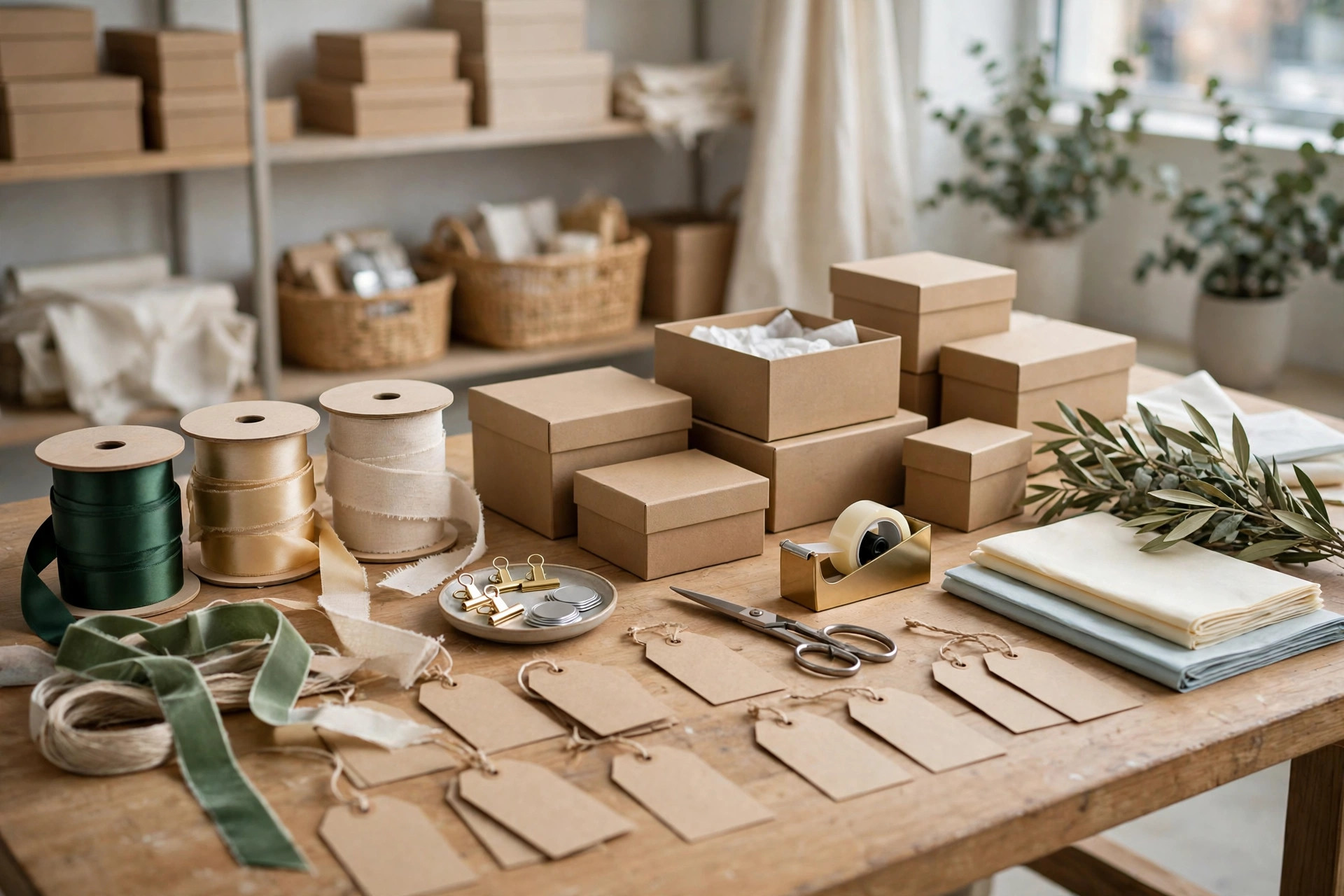
Gift sets and hampers. Personalization extends beyond the product: custom rigid boxes with foil-stamped lids, sleeves printed with the recipient’s name, belly bands, and personalized message cards. For festive seasons like Ramadan and year-end — when hampers dominate UAE corporate gifting — the packaging personalization often matters more than any single item inside.
Awards and recognition pieces. Crystal, glass, metal and wooden awards are engraving’s natural territory. Names, dates, achievement wording — precision matters enormously here, so proofreading is non-negotiable (more on that below).
If you’re hunting for items with real distinctiveness, browse unique corporate gifts — unusual products give personalization more room to shine, because the gift is memorable before the branding even lands. And for the Dubai-specific angle, our range of unique corporate gifts Dubai buyers favour includes pieces chosen specifically for this market’s tastes.
Artwork Requirements: What Your Supplier Needs From You
Great personalization starts with good artwork. Supplying the right files — and approving proofs carefully — is the difference between crisp, professional branding and a blurry disappointment. Here’s what to prepare.
Vector files for engraving, embossing, screen printing and foil. Methods that reproduce your logo as a precise mark need vector artwork — files built from mathematical paths rather than pixels, so they scale to any size without losing sharpness. Common vector formats include AI, EPS and SVG, and PDFs saved with vector content. If you only have a PNG or JPG of your logo, tell your supplier early: redrawing or converting a logo takes time and sometimes a design fee, and it’s far better handled before production is scheduled.
High-resolution images for digital printing and embroidery. UV printing can work from raster images, but they need to be high resolution at the actual print size — a small web logo stretched across a tumbler will look soft and unprofessional. Embroidery needs a different preparation entirely: the design must be digitized into stitch instructions, a specialist step your supplier or a digitizer handles, charged per design.
Fonts and text. Any names, taglines or messages to be engraved or printed should be supplied as final, proofread text — ideally with the font specified or outlined. Never assume the supplier has your brand font; either provide the font files (with appropriate licensing) or accept a close substitute shown on the proof. For Arabic text, confirm the supplier can set it correctly — Arabic script has joining and shaping rules that demand proper typesetting, and mirrored or broken Arabic on a gift is a serious embarrassment in this market.
Colours. Provide Pantone or CMYK references for printed branding rather than “it’s kind of a dark blue.” Thread colours for embroidery and foil colours for stamping are chosen from physical charts — ask to see them. Screen colours on a monitor lie; physical references don’t.
The proof stage. Never skip it. A reputable supplier produces a digital mockup at minimum, and for significant orders a physical pre-production sample. Check everything on the proof: spelling of every name (especially for variable-data runs — see below), logo proportions, placement, size, colour, and orientation. A surprising number of corporate gift disasters are proofreading failures, not production failures. Approve in writing, and keep a copy of exactly what you approved.
MOQs for Personalized Runs
Minimum order quantities are the practical reality of customized production: setting up a laser, cutting a die, mixing inks or digitizing embroidery has a fixed cost, so suppliers set minimums that make each run viable. Understanding how MOQs behave helps you plan realistically.
As a general pattern, the simpler the personalization, the lower the MOQ. Straightforward printed or engraved items with a single design are typically available in smaller quantities — suitable for executive lists and pilot orders. The more complex the customization, the higher the threshold tends to be: multi-colour printing, embroidery (which needs digitizing), fully custom products, and items manufactured to your specification rather than branded from stock.
Volume also changes the economics. Larger personalized runs generally unlock better per-unit pricing, because setup costs spread across more pieces — which is why consolidating your annual gifting into fewer, larger orders is often cheaper than several small ones. If your list is genuinely small — a dozen VIP clients, say — say so upfront and ask which products and methods work at low quantities; engraving and debossing on stocked premium items are usually the most accommodating.
One more MOQ consideration: consistency across reorders. If you plan to reorder the same personalized gift annually, confirm the product will remain available and that your die, screen or embroidery file can be stored for reuse — it saves setup costs and keeps branding identical year to year.
Timelines: How Long Personalization Takes
Personalized orders move through more stages than off-the-shelf purchases, and each stage needs its slot in the schedule. A realistic production flow looks like this: artwork preparation and file checks, digital proof creation and your approval, pre-production sampling for significant orders, the branding run itself, quality inspection, individual packing (personalized items are usually packed separately with name checks), and delivery.
Simple personalization on stocked items — a single logo engraved on a standard pen, for example — can move through this flow relatively quickly when everything is ready. Complexity adds time at every stage: recipient names to collect and verify, multiple designs to proof, special materials to source, custom packaging to manufacture, and multi-address delivery across the Emirates to coordinate.
The variables that most often cause delays are predictable: artwork arriving in the wrong format, proofs sitting unapproved, name lists arriving late or with errors, and changes requested after production has started. You control most of these. The golden rules are: finalize artwork before you need it, approve proofs within a day or two, deliver recipient lists as clean spreadsheets (with a column for exactly how each name should appear — “Dr. Ahmed Hassan” vs “Ahmed” matters), and freeze changes once production begins.
Seasonality is the other major factor. The weeks before Ramadan, Eid and December are the busiest in the UAE corporate gifting calendar, and supplier capacity fills up. Personalized orders placed during peak season compete for production slots with everyone else’s peak orders. The companies that enjoy calm, on-time, beautifully finished personalized gifts are almost always the ones that ordered early. For major festive campaigns, think in terms of months of lead time, not weeks — and confirm your production slot when you place the order, not when you start worrying.
Delivery across the UAE deserves its own line in the plan. A Dubai-based supplier routinely delivers to Abu Dhabi, Sharjah, Ajman, Ras Al Khaimah, Fujairah and Umm Al Quwain, but personalized corporate gifts often go to many individual addresses — offices, homes, event venues. Multi-drop delivery needs recipient details, timing windows, and during Ramadan, awareness of adjusted working hours. Build it into the timeline from the start.
Personalizing at Scale: Variable Data Done Right
What if your “personalized” order covers hundreds of recipients? This is where variable-data personalization earns its keep: each item carries individual data — a name on every notebook, a different message card in every box, department-specific sleeve designs — produced in a single organized run rather than hundreds of one-offs.
It works when the data is clean. Supply a single spreadsheet with one row per recipient, columns for each variable element, and the exact text as it should appear — including capitalisation, titles and Arabic spellings. Decide your fallback rules in advance: what prints when a name field is blank, how long names are handled on small engraving areas, and who signs off the final list. Then proof the data like your reputation depends on it — because a misspelled client name on an engraved gift is worse than no personalization at all.
Variable data pairs naturally with smart packaging: a standard premium gift inside, with a personalized sleeve, belly band or card carrying the individual’s name. You get the efficiency of a uniform product run with the impact of individual recognition — the best of both worlds for staff gifting, large client lists and event audiences.
Mistakes That Ruin Good Personalized Gifts
Skipping the proof. The most expensive sentence in corporate gifting is “I’m sure the logo is fine.” Always review proofs, and for name-personalized runs, have a second person check the list independently.
Wrong file formats. Sending a low-resolution web logo and expecting crisp engraving is the most common artwork failure. Ask your supplier what they need before you send anything.
Over-branding the personal. Engraving a client’s name in tiny type under a huge company logo misses the entire point of personalization. If the name is there, give it pride of place.
Ignoring the material. Not every method suits every surface — printing a photographic logo on textured leather, or embroidering hairline text on a cap, produces poor results no technician can rescue. Trust your supplier’s guidance on method-to-material matching; it’s what you’re paying for.
Forgetting cultural details. In the UAE market, this means checking Arabic text rendering with a native reader, keeping festive gifts appropriate to the occasion, and remembering that a gift’s presentation — the box, the wrapping, the card — carries real weight here. A beautifully personalized item in careless packaging sends a mixed message.
Leaving it too late. Personalization cannot be rushed without risk. Compressed timelines force skipped proofs, unchecked name lists and corner-cutting at exactly the stages where errors are most expensive. The surcharge for “urgent” is never just money — it’s quality risk.
Personalized or Custom Corporate Gifts — What Is the Difference?
Buyers often use the two terms as if they were the same, and suppliers — us included — are partly to blame. Custom corporate gifts are products made or branded to a company’s specification: your colours, your logo, your chosen combination of items in a set. The gift is customised for the brand. Personalization goes one step further and customises for the person: a name engraved on a pen, initials debossed on a wallet, a message printed inside a notebook lid.
In practice, most strong orders combine both. A company might order custom corporate gifts for a campaign — say a run of gift sets or a batch of custom lapel pins for an event — and then personalise a smaller number of pieces for the people who matter most: top clients, award winners, long-service staff. The same logic applies to corporate awards, where an engraved name turns a standard trophy into a personal milestone. When you are comparing quotes for personalized corporate gifts Dubai suppliers offer, check which of the two layers each quote actually includes — brand customisation, name personalization, or both — because that is where prices and timelines really diverge.
Make It Personal, Make It Memorable
Personalized corporate gifts in Dubai work because they respect a simple truth about business here: people remember how you made them feel. A gift carrying someone’s name — chosen well, branded beautifully, delivered on time — says your company pays attention. In a city where relationships drive revenue, that message is worth more than any advertisement.
Whether you need engraved executive pens for a VIP list, debossed leather notebooks for a client tier, embroidered apparel for your team, or a fully customized gift set built around your brand, the process rewards planning: choose the right technique for the material, supply clean artwork, approve proofs carefully, respect the timelines, and work with a supplier who treats personalization as a craft rather than an add-on.
Vision Advertising is a Dubai-based corporate gifts supplier specialising in personalized and corporate gifts in Dubai for businesses across the UAE — from single-piece engraved executive gifts to large-scale branded programs with variable-data personalization. Browse our shop to explore the range, or talk to us directly: visit 38A St, Hor Al Anz, Deira, Dubai, call +971 50 970 9564, or email [email protected]. Tell us who you’re gifting and what you want them to feel — we’ll handle the rest.
Frequently Asked Questions
What is the best personalization method for metal corporate gifts?
Laser engraving is the standard choice for metal items like pens, drinkware, card holders and keychains. It creates a permanent, premium single-tone mark with no ink to fade or peel. If your logo needs full colour on a metal surface, UV printing is the alternative — but for executive gifts where subtlety matters, engraving is hard to beat.
Can we personalize corporate gifts with individual recipient names in Dubai?
Yes — name engraving, monogramming, debossed initials and variable-data printing are all widely available through Dubai corporate gift suppliers. You’ll need to supply a clean recipient list with the exact text for each name, and allow extra time for proofing. For large lists, personalized sleeves, cards or box labels can deliver individual recognition efficiently alongside a uniform product.
What artwork files do suppliers need for personalized corporate gifts?
For engraving, embossing, debossing, screen printing and foil stamping, suppliers need vector artwork (AI, EPS, SVG or vector PDF) so the design scales crisply. UV and digital printing can work from high-resolution raster images at the actual print size. Embroidery requires digitizing from your design. Always provide Pantone or CMYK colour references, and have any Arabic text checked by a native reader before production.
What are typical MOQs for personalized corporate gifts in the UAE?
It varies by product and method: simple engraved or printed items on stocked products are generally available in smaller quantities, while embroidery, multi-colour printing, fully custom products and manufactured-to-order items carry higher minimums. Larger runs usually improve per-unit pricing since setup costs spread further. Share your quantities upfront so your supplier can recommend suitable products and methods.
How far in advance should we order personalized corporate gifts?
Earlier than you think — especially before Ramadan, Eid and the December season, when UAE suppliers run at full capacity. Finalize artwork and recipient lists well ahead, approve proofs promptly, and confirm your production slot when ordering. For major festive campaigns involving customization, plan in months rather than weeks, and build multi-address delivery across the Emirates into the schedule from the start.




