
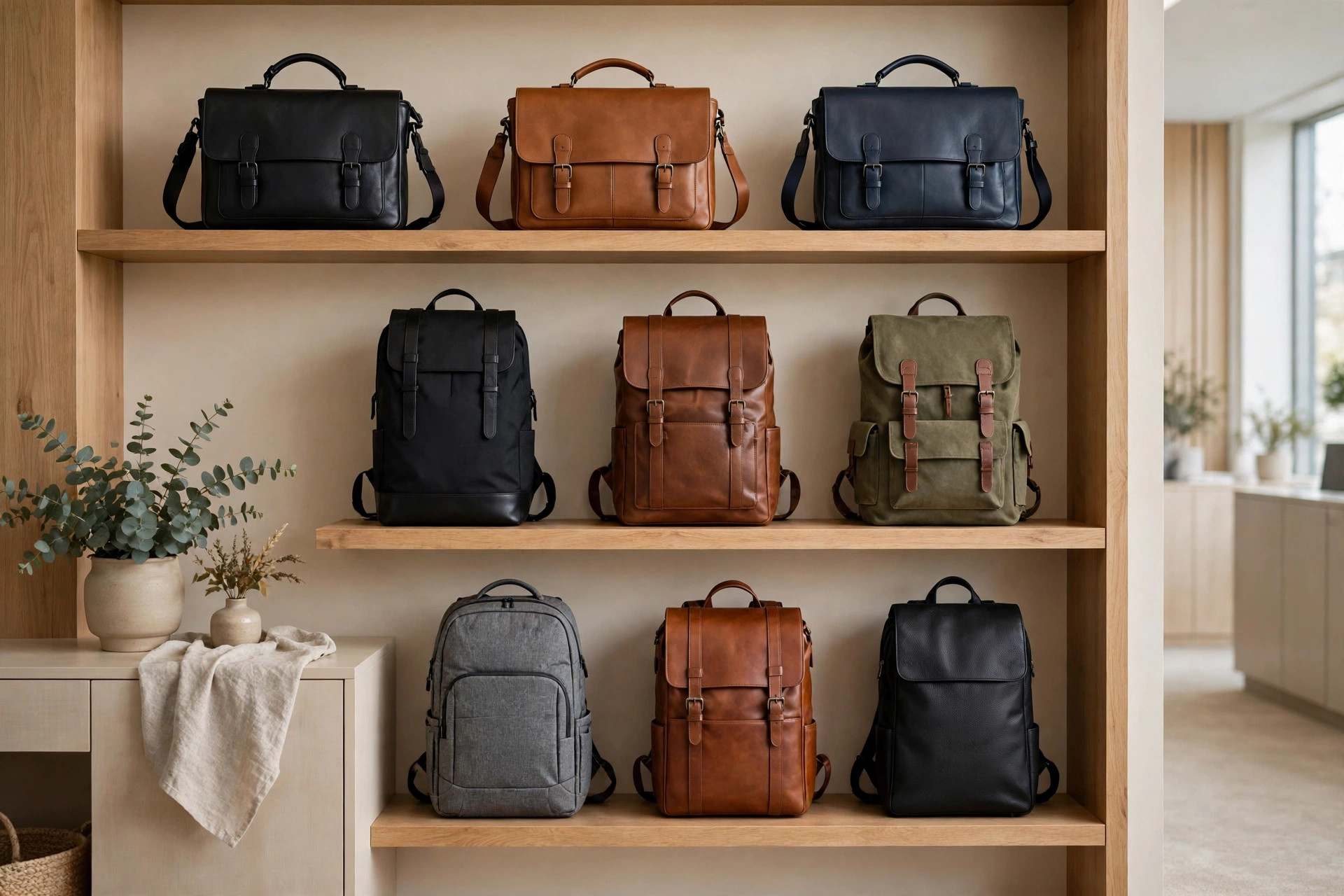
Few corporate gifts get used as often — or seen as often — as a good laptop bag. Pens get lost, mugs stay on desks, and desk toys gather dust. A laptop bag, on the other hand, travels with its owner to the office, to client meetings, through airport security, and onto the Metro every single day. Every one of those journeys is a quiet brand impression for your company, made not by an advertisement but by a useful object someone genuinely chose to carry.
That is why custom laptop bags in Dubai have become one of the most requested executive and employee gifts among companies that take their brand seriously. Whether you are onboarding a batch of new hires, rewarding top performers, preparing welcome kits for a conference, or refreshing your client gifting list, a branded laptop bag delivers daily utility wrapped in your identity. But not all laptop bags are equal — and not all branding looks good on all bags. The buyers who get the best results are the ones who understand materials, compartments, branding methods, and sizing before they place the order.
This guide walks through everything a Dubai-based buyer needs to know: the styles that suit different teams, the features worth paying attention to, the branding techniques that last, realistic minimum order quantities and production timelines, and how to brief a supplier so the finished bags arrive exactly as you imagined them. If you take one thing away from this article, let it be this: a laptop bag is only as good as its fit — the fit of the laptop inside it, the fit of your logo on it, and the fit of the whole package with the people who will carry it.
Why laptop bags work so well as corporate gifts in the UAE
Corporate gifting in Dubai is competitive. Companies here gift generously — during Ramadan, at year-end, at exhibitions like GITEX and trade shows across the World Trade Centre, and at every onboarding. The gifts that stand out are the ones recipients actually keep using, because a gift that gets used becomes a recurring reminder of the giver. Laptop bags score exceptionally well on this measure. Industry buyers consistently rank bags among the highest-retention corporate gifts, simply because a professional who commutes with a laptop needs somewhere to put it, and a well-made bag earns its place fast.
There is also a visibility argument that matters in the UAE’s business culture. Dubai is a city of meetings — people move between offices, co-working spaces, hotel lobbies, and client sites all day. A branded laptop bag carried into a boardroom is a subtle, professional brand placement that no banner or email signature can replicate. Unlike a T-shirt, which is only worn in casual settings, a laptop bag is carried into precisely the professional environments where your brand wants to be seen.
Durability is another factor. A cheap gift that falls apart in three months damages the brand it carries; a sturdy bag that still looks sharp after two years of daily commuting builds it. For companies ordering branded laptop bags in the UAE, the smart move is to think in terms of cost-per-impression over the bag’s life rather than unit price alone. A bag carried five days a week for two years delivers an extraordinary number of brand impressions for a single upfront investment.
Finally, laptop bags scale beautifully across occasions. The same product category works for C-suite executive gifting (in premium leather or debossed finishes), for all-staff onboarding kits (in durable branded backpacks), for event giveaways at conferences (in smart slim sleeves), and for client appreciation (in elegant messenger styles). Few gift categories cover that range, which makes laptop bags a reliable anchor product for any corporate gifting programme.
Choosing the right style for your team
Laptop bags come in several distinct styles, and the right choice depends on who will carry the bag and where. Before browsing catalogues, picture your recipients: their seniority, their commute, and the impression you want the gift to make.
Laptop backpacks: the all-rounder
The backpack is the most popular format for employee gifting, and for good reason. It distributes weight across both shoulders, which matters for commuters who walk, use the Metro, or carry the bag through large office towers and airports. Modern laptop backpacks designed for professionals look nothing like school bags — slim profiles, structured shapes, and muted colours make them boardroom-appropriate while staying comfortable.
Backpacks also offer the most internal organisation: padded laptop sleeves, tablet pockets, document dividers, cable organisers, and quick-access front pockets. For onboarding kits and team-wide gifting, backpacks are usually the safest choice because they suit almost every body type and working style. When buyers search for backpacks with logo Dubai options for a mixed team, the professional laptop backpack is typically where experienced buyers start.
Messenger bags and briefcase styles: the executive pick
Messenger and briefcase-style laptop bags carry a more formal tone. They suit senior staff, client-facing consultants, and anyone whose working day runs through meetings rather than commutes. A structured messenger in a dark, refined finish with a subtle debossed logo reads as an executive gift rather than a utility item — which is exactly the point when the recipient is a director, a partner, or a valued client.
The trade-off is comfort on long commutes: a single-strap bag loaded with a laptop gets heavy. For this reason, messenger styles work best as appreciation gifts for people who mostly travel by car or taxi between meetings, which describes a large share of Dubai’s executive workforce.
Slim sleeves and document cases: the event favourite
For conferences, exhibitions, and large-scale giveaways, slim laptop sleeves and document cases are the practical choice. They are lighter, more affordable at volume, and easy to distribute — they slip into delegate bags and hand luggage without fuss. A well-designed sleeve with an embroidered or printed logo still feels like a considered gift rather than a throwaway, especially when the material and stitching are clean.
Sleeves also work as a companion gift: companies sometimes pair a premium backpack for the laptop with a slim sleeve for the tablet, creating a coordinated set. Sets photograph well for internal announcements and social posts, and they make the gifting moment feel more substantial.
Convertible and hybrid designs
A newer category worth knowing about is the convertible bag — backpacks with hideaway straps that convert into briefcase-style carriers, or totes with padded laptop compartments. These suit frequent travellers and hybrid workers who move between casual and formal settings. They tend to sit at a higher price point, but for executive travel gifts and leadership off-sites, the versatility justifies it. When buyers exploring custom travel bags Dubai suppliers can brand ask about versatile options, convertibles are often what they have in mind: one bag that handles the office, the airport, and the client dinner.
Sizing: the step buyers skip and regret
The single most common mistake in bulk laptop bag orders is getting the sizing wrong. A bag that is too small for the recipient’s laptop is useless; a bag far too large looks sloppy and lets the device slide around, which defeats the purpose of padding. Getting this right is straightforward if you plan for it.
Most business laptops fall into three screen-size bands: 13 to 14 inches (ultrabooks and compact business machines), 15 to 16 inches (the most common corporate standard), and 17 inches and above (mobile workstations, less common). A bag’s stated laptop size refers to the padded compartment’s internal fit, not the bag’s outer dimensions — always confirm the compartment’s internal measurements with your supplier rather than relying on the headline size alone.
For mixed teams where you cannot survey every recipient’s device, the 15–16 inch compartment is the standard safe choice: it comfortably holds 13 and 14 inch laptops too (with a little extra room), while genuinely fitting the 15.6 inch machines most companies issue. Ordering a split — say, mostly 15–16 inch with a smaller run of 13–14 inch sleeves for ultrabook users — is possible but adds complexity to production and packing, so weigh that against the simplicity of one size.
If your company issues a standard device fleet, ask IT for the exact models and their dimensions before briefing the supplier. A good supplier will check compartment fit against those dimensions rather than guessing from screen size, because two “15.6 inch” laptops from different manufacturers can differ meaningfully in depth and thickness. For executive gifting where the recipient’s device is unknown, include a little tolerance: a slightly roomy premium bag with an adjustable strap inside the compartment adapts to more devices than a skin-tight fit.
Also consider what else the bag must carry. A bag that only fits the laptop is fine for minimalists, but most professionals also carry a charger, a phone, a notebook, and sometimes documents. Check the depth of the main compartment and the presence of a separate document section — a bag that technically fits the laptop but cannot close over a charger brick will frustrate its owner daily.
Features worth checking before you order
Beyond style and size, the details separate a bag people love from a bag people replace. When you are evaluating samples of bulk laptop bags in Dubai, run through this checklist. It takes ten minutes with a sample in hand and it prevents the vast majority of post-delivery complaints.
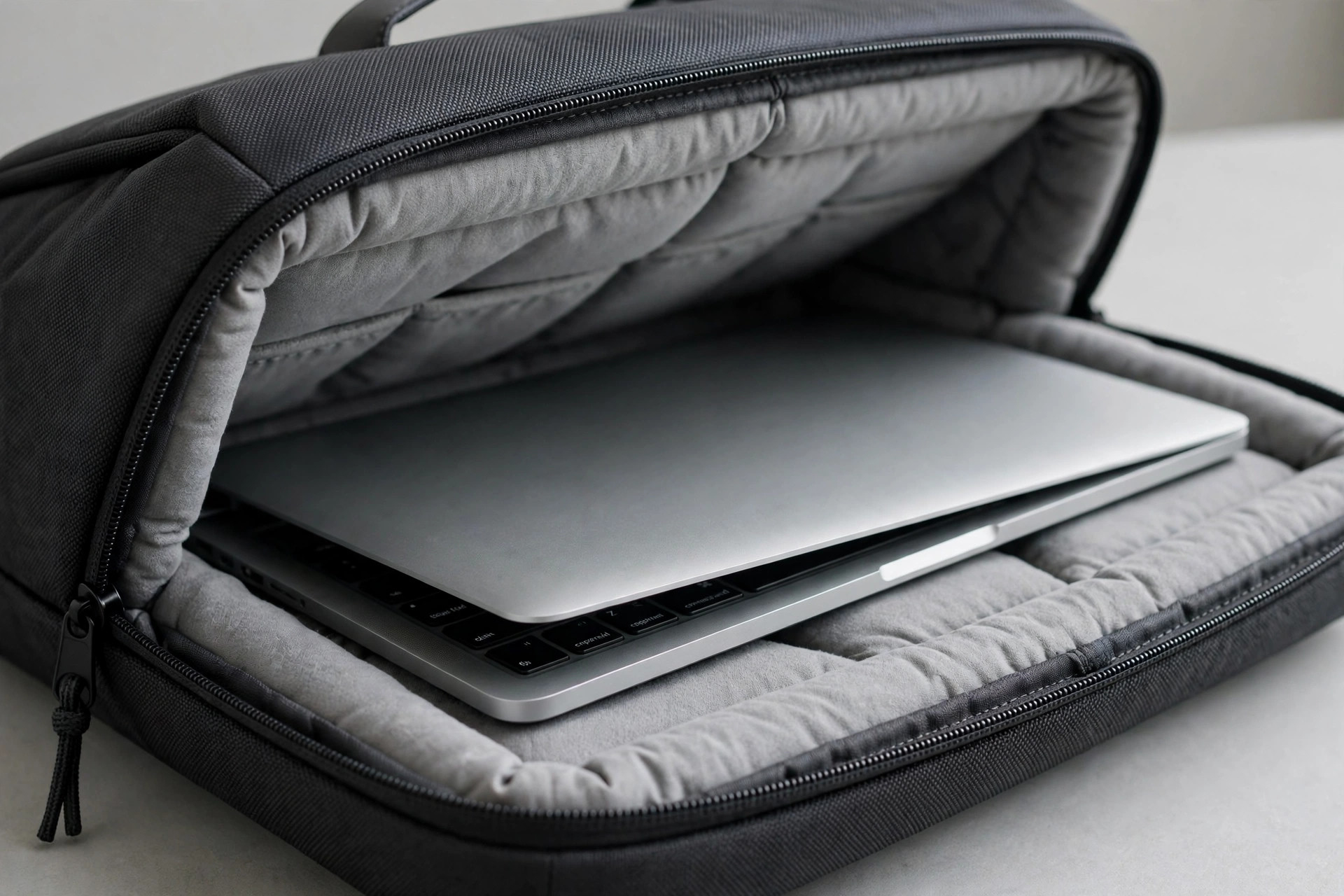
Padded laptop compartment. Look for a dedicated, fully enclosed sleeve with padding on all sides — not just a divider inside the main compartment. The best designs suspend the laptop slightly above the bag’s base so a hard set-down does not jar the device. Press the padding: it should feel dense and spring back, not thin and papery. Check that the compartment closes securely, ideally with its own zip or Velcro strap, so the laptop cannot slide out when the main compartment is opened.
Suspension and base protection. Related to the above: quality bags keep the laptop from resting directly on the ground. Some use a raised or hammock-style sleeve; others add reinforced base panels and protective feet. If your recipients commute on foot or by Metro, this matters more than it sounds — bags get set down hard on pavements and train floors daily.
USB passthrough port. Many modern laptop backpacks include an external USB port connected by an internal cable to a power bank pocket inside. It lets the owner charge a phone without opening the bag — a genuinely useful commuter feature. If you include this, confirm the internal cable length and connector type suit current power banks, and remember the power bank itself is not included (a point worth clarifying in any gift messaging).
Water resistance. Dubai’s climate is dry most of the year, but sudden rain does happen, and bags also face spilled coffee, air-conditioning condensation, and dusty construction zones. Water-resistant fabrics or coatings protect both the bag and the expensive device inside. Check whether the resistance comes from the fabric itself, a coating, or a separate rain cover — coatings wear over time, while inherently resistant fabrics last longer.
Zippers and hardware. Zippers are the most common failure point on cheap bags. On a sample, run every zip twenty times: it should glide without catching, and the pulls should feel solid. Metal zippers generally outlast plastic ones, and lockable pulls add a small security benefit for travellers. Check buckles, D-rings, and strap adjusters the same way — hardware that feels flimsy on day one will not survive year two.
Back panel and straps. For backpacks, the back panel determines comfort. Look for padded, breathable mesh rather than flat fabric — in the UAE’s heat, ventilation against the back is not a luxury. Shoulder straps should be wide, padded, and adjustable with sturdy sliders; a sternum strap helps on longer walks. For messenger styles, check that the shoulder pad is wide enough to distribute weight and does not slide around.
Organisation. Open every pocket. A useful laptop bag has a sensible layout: quick-access pocket for phone and access cards, a secure inner pocket for valuables, pen loops, and a cable organiser or mesh pouches. Avoid designs with dozens of tiny pockets nobody can remember — thoughtful simplicity beats pocket-count marketing. Lay out what a typical recipient carries and mentally pack the sample; gaps become obvious fast.
Weight. An empty bag should feel light. Every extra hundred grams matters when the bag will carry a two-kilo laptop plus accessories through a working day. Compare samples side by side — weight differences between similar-looking bags can be surprising, and lighter usually wins for daily carry.
Materials: what the bag is made of and why it matters
Material choice affects durability, appearance, branding options, and how the gift is perceived. Here is an honest rundown of the fabrics you will encounter — this is also the point where many buyers start their research, typing phrases like “laptop bags with logo Dubai” or “branded laptop bags UAE” into Google before ever speaking to a supplier, so it pays to know what those listings are actually offering.
Ballistic nylon and high-denier polyester. The workhorses of the laptop bag world. Originally developed for military use, ballistic nylon is exceptionally abrasion-resistant; heavyweight polyester (often quoted in denier ratings, where higher numbers mean thicker threads) offers similar toughness at a friendlier cost. Both take screen printing and embroidery well, resist water reasonably, and look appropriately professional in dark colours. For team-wide orders where durability matters most, these are the default recommendation.
Canvas. Cotton canvas gives a more casual, contemporary feel — popular with creative teams, startups, and companies that want a less corporate aesthetic. It is sturdy but heavier than synthetics and less water-resistant unless waxed or treated. Canvas takes embroidery beautifully and screen printing well, and it ages with a character that many people like. Just be aware that light-coloured canvas shows dirt quickly in daily commuting use.
PU (vegan) leather. Polyurethane leather delivers a leather look at a fraction of the cost and is a staple for executive-style laptop bags and document cases. Quality varies enormously: good PU feels supple and wears evenly, while cheap PU peels and cracks, especially in heat. This is one area where ordering a physical sample is non-negotiable — photos cannot tell you how PU will age. PU takes debossing and foil stamping elegantly, which is why it dominates the executive gifting segment.
Genuine leather. The premium choice for top-tier executive gifts. Full-grain or top-grain leather laptop bags look superb, develop a rich patina, and signal genuine appreciation. They are heavier and costlier, and they need occasional conditioning, but for board-level gifting nothing else quite matches the impression. Branding on leather is usually debossed or foil-stamped — subtle, permanent, and classy. If your budget allows leather for a small executive list, it is money well spent.
Recycled PET (rPET) fabrics. Made from recycled plastic bottles, rPET fabrics answer the growing demand for sustainable corporate gifts. They perform much like conventional polyester and take the same branding methods. For companies with published sustainability commitments, or those gifting around environmental occasions, recycled-content bags let the gift tell a second story beyond the logo. Ask suppliers about the recycled content and whether any certification backs the claim — credible specifics beat vague “eco-friendly” labelling.
When comparing materials across suppliers, ask for the fabric specification in writing (composition and weight) rather than accepting descriptive names alone — “premium nylon” means nothing without a denier rating, and “genuine leather feel” is not genuine leather. Reputable suppliers provide this without hesitation.

Branding methods: how your logo gets on the bag
This is where many orders succeed or fail aesthetically. Each branding method suits certain materials and produces a different look, lifespan, and feel. Understanding the options lets you match the method to the bag — and avoid the all-too-common result of a beautiful bag ruined by the wrong decoration.
Embroidery. Thread stitched directly into the fabric. It gives a textured, premium, three-dimensional finish and lasts as long as the bag itself. Embroidery suits woven fabrics — polyester, nylon, canvas — and is the classic choice for backpacks and fabric laptop bags. Considerations: fine detail and tiny text do not reproduce well in thread, so logos may need simplifying; there are practical limits on stitch area for large designs; and embroidery adds slight stiffness to the decorated panel. For laptop bags with logo branding in Dubai, embroidery remains the most requested method on fabric bags, and it photographs beautifully for internal announcements.
Debossing (and embossing). The logo is pressed into the material with heat and pressure, creating an indented (debossed) or raised (embossed) impression without ink. This is the signature method for leather and PU leather bags, producing the understated, permanent mark that defines executive gifting. Debossing cannot add colour on its own — though it can be combined with foil — and it needs a smooth, reasonably flat area to work cleanly. On the right bag, nothing looks more refined.
Screen printing. Ink pushed through a mesh stencil onto the fabric. It handles bold graphics, solid colours, and larger designs economically, making it the go-to for high-volume orders and event sleeves. Modern inks are durable, but printing sits on the fabric surface, so heavy abrasion over years can wear it — less of a concern for bags carried carefully, more of one for bags thrown into car boots daily. Best on smooth, light-to-medium fabrics; dark fabrics may need an underbase layer for bright colours.
Heat transfer. A design printed onto transfer film and heat-pressed onto the bag. It reproduces full-colour, photographic detail that embroidery and screen printing cannot — useful if your branding includes gradients or complex artwork. Transfers have improved greatly in durability, but they remain a surface application; quality of the film and the pressing process determines lifespan. A sensible choice for detailed designs on polyester and nylon.
Foil stamping. Metallic or pigmented foil bonded to the surface with heat — most often gold or silver on dark leather and PU. It creates a striking, premium accent and is a favourite for executive gifts and festive-season gifting in the region, where a touch of gold carries celebratory connotations. Foil is best used for logos, monograms, and short text rather than large areas, and like debossing it needs a smooth surface.
Metal plates and badges. A small engraved or printed metal plate riveted or stitched to the bag. Plates give an unmistakable premium hardware feel and are popular for luxury-tier executive gifts. They add cost and weight, and placement is usually limited to one fixed position, but the perceived value is high. If your gifting tier includes C-suite recipients, ask your supplier about plate options.
Woven labels. Small fabric labels with your logo woven in, stitched inside or outside the bag. Often used as a secondary branding element alongside a primary method — for example, an embroidered logo outside and a woven label with a campaign tagline inside. A nice touch for storytelling: anniversary editions, event names, or values statements.
A practical rule of thumb: match the method to the material first, then to the occasion. Embroidery on woven fabrics, debossing or foil on leather and PU, screen print or transfer for bold high-volume graphics. And always approve a physical pre-production sample showing the actual branding — screen proofs lie about texture, thread sheen, and how a mark sits on a curved panel. For buyers comparing branded laptop bags in the UAE, the sample with your real logo on it is the single most important step in the whole process.
Where to place the branding
Placement affects both visibility and taste. The front face of the bag — the panel people see when the bag is worn or set down — is the primary position and suits the company logo at a confident but not overwhelming size. Oversized logos read as merchandise; a well-proportioned mark reads as a quality product that happens to be branded. As a guideline, the logo should be clearly legible at arm’s length without dominating the panel.
Secondary positions add refinement: a small embroidered mark on a side pocket, a debossed logo on a leather luggage tag, a woven label inside the lid, or a foil monogram on the front slip pocket. For executive tiers, restraint wins — one beautifully executed deboss beats three competing logos. For event giveaways where visibility is the goal, a bolder front print is appropriate and expected.
One placement many buyers overlook is the luggage strap or trolley sleeve on the back panel — the strap that slides over a suitcase handle. It is invisible most of the time but invaluable at airports, and adding your mark there is a thoughtful detail frequent travellers notice. Similarly, custom zipper pulls or branded lining fabric are subtle touches that elevate a bag from “promotional item” to “product” in the recipient’s mind.
Always check placement against the bag’s seams, pockets, and curves. A logo that looks perfect on a flat proof can straddle a seam or warp over a padded curve on the real bag. This is another reason the physical branded sample matters: it reveals placement problems that proofs hide.
Ordering in bulk: MOQs, sizing for teams, and getting the numbers right
When companies start comparing bulk laptop bags Dubai suppliers can produce, the first question is usually about minimum order quantities. The honest answer is that MOQs vary widely: they depend on the bag style, the branding method, and whether the bags are decorated locally or produced to order. Simpler decoration on stocked bag styles generally allows smaller runs than fully custom-manufactured designs, and embroidery often has different minimums than screen printing because of setup. Rather than fixating on a number you read online, get a clear MOQ in writing from your supplier for your exact bag-and-branding combination — and ask what happens to unit economics just above and below that threshold, since ordering slightly more sometimes improves the per-unit rate meaningfully.
Sizing the order for your team. Start from a headcount, then add a buffer. People join after the order is placed, samples get kept by decision-makers, and a few units always end up reserved for VIP spares. A modest overage — enough to cover near-term hires and replacements — is far cheaper than placing a small re-order later, which usually means new setup costs and possible colour or material batch differences. For annual programmes like onboarding kits, some companies place one larger yearly order rather than quarterly top-ups, locking in consistency across the year’s cohorts.
Colour and variant splits. Offering two or three colourways (for example, black, navy, and grey) is a nice touch, but each split complicates production and packing. If you split colours, confirm that the branding reproduction is approved separately for each — a thread colour that sings on black may disappear on grey, and foil that pops on navy may wash out on tan. Keep splits simple, and make sure the packing list clearly identifies which units are which.
Name personalisation. For executive tiers, individual name embossing or engraving alongside the company logo transforms a corporate gift into a personal one. It adds lead time and cost, and it requires an accurate name list with spellings confirmed in writing — but the impact on the recipient is disproportionate. If you personalise, build a verification step into your timeline: have each name checked by someone who knows the recipients, because a misspelled name on a premium gift is worse than no personalisation at all.
Packing and kitting. Decide how the bags should arrive: individually poly-bagged, boxed for executive presentation, or kitted with other items (notebook, pen, welcome letter) for onboarding. Presentation packaging changes the unboxing moment dramatically and is worth specifying upfront rather than as an afterthought. If bags are part of a larger welcome kit, coordinate dimensions with the other items so everything fits the kit box cleanly.
Production timelines: plan backwards from the date that matters
Laptop bag orders take time, and the timeline has more stages than buyers expect: bag sourcing or manufacturing, branding production (digitising embroidery files, making screens or dies), the physical sample and your approval, bulk production, quality checks, packing, and delivery. Each stage needs its own slot, and the sample-approval stage depends on your responsiveness — a sample sitting on your desk for a week is a week added to the timeline.
Work backwards from your hard deadline — the onboarding day, the conference, the festive season — and add contingency. In the UAE, build in awareness of public holidays and the Ramadan/Eid periods, when working hours shift and schedules compress. If your deadline falls near a major exhibition season, suppliers are handling many simultaneous orders, so earlier briefing earns you better production slots.
A realistic approach for a first-time order: brief the supplier as early as you can, approve the physical sample without rushing it (this is where quality is won or lost), and keep one decision-maker empowered to approve so feedback loops stay short. Repeat orders with an approved design and an established supplier naturally move faster, which is another argument for getting the first order right and building the relationship.
Dubai and UAE occasion notes
Corporate gifting here follows a rhythm, and laptop bags fit it well. During Ramadan and Eid, gifts carry particular significance — premium, respectfully presented items are customary, and a finely finished laptop bag with subtle branding suits the tone far better than loud promotional items. For National Day and UAE-focused occasions, some companies add a patriotic accent to the branding or packaging; keep the bag itself timeless so it outlives the occasion.
Exhibition season — GITEX, trade shows, and industry conferences — is prime time for laptop bags as delegate and speaker gifts. If you are exhibiting, consider tiering: an accessible branded sleeve or tote for booth visitors, and a premium backpack or messenger for qualified leads, speakers, and partners. Tiering stretches the budget while making key relationships feel recognised.
Year-end gifting and onboarding peaks (many companies hire in waves around the new year and after summer) are the other natural moments. Whatever the occasion, match the bag’s tone to it: festive gold-foil accents for celebrations, restrained debossing for formal appreciation, practical embroidered backpacks for team-wide utility.
One cultural note worth respecting: presentation matters enormously in the region. A superb bag handed over in a crushed poly bag loses half its impact; the same bag in a clean gift box with a brief card feels like the premium gift it is. Budget for presentation as part of the gift, not as an optional extra.
Delivery across the Emirates
If your team spans Dubai, Abu Dhabi, Sharjah, and the Northern Emirates — or if client gifts must reach offices across the country — plan distribution alongside production. Confirm with your supplier whether delivery covers all Emirates or just Dubai, how bulk shipments are packed for transport (individual units protected within master cartons), and what the delivery scheduling looks like for multi-location drops.
For large headcounts, it often makes sense to have the full order delivered to your central office or warehouse for internal distribution, since you control the final handover and can spot-check quality on arrival. For client and partner gifting, direct dispatch in presentation packaging saves your team the re-packing work. Either way, keep a small reserve stock at your office for new joiners, replacements, and last-minute VIP needs — running out the week after a big distribution is a common and avoidable frustration.
If any recipients are outside the UAE, mention it during briefing: international shipping, customs documentation, and longer lead times all need factoring in from the start, not discovered at the packing stage.
How to brief your supplier: a checklist that prevents problems
A clear brief is the difference between bags you love and bags you tolerate. Before requesting a quotation for custom laptop bags in Dubai, assemble the following — suppliers quote faster and more accurately when the brief is complete:
- Quantities and size split — total units, any colour or size variants, and your buffer for spares.
- Recipient profile — who carries the bag (staff, executives, event delegates) and what devices they use, including IT’s device dimensions if available.
- Bag style and material preferences — backpack, messenger, sleeve, or convertible; fabric family and colour direction.
- Branding artwork — vector logo files, plus any secondary marks, taglines, or personalisation lists with confirmed spellings.
- Branding method and placement — your preference, or an open request for the supplier’s recommendation with reasoning.
- Deadline and delivery — the hard date, delivery locations across the Emirates, and packing/presentation requirements.
- Sample expectations — confirm a physical branded sample for approval before bulk production, and who approves it.
- Budget direction — a realistic range or tier (staff, executive, VIP) so the supplier proposes appropriate options rather than guessing.
Bring this to a supplier and you will immediately separate the professionals from the order-takers: good suppliers respond with specific bag suggestions, honest notes on what will and will not work with your artwork, and a timeline with named stages. Vague responses to a precise brief are a warning sign — walk away early rather than discovering problems at delivery.
It also pays to look at the broader gifting context. Laptop bags pair naturally with other branded essentials: many buyers coordinate them with custom backpacks in Dubai for teams that need both daily carry and travel options, or explore the full laptop bags collection to compare styles side by side. Companies leaning into sustainable gifting often read about eco-friendly branded bags alongside their laptop bag decision, since the material story increasingly matters to recipients. And for anything else in the corporate gifting range, the Vision Advertising homepage is the natural starting point.
The bottom line
A custom laptop bag is one of the hardest-working corporate gifts you can buy: it protects an expensive device, organises a working day, commutes through the city your business lives in, and carries your brand into rooms your marketing never reaches. The buyers who get the most from it are not the ones who spend the most — they are the ones who choose the right style for their people, verify the fit and features with a sample in hand, match the branding method to the material, and plan the timeline backwards from the date that matters.
Get those fundamentals right, and the bag stops being a promotional expense and becomes something rarer: a gift people choose to carry, every day, for years.
Ready to create laptop bags your team will actually carry?
Vision Advertising helps companies across Dubai and the UAE design and produce custom laptop bags that get the details right — from material and compartment selection to embroidery, debossing, and executive finishing. If you are comparing custom laptop bags Dubai suppliers for your next gifting cycle, share your headcount, timeline, and branding — we will guide you to the right bag, produce a physical branded sample for your approval, and deliver across the Emirates on schedule.
Vision Advertising — 38A St, Hor Al Anz, Deira, Dubai, UAE Phone: +971 50 970 9564 | Email: [email protected]
Get in touch today to start your order — and give your team a gift that works as hard as they do.
How many laptop bags should I order for my team?
Order your confirmed headcount plus a sensible buffer for near-term new joiners, VIP spares, and replacements. Running out shortly after a distribution usually forces a small re-order with fresh setup costs and possible batch differences in colour or material, so a modest overage on the first order is almost always the economical choice. For annual onboarding programmes, many companies place one larger yearly order to keep every cohort’s kit identical.
What is the best branding method for a laptop bag?
It depends on the material. Embroidery is the classic choice for fabric bags in polyester, nylon, or canvas and gives a durable, premium textured finish. Debossing or foil stamping suits leather and PU leather bags and produces the understated mark executive gifting calls for. Screen printing and heat transfer handle bold or full-colour graphics on high-volume orders. Always approve a physical sample with your actual logo before bulk production — proofs cannot show how a mark sits on real fabric.
How far in advance should I place a bulk laptop bag order in Dubai?
As early as you can. A proper order moves through sourcing, branding setup, physical sample approval, bulk production, quality checks, and delivery — and the sample stage depends on your own approval speed. Work backwards from your hard deadline (onboarding day, conference, festive season), allow contingency around UAE public holidays and Ramadan schedules, and remember that exhibition seasons fill supplier capacity quickly. Repeat orders with an approved design move faster than first-time orders.
Can laptop bags be personalised with individual names?
Yes, and for executive tiers it is one of the highest-impact upgrades available — an individual name embossed or engraved beside the company logo turns a corporate gift into a personal one. Personalisation adds lead time and requires a confirmed name list with spellings verified in writing, so build a checking step into your timeline. A misspelled name on a premium gift undoes all the goodwill, so verification is worth the effort.
What size laptop bag should I choose for a mixed team?
For teams with mixed devices, a 15–16 inch padded compartment is the standard safe choice: it genuinely fits the 15.6 inch machines most companies issue while comfortably holding smaller 13–14 inch ultrabooks. Confirm internal compartment measurements with your supplier rather than relying on headline sizes, and if your company issues a standard device fleet, ask IT for exact model dimensions so the fit can be checked precisely. Avoid going oversized “just in case” — excess room lets the laptop slide and defeats the padding.




