
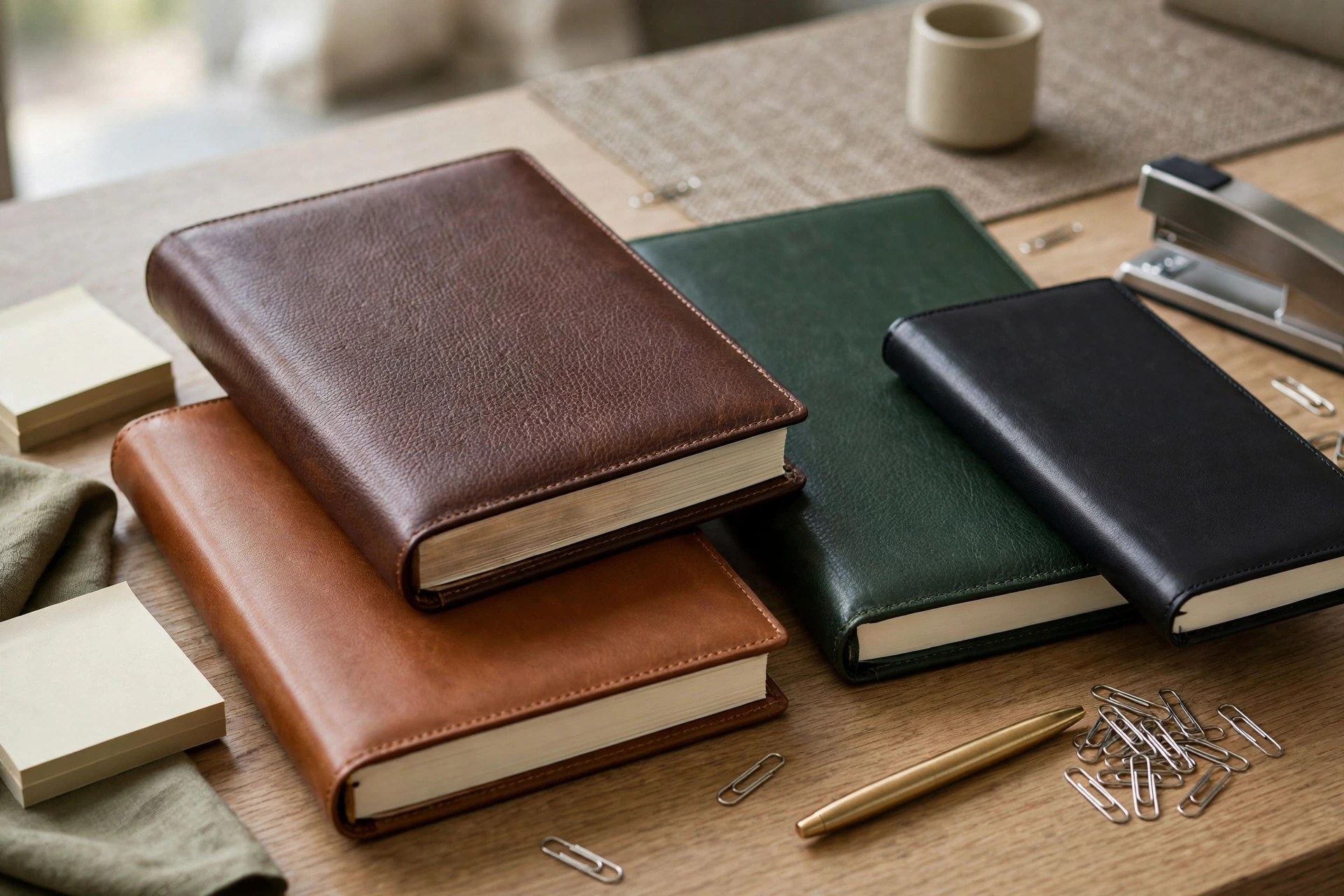
There is a particular moment, usually sometime in early December, when every office in Dubai starts thinking about the new year. HR managers pull out last year’s gift list, procurement officers ask for quotes, and somewhere on almost every list sits a diary. Not a novelty item, not a gimmick — a diary. The custom diary remains one of the most dependable corporate gifts in the UAE precisely because it earns its place: it sits on a desk or in a bag for twelve months, carries the giver’s name on its cover, and gets opened every single working day.
For companies ordering custom diaries in Dubai, the opportunity is bigger than most buyers realise. A diary is not just stationery; it is a full year of brand visibility. The difference between a diary that gets used and one that gets shelved comes down to decisions the buyer makes before a single page is printed: dated or undated, daily or weekly layout, paper weight, cover material, and how the logo is applied. Get those right and you have a branded diary people genuinely value. Get them wrong and you have paid for twelve months of shelf space in someone’s drawer.
This guide walks through every one of those decisions, the way they play out specifically in the Dubai and UAE market — realistic MOQs, local production timelines, branding methods that work on diary covers, and how to time your order for the year-end gifting season. Whether you need bulk diaries in Dubai for a company-wide New Year distribution or a smaller run of premium planners with logo for client gifting, this is the definitive reference.
Why Branded Diaries Still Work in a Digital Age
It is a fair question. Everyone has a phone calendar, a task app, a shared team board. Why would a printed diary still matter as a corporate gift?
The honest answer is that diaries and digital tools are not substitutes for each other. Phones handle reminders and scheduling; diaries handle thinking. A large share of professionals still keep a physical diary alongside their digital tools — for meeting notes, for the sketch of an idea that does not fit in a calendar entry, for the to-do list that needs to be rewritten each morning to feel real. The diary is where work gets processed, not just scheduled. That is why the branded diary survives every wave of new productivity software: it occupies a different role.
For the giver, that role is exactly what makes diaries with logo in Dubai such strong corporate gifts. Consider the visibility. A branded pen is used for minutes at a time. A branded mug sits in a kitchen corner. A diary sits open on a desk, cover facing outward, for months. During meetings it lies flat on the conference table, logo visible to everyone in the room. During travel it comes out in airport lounges and client offices. A diary is one of the few corporate gifts whose brand impression repeats daily without ever feeling intrusive — the recipient chose to open it, because it is useful.
There is also a calendar logic to diary gifting that no other corporate gift quite matches. Diaries are inherently tied to the new year. A well-timed diary arrives when the recipient is thinking about planning, goals and fresh starts — the psychological moment when a new tool is most welcome. Hand someone a diary in the second week of December and it feels prescient. Hand them the same diary in March and it feels like leftover stock. Timing, which we will cover in detail later, is part of what makes the custom diary category work.
Finally, diaries scale beautifully across budgets. The same category can serve a company ordering five hundred economical branded diaries in the UAE for staff and a company ordering fifty premium planners with logo for key accounts — different covers, different paper, different branding, same dependable gift. Few corporate gift categories cover that range as gracefully.
Dated vs Undated Diaries: The First Decision
Before anything else — before covers, paper, or branding — you need to choose between a dated and an undated diary. This single decision shapes the page layout, the ordering timeline, and how the recipient will use the product. It is also the decision buyers get wrong most often, usually by defaulting to dated without considering the trade-offs.
Dated diaries
A dated diary is printed for a specific year, with every page carrying its date. The advantages are obvious: the recipient opens it on January 1st and everything is ready. It feels official, structured, and gift-appropriate — which is why dated diaries dominate the corporate gifting market, especially for year-end distribution.
The constraint is time. Dated diaries must be ordered, printed and delivered before the new year begins, and the diary manufacturer needs the coming year’s calendar block — the actual dates, public holidays, and page sequences — set up in advance. In practice, this means the year-end diary season in Dubai runs on a hard deadline. Order in October or November and you have comfortable room for customisation. Order in mid-December and you are choosing from ready stock with standard branding, because there is no time left for a custom build. Miss the window entirely and the dated diary becomes unsellable for eleven months — nobody wants a diary that starts in a year that has already passed.
Dated diaries also carry a small psychological risk for the giver: if the recipient already received two dated diaries from other companies, yours becomes the spare. This is not a reason to avoid dated diaries — they remain the standard — but it is a reason to make yours the one worth keeping, through better paper, a better cover, and a layout that suits how people actually work.
Undated diaries
An undated diary has the same structure — daily, weekly or monthly pages — but the date fields are left blank for the recipient to fill in. The recipient starts whenever they like and skips days without wasting pages, which makes undated diaries popular with people who journal intermittently or whose planning does not follow a strict daily rhythm.
For the buyer, undated diaries remove the deadline pressure entirely. They can be ordered at any point in the year, carry no expiry, and leftover stock rolls into the next gifting cycle without becoming obsolete. That makes them a smart choice for welcome kits, event giveaways, mid-year client gifts, and any situation where the gift is not tied to the calendar. A company onboarding new hires year-round, for example, can keep a stock of undated branded diaries and include one in every welcome pack — something impossible with dated stock.
The trade-off is perceived value. An undated diary can feel slightly less “official” than a dated one, and some recipients never get around to writing in the dates, which means the diary goes unused. For pure year-end corporate gifting, dated remains the stronger choice. For everything else, undated is the flexible one.
A practical note for Dubai buyers: because undated diaries have no calendar-year dependency, suppliers can often produce them faster and hold them as stock items with quicker branding turnaround. If you are ordering outside the year-end season, ask what is available in undated formats — you may get better pricing and shorter lead times.
Page Layouts Explained: Daily, Weekly, Monthly and Combo
Once you have chosen dated or undated, the next decision is the page layout — how each day, week or month is presented. This is where the diary either fits the recipient’s working life or fights it. A managing director who lives in back-to-back meetings needs a different layout from a sales rep who plans by the week. Here is what each layout actually means in practice.
Page-per-day diaries
The page-per-day format gives every date a full page, usually with timed appointment slots running down the page and a notes section. This is the layout for heavy schedulers: executives, consultants, anyone whose day is chopped into meetings. It produces the thickest diary — a full year of daily pages is a substantial book — which also makes it feel premium. Page-per-day is the classic executive diary format and pairs naturally with higher-end covers and foil branding.
The honest limitation: most recipients do not need a full page per day. For general staff gifting, page-per-day can feel like overkill, and the bulk makes the diary less portable. Reserve it for senior recipients or roles where the diary genuinely functions as the working daybook.
Week-per-view diaries
The week-per-view (weekly) layout shows seven days across a two-page spread — the most popular corporate diary format in the UAE by a wide margin. It strikes the balance: enough space to plan each day, the whole week visible at a glance, and a book slim enough to carry. For bulk diaries in Dubai ordered for staff-wide distribution, weekly is the default recommendation, and it is the layout most ready-stock diary ranges are built around.
Weekly layouts come in variations worth knowing about. Some run Monday-to-Sunday across the spread with equal columns; others give Saturday and Sunday a shared or half column, on the logic that weekends need less planning space. Neither is objectively better — it depends on whether your recipients work weekends, which in Dubai’s retail, hospitality and events sectors many do. If your audience works six-day weeks, ask for a layout that gives the weekend proper space.
Monthly planners
Monthly planners show a full month on a spread, with small boxes per day — the layout for big-picture planning rather than daily detail. They suit managers who plan campaigns, project timelines and leave schedules. Monthly formats are also the slimmest diaries, which makes them popular as secondary gifts or as part of gift sets where the diary is one item among several. Custom planners in Dubai ordered for marketing teams, project managers and executives who already keep detailed daily notes elsewhere often work best in monthly format.
Combination and special layouts
Many diary ranges include combination layouts: a monthly overview section at the front, weekly spreads through the body, and notes pages at the back. There are also specialised additions buyers can request in custom runs — project planning grids, expense trackers, goal-setting pages, contact directories, and UAE public holiday listings. The UAE holiday list is a genuinely useful addition for diaries distributed locally; recipients notice when their diary knows about Eid, National Day and the Gregorian new year, and it costs nothing to include in a custom print run.
When choosing, think about the recipient’s actual job rather than what looks impressive. The best diary layout is the one that matches how the person plans — and that is a question worth asking your team leads before you place a bulk order.
Paper Quality: What to Ask For
Paper is the part of a diary buyers undervalue and recipients notice immediately. A diary lives or dies on how it feels to write in. Cheap, thin paper that lets ink bleed through will quietly kill an otherwise beautiful diary; the recipient tries one pen, sees ghosting on the reverse, and the diary goes in the drawer. Good paper is the difference between a diary that gets used daily and one that gets abandoned in January.
Here is what to ask your supplier about, in plain terms.
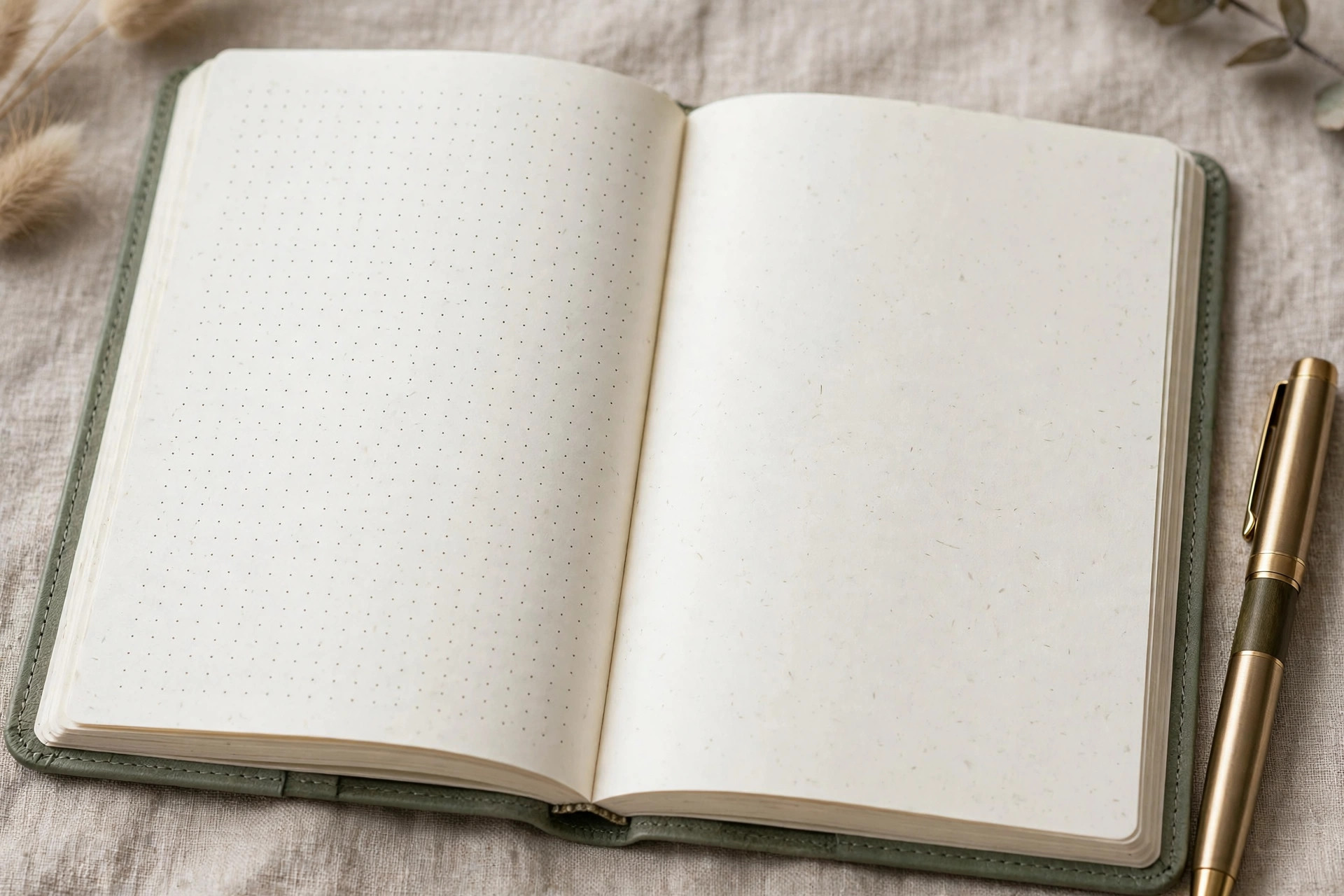
Paper weight. Diary paper is measured in GSM (grams per square metre). Standard diary paper sits around 70–80 GSM — fine for ballpoint pens, acceptable for most use. If your recipients use gel pens, rollerballs or fountain pens, ask for 80–100 GSM. Heavier paper resists bleed-through and feels more substantial when turning pages. For premium custom planners in Dubai aimed at executives, 100 GSM is the sweet spot: noticeably better writing experience without making the book unwieldy.
Opacity. Weight is not the whole story. Opacity — how much show-through appears on the reverse side — depends on the paper’s composition as well as its weight. Ask the supplier directly: “Does ink show through on this paper with a gel pen?” A reputable diary supplier in Dubai will know the answer for their stock papers, and many will send a sample sheet for a writing test. Take the sample. Write on it with the pens your recipients actually use.
Colour and finish. Most diaries use an off-white or cream paper, which is easier on the eyes than stark white and photographs better for the premium feel. The finish is usually uncoated or lightly finished — coated glossy paper looks wrong in a diary and most pens smear on it. If a supplier offers a glossy paper option for diary interiors, treat that as a red flag about their diary experience.
Ruling and print quality. Check that the date bands, lines and grids are printed crisply and consistently — misaligned ruling across hundreds of pages is a manufacturing defect that signals poor quality control. In custom print runs, ask to approve a printed proof of several interior pages before full production, not just the cover.
Extras that matter. Perforated corners, ribbon markers, elastic closures and expandable back pockets are small features with outsized impact on daily use. Two ribbon markers (one for the current week, one for notes) cost little and get noticed. An elastic band keeps the diary shut in a bag. A back pocket holds business cards and receipts. When comparing quotes for branded diaries in the UAE, check which of these are included as standard and which are add-ons — suppliers differ, and the differences affect both price and perceived quality.
Cover Materials and Finishes
The cover is what the recipient sees first, what carries your logo, and what determines how the diary ages over twelve months of daily handling. Cover choice is also where the budget conversation happens most honestly: materials range from economical to genuinely luxurious, and each has a place.
PU leather (polyurethane). The workhorse of the corporate diary market. Modern PU covers look and feel convincingly like leather, come in a wide colour range, take debossing and foil stamping beautifully, and survive a year in a laptop bag without falling apart. For bulk diaries in Dubai, PU is the default recommendation — it hits the quality-perception sweet spot at a sensible cost. Good PU does not peel or crack within a year; cheap PU does, which is another reason to work with a supplier whose materials you have seen and handled.
Genuine leather. The premium tier. Real leather covers age gracefully, develop character, and signal genuine luxury — appropriate for board-level gifting, VIP clients and milestone awards. The cost jump from PU to genuine leather is significant, so reserve it for smaller, high-impact runs. One honest note: genuine leather takes debossing beautifully but foil stamping requires care, as heat and real leather need the right settings — an experienced branding workshop will know this.
Hardcover (paper-wrapped board). The classic book-style cover, wrapped in printed or plain paper, sometimes with a matte or gloss laminate. Hardcover suits diaries where the cover itself carries a full-colour printed design — company imagery, a campaign visual, an illustrated cover. It is less durable than PU for daily bag carry but excellent for desk-kept diaries and for designs where the cover art matters more than the tactile feel.
Fabric and specialty covers. Linen-textured, canvas and other fabric covers occupy a middle ground — distinctive, modern, and pleasant to hold. They brand well with screen printing and embroidery-style finishes. Worth considering when the diary needs to look contemporary rather than traditional.
Finishes. Beyond the base material, finishes change the feel: matte lamination (understated, fingerprint-resistant), gloss (vivid but shows wear), soft-touch coating (the velvety premium feel, increasingly popular), and textured embossing patterns on the cover itself. Soft-touch PU with a blind deboss is currently one of the most requested combinations for planners with logo in Dubai — it looks expensive because the finish genuinely feels expensive.
Colour choice deserves a thought too. Black and navy remain the safe corporate defaults, but deep green, burgundy, tan and grey have all become mainstream in the UAE corporate gifting market. If your brand has a distinctive colour, matching the diary cover to it — with the logo debossed tone-on-tone — produces a strikingly cohesive gift. Just confirm colour availability early: popular colours in popular sizes sell through during the year-end rush.
Branding Methods: Debossing, Foil Stamping, Screen Print and UV
How your logo gets onto the diary cover matters as much as the cover itself. Each branding method produces a different look, suits different materials, and carries different cost and lead-time implications. Here is the honest breakdown.
Debossing (blind deboss)
Debossing presses the logo into the cover without ink or foil, creating a recessed impression. It is the most understated and, to many eyes, the most premium option — the logo is felt as much as seen. Blind deboss works beautifully on PU and genuine leather, where the material takes and holds the impression. It never fades, never peels, and cannot clash with the cover colour, which makes it the safest choice for executive diaries. The one limitation: fine detail can get lost, so highly intricate logos may need simplifying for the deboss die.
Foil stamping
Foil stamping applies metallic foil — gold, silver, copper, holographic — to the cover using heat and a die. It is the classic premium diary branding: a gold foil logo on a navy or black cover is the visual shorthand for “quality corporate gift” across the Gulf. Foil works on PU, leather and hardcover alike. Metallic foils photograph well, which matters if the diary will appear in your own marketing or the recipient posts it. The considerations: foil dies are custom-made (a one-time cost per design), and very fine lines in a logo can fill in — your supplier’s artwork team should advise on minimum line weights.
Combination deboss + foil. Many premium diaries use both: the logo debossed first, then foiled within the debossed area. The result has depth and shine together. If the budget allows one upgrade on a VIP diary run, this is usually it.
Screen printing
Screen printing applies ink directly to the cover, which makes it the method for multi-colour logos and full-colour cover designs. If your logo has gradients or several colours that foil cannot reproduce, screen print is the answer. It works best on hardcover and fabric covers; on PU and leather it is possible but less durable than deboss or foil for a product handled daily. For economical bulk runs where the priority is a visible full-colour logo, screen printing keeps costs down.
UV printing and digital methods
UV-cured digital printing can reproduce photographic detail directly on the cover — useful for covers that carry imagery rather than just a logo. It is a newer option in the diary market and best suited to hardcover formats. Treat it as a specialty choice rather than the default.
A note on placement. The standard logo position is centred on the front cover, upper-middle or dead centre. Spine branding is a worthwhile addition for diaries that will sit on shelves — the company name on the spine turns a row of office diaries into a branded set. Inside-front-cover branding (a printed company message, values, or the year’s holiday list on the endpapers) is an underused touch that costs little in custom runs and gets seen every time the diary is opened.
Artwork preparation. Whatever the method, the supplier needs your logo in vector format (AI, EPS or high-resolution PDF) — not a JPG pulled from the website. Foil and deboss dies are made from the vector file, and a low-resolution source produces a poor die. If you only have a raster logo, ask the supplier whether their artwork team can redraw it; most established diary suppliers in Dubai offer this, sometimes free for confirmed orders.

Sizes and Formats
Diary sizes follow a few standard formats, and choosing the right one is partly about use and partly about perception.
A5 (148 × 210 mm). The standard corporate diary size — large enough for comfortable daily writing, small enough for a bag. The majority of bulk diaries in Dubai are A5. If you are unsure which size to order, order A5.
A4 (210 × 297 mm). The desk diary. Generous writing space, genuinely useful for people who treat the diary as their primary planning surface — but too large to carry comfortably. A4 suits desk-bound roles and reads as substantial and generous. It also costs more in materials and is heavier to ship in bulk, which matters for large distributions.
B5 and slim formats. B5 sits between A5 and A4 and is popular in some corporate ranges. Slim and pocket formats (roughly A6 and smaller) are carry-everywhere diaries — excellent as secondary gifts, event giveaways, or companions to a larger desk diary. A pocket diary will not replace anyone’s main planner, but as a branded item it gets carried and seen constantly.
Format honesty. Bigger is not automatically better. An A4 diary given to a sales rep who lives out of a car will sit on their desk unused; a pocket diary given to a CFO may feel insubstantial. Match the size to the recipient’s working pattern the same way you matched the layout — and when ordering one size for a mixed audience, A5 weekly remains the safest universal choice.
The Year-End Season: Ordering Timelines for New Year Gifting
The diary business runs on a calendar as strict as the product itself. Understanding the season is the difference between a relaxed, well-customised order and a stressful compromise — or a missed year entirely.
How the season works in Dubai. Demand for dated diaries concentrates in the last quarter of the year. Suppliers bring in calendar blocks for the coming year, diary manufacturers schedule production slots, and branding workshops book up. The buyers who order in September and October get the full menu: choice of covers, custom layouts, combination branding, proofing rounds. Buyers who order in late November and December choose from what is left, with standard branding on ready stock. This is not a sales tactic — it is manufacturing reality. Custom diary production involves real steps (die-making, printing, binding, branding, quality checks), each of which takes days, and the workshops serving the UAE market run at capacity in Q4.
A realistic timeline. For a custom diary order — custom cover, branded, dated for the new year — allow six to eight weeks from artwork approval to delivery in Dubai. That breaks down roughly into artwork and proofing, die production for foil or deboss, interior printing, cover production and branding, binding, and quality control. Ready-stock diaries with standard logo branding can turn around far faster, often within one to two weeks, because the diary itself already exists and only the branding step remains. When a supplier quotes you a timeline, ask which parts are custom and which are stock — the answer tells you how much flexibility remains.
The public-holiday factor. The UAE’s public holidays shift with moon sightings, and the exact dates for the coming year are typically confirmed late in the current year. Dated diaries printed for the UAE market usually include a holiday page listing confirmed and expected dates; reputable suppliers update this as late as production allows. If precise holiday accuracy matters to you, ask the supplier when their holiday page is finalised.
What to do right now. If you are reading this in the final quarter of the year and have not ordered yet, contact your supplier immediately and ask two questions: what dated stock is available in your quantity, and what is the last order date for custom branding before the new year. If you are reading this earlier in the year, you have the luxury of planning — and planning is what separates the diaries people keep from the diaries people shelve.
Thinking beyond January. Not every diary gift must land on New Year’s Day. Diaries make excellent gifts for the Islamic New Year, for financial-year starts (many companies run April-to-March or July-to-June cycles — undated or custom-dated diaries serve these perfectly), for conference and exhibition giveaways year-round, and for onboarding. A supplier geared for the corporate market can produce custom-dated diaries starting in any month; the year-end rush is a convention, not a constraint.
Pairing Diaries with Pens and Desk Items: The Gift Set Strategy
A diary on its own is a strong gift. A diary paired with the right companions becomes a gift set — and gift sets consistently outperform single items in perceived value. The arithmetic is simple: two coordinated items feel considered in a way that one item, however nice, does not. The diary-plus-pen set is the cornerstone of corporate desk gifting for good reason.
The classic diary and pen set. The logic is unanswerable: a diary needs a pen, so give both. The execution details are what separate a good set from a forgettable one. Match the branding — the same logo treatment on diary and pen, or at least the same colour family. Match the quality tier — a premium diary with a flimsy pen undermines the diary; an economical diary with a good pen lifts the whole set. Presentation matters enormously: a rigid gift box with the diary and pen nested in fitted compartments transforms two products into one gift. Many buyers skip the box to save cost and lose more in perceived value than they saved in dirhams. For a deeper look at pen selection, see our branded pens buyer’s guide.
Diary and notebook combos. A growing trend in the UAE corporate market is pairing a dated diary with an undated notebook — the diary for scheduling, the notebook for everything else. The two share cover material and branding for a coordinated look. This combo works particularly well for creative and consulting audiences who fill pages with notes, sketches and meeting minutes alongside their calendar. Our range of custom notebooks in Dubai is designed to coordinate with diary covers for exactly this purpose.
Wider desk sets. For VIP gifting, the diary anchors a larger desk collection: pen, notebook, card holder, desk organiser or mousepad, all in matching materials with consistent branding. The key word is consistent — a set where every item carries the same logo treatment in the same finish looks deliberate and premium; a set where each item was branded differently looks assembled from leftovers. When planning a multi-item set, brief your supplier on the full set upfront so branding is coordinated across items, not decided item by item.
The office corporate gifts range covers the full desk-gift spectrum, which makes coordination straightforward — diary, pen, notebook and accessories sourced together, branded together, boxed together. For curated selections by use case, browse our office gifts collection.
MOQs and Production Timelines in Dubai
Minimum order quantities and lead times are the two most practical questions in any diary order, and the answers depend on how custom the diary is.
Ready-stock diaries with logo branding. Most Dubai suppliers hold popular diary formats — typically A5 weekly in standard colours — as ready stock during the season. MOQs for branding ready stock are usually low, often from a few dozen units, because the supplier is only adding your logo to an existing product. Turnaround is typically one to two weeks including the branding step. This is the route for tight deadlines and smaller quantities.
Semi-custom diaries. Choose your cover material and colour, page layout, and branding method from the supplier’s range, and the diary is assembled for your order. MOQs are higher — commonly in the low hundreds — and lead times run four to six weeks. This is the sweet spot for most corporate buyers: meaningful customisation without full custom-manufacturing commitment.
Fully custom diaries. Custom cover design, custom interior layouts, special page additions (company information pages, custom holiday lists, branded endpapers), bespoke sizes. MOQs start higher and lead times stretch to eight weeks or more. Fully custom is for large distributions, flagship client gifts, and companies where the diary is a brand statement rather than a seasonal obligation.
What affects the timeline most. Artwork approval is the silent killer of diary schedules. Every round of logo revisions, colour corrections and proofing exchanges adds days, and in Q4 those days come out of production time, not buffer time. Have your vector logo ready, confirm colours against physical swatches (screen colours lie), and approve proofs promptly. The buyers who hit their December delivery dates are the ones who approved artwork in October.
Delivery across the Emirates. Diary orders placed in Dubai deliver across the UAE — Abu Dhabi, Sharjah, Ajman, Ras Al Khaimah, Fujairah and Umm Al Quwain — with standard courier timelines once the order is complete. For large bulk distributions (hundreds of diaries going to multiple office locations), discuss split delivery with your supplier upfront: delivering boxed sets directly to each location saves you a warehousing and re-shipping step. During the December peak, book delivery slots early — couriers run at capacity too.
Quality Checks: What to Inspect Before Accepting Delivery
A diary order represents a significant investment, and the defects that matter are the ones your recipients will find in week one. Build a simple inspection routine into your receiving process — it takes minutes per carton and saves real embarrassment.
Cover branding. Check the logo impression on several diaries from different cartons, not just the top one. Foil should be clean and complete with no missing patches or rough edges; deboss should be even in depth across the design. Compare against your approved proof. On large orders, check the first, middle and last cartons — branding quality can drift over a long production run.
Binding. Open the diary flat at several points through the book. Pages should lie reasonably flat without the spine cracking or pages loosening. For wire or spiral formats, check that the wire is closed properly with no snagging ends. For perfect-bound (glued spine) diaries, flex the book gently — pages should not shift or detach.
Interior print. Flip through the date sequence checking for skipped dates, duplicated pages, or misaligned ruling. Verify the year on the title page and the holiday list. In dated diaries, confirm the dates actually correspond to the correct year — a surprising number of diary defects are calendar errors that nobody checked.
Paper and writing test. Write on several pages with a ballpoint and a gel pen. Check for bleed-through, feathering (ink spreading along paper fibres), and whether the paper feels consistent through the book. If the paper fails the writing test, raise it before distribution — a diary that cannot be written in is a failed gift.
Completeness of sets. If you ordered diary-and-pen sets or multi-item boxes, open a sample of finished boxes and verify every component is present, correctly branded, and undamaged. Count against the packing list. Boxed sets are assembled by hand, and hand assembly means occasional misses — catching them at receiving is infinitely cheaper than catching them from a client’s complaint.
Quantities. Count cartons against the delivery note, and spot-count units within cartons on large orders. Short shipments happen; discovering them in January, when you needed the diaries in December, is not the time.
A supplier confident in their quality control will welcome inspection and will have their own QC checkpoints to describe. Ask what they check before dispatch — the answer tells you a lot about the operation you are buying from.
Caring for PU and Leather Diary Covers
A small care note included with the diary — a card slipped into the front pocket — is a thoughtful touch that extends the life of the gift and, not incidentally, keeps your branded cover looking good all year. The advice differs by material.
PU covers. Wipe with a soft, slightly damp cloth to remove dust and fingerprints; dry immediately. Keep away from prolonged direct sunlight and car dashboards in the UAE summer — heat is the enemy of PU, causing drying and eventual cracking. Avoid alcohol-based cleaners and harsh solvents, which strip the surface finish. For scuffs, a gentle rub with a dry soft cloth often minimises the mark.
Genuine leather covers. Condition occasionally with a neutral leather conditioner to prevent drying, especially in air-conditioned offices where the air is deceptively dry year-round. Wipe spills promptly — leather stains if liquids sit. Store away from direct sunlight to prevent uneven fading. A well-kept leather diary develops a patina that looks better at month twelve than month one, which is part of the material’s appeal.
General. Do not overstuff the back pocket — it warps the cover over time. Use the elastic closure or ribbon markers rather than folding page corners. And keep the diary out of the bottom of bags under heavy items; even the best binding suffers under sustained pressure.
Including a short care card costs almost nothing and signals that the gift was chosen with care, not ordered from a catalogue on autopilot. It is the kind of detail recipients remember.
Frequently Asked Questions
How far in advance should we order custom diaries in Dubai for New Year gifting?
For fully custom branded diaries, start the conversation in September and aim to approve artwork by late October, which allows six to eight weeks for production and delivery before mid-December distribution. For ready-stock diaries with standard logo branding, one to two weeks is usually enough, so even late-November orders are workable. The earlier you order, the wider your choice of covers, colours and branding methods.
What is the minimum order quantity for branded diaries in the UAE?
It depends on the level of customisation. Ready-stock diaries with your logo added typically start from a few dozen units. Semi-custom diaries — your choice of cover, layout and branding from the supplier’s range — usually require quantities in the low hundreds. Fully custom-manufactured diaries need larger commitments. Tell your supplier your quantity first; they will steer you to the right production route.
Which branding method looks most premium on a diary cover?
Blind debossing on PU or genuine leather is widely considered the most understated-premium option — the logo pressed into the cover with no ink or foil. Gold or silver foil stamping is the classic high-impact premium look, and combining deboss with foil gives both depth and shine. For multi-colour logos, screen printing or UV printing reproduces the full design. The “most premium” choice depends on your logo and audience, but deboss and foil remain the executive standards.
Should we choose dated or undated diaries for corporate gifting?
Choose dated diaries for year-end New Year gifting — they feel official and arrive at the psychologically perfect moment. Choose undated diaries for welcome kits, events, mid-year client gifts, or any situation where stock needs to stay usable year-round. Many companies use both: dated diaries for the December distribution and undated branded diaries for ongoing onboarding and events.
Can we get diaries with the UAE public holiday list included?
Yes. Reputable diary suppliers serving the UAE market include a public holiday page covering Eid, National Day and other observances, and custom print runs can carry your own holiday schedule or company information pages. Because some UAE holiday dates depend on moon sightings and are confirmed late in the year, ask your supplier when their holiday page is finalised for the coming year’s print run.
Do you deliver bulk diary orders outside Dubai?
Yes — diary orders placed in Dubai are delivered across all seven Emirates, including Abu Dhabi, Sharjah, Ajman, Ras Al Khaimah, Fujairah and Umm Al Quwain. For large distributions to multiple office locations, split delivery can be arranged so boxed sets go directly to each site.
Conclusion: The Diary That Gets Used Is the Diary That Was Planned
The custom diary is that rare corporate gift where the buyer’s homework shows. Recipients can tell — consciously or not — whether the diary in their hands was chosen for them or ordered at them. The right layout for their working week, paper that takes their pen, a cover that survives their bag, branding that looks intentional rather than slapped on: none of these happen by accident, and all of them happen before the order is placed.
That is the real argument for starting early and choosing carefully. A diary ordered in a October rush from whatever stock remains will still carry your logo — but a diary planned in September, with the layout, paper, cover and branding matched to the people receiving it, will carry your reputation. One gets shelved in February. The other gets opened every working day of the year, in meetings, in client offices, in airport lounges, with your name on the cover each time.
If you are planning a diary order for the new year — whether it is bulk diaries in Dubai for company-wide distribution, premium planners with logo for key clients, or coordinated diary-and-pen gift sets — talk to a supplier who will walk through these decisions with you rather than just quoting a unit price. Vision Advertising supplies custom diaries and branded planners across the UAE, with in-house branding, honest advice on layouts and materials, and delivery across all seven Emirates.
Get in touch to start your order: call or WhatsApp +971 50 970 9564, email [email protected], or visit us at 38A St, Hor Al Anz, Deira, Dubai, UAE. Order early, choose well, and give a diary people will actually use — all year long.




