
Choosing a corporate gifts supplier in Abu Dhabi is not just a procurement decision — it is a branding decision. Every branded notebook, every engraved pen, every gift box that carries your company name becomes a small ambassador for your business. It sits on a client’s desk, travels in an employee’s bag, and quietly shapes how people remember your brand. Get it right, and a single well-chosen gift can strengthen a relationship for years. Get it wrong, and a cheap or poorly branded item can do the opposite.
For buyers in the UAE capital, the search for the right supplier comes with its own practical questions. Should you work with a supplier physically based in Abu Dhabi, or is a Dubai- or Sharjah-based supplier who delivers to Abu Dhabi just as reliable? How do minimum order quantities work for custom-branded items? How far in advance should you order before an event, an exhibition, or the year-end gifting season? And what exactly should you check before handing over your logo files and your budget?
This guide answers those questions in practical detail. It walks you through how the corporate gifting market in the UAE actually works, what a professional corporate gifts supplier does behind the scenes, how to evaluate candidates side by side, and the red flags that signal trouble. Whether you are a marketing manager ordering for the first time or a procurement officer managing recurring campaigns, the framework below will help you make a confident, well-informed choice.
Understanding the Corporate Gifts Market in Abu Dhabi
Abu Dhabi is home to a distinct corporate gifting culture. As the capital of the UAE, it hosts government entities, semi-government organisations, sovereign institutions, oil and gas companies, and a growing base of private-sector firms. Each of these segments gifts differently. Government-linked organisations often have strict guidelines about gift values and approved items. Multinational corporations may need gifts that comply with global brand standards and anti-bribery policies. SMEs and startups, meanwhile, tend to prioritise visible impact per dirham spent.
This diversity means that a one-size-fits-all supplier rarely works. A capable corporate gifts supplier in Abu Dhabi — or one serving Abu Dhabi — understands these nuances. They know which items tend to be safe choices for government-adjacent recipients, which premium products suit C-suite gifting, and which practical, everyday items employees actually use rather than leave in a drawer.
It also helps to understand that the UAE’s corporate gifting industry is geographically concentrated. A large share of suppliers, print facilities, and showrooms are based in Dubai and Sharjah, where printing, embroidery, and engraving infrastructure has been built up over decades. Many of these suppliers routinely deliver to Abu Dhabi as a matter of course, with established courier routes between the emirates. So when you search for a corporate gifts supplier in Abu Dhabi, do not limit yourself to companies with a showroom inside the capital’s borders. Judge suppliers by their delivery coverage, response times, and ability to service Abu Dhabi orders end to end — not just by their street address.
What a Professional Corporate Gifts Supplier Actually Does
Many first-time buyers assume a gifts supplier is simply a shop that sells mugs and notebooks. In reality, a professional supplier handles a full production chain. Understanding that chain helps you ask better questions and set realistic expectations.
Product sourcing and catalogue management. Suppliers curate catalogues of gift items sourced from manufacturers, importers, and wholesalers — locally and internationally. A strong supplier keeps a broad, current catalogue and can also source specific products on request when you have something unusual in mind.
Branding and customisation. This is where most of the work happens. Your logo or message is applied to the product using methods such as screen printing, pad printing, laser engraving, embroidery, UV printing, sublimation, or foil debossing. Each method has different costs, durability, and visual effects, and a good supplier will guide you to the right method for each item rather than applying the same technique to everything.
Proofing and quality control. Before production begins, a professional supplier prepares digital mockups or artwork proofs showing exactly how your branding will appear on the item. Many also produce physical samples for larger orders. After production, they inspect the finished items so you do not receive boxes of misaligned logos.
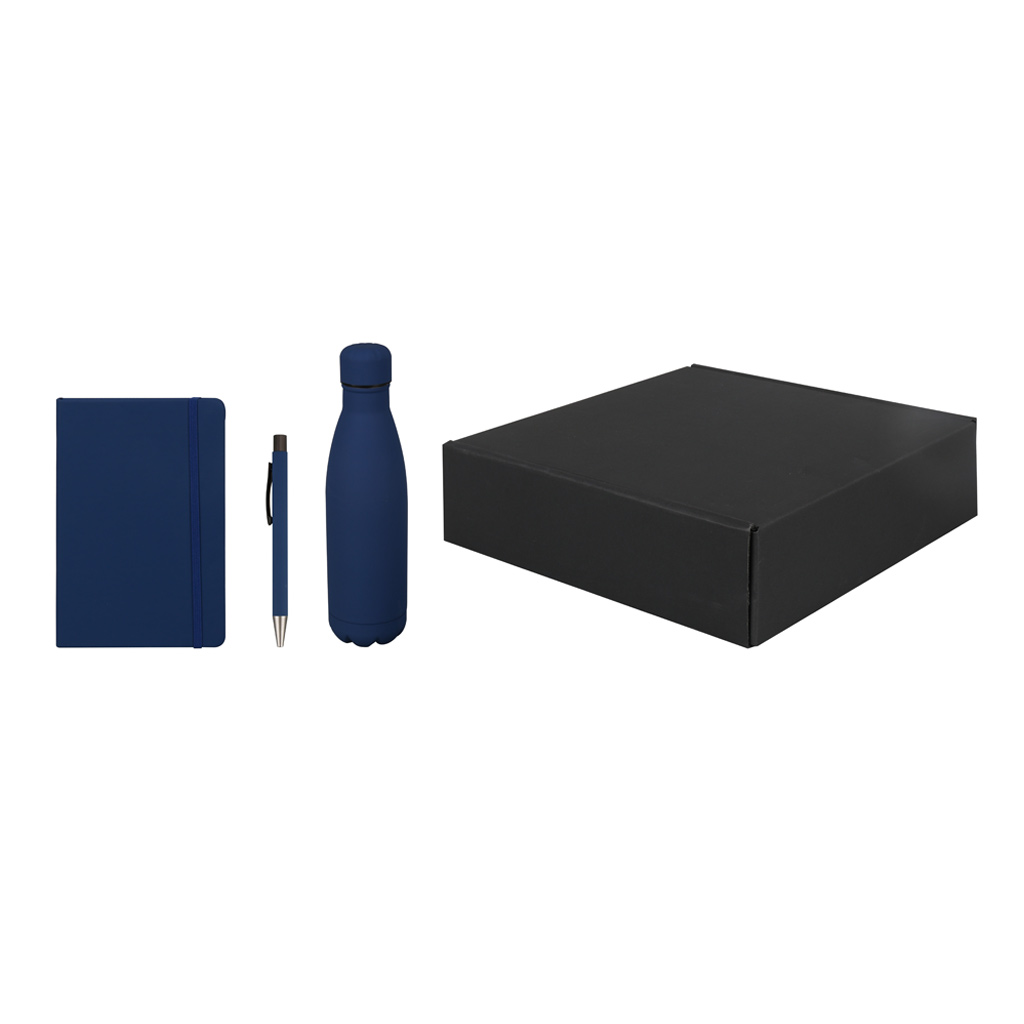
Packaging and finishing. Gift presentation matters. Suppliers can package items in custom gift boxes, add ribbon or tissue, include personalised cards, or assemble multi-item gift sets — the finishing touches that turn a product into a present.
Logistics and delivery. Finally, the supplier coordinates delivery to your office in Abu Dhabi, to multiple office locations, or even directly to individual recipients. For large campaigns, this can include warehousing stock and releasing it in batches.
When you evaluate a supplier, you are really evaluating how well they execute all five of these functions — not just how attractive their catalogue looks.
Catalogue Breadth: Why Range Matters More Than You Think
A supplier’s catalogue is the first thing most buyers look at, and rightly so. But instead of simply checking whether they have “enough” items, assess breadth across the categories that matter for corporate programmes:
- Drinkware — ceramic mugs, travel mugs, thermos flasks, insulated bottles, glassware. One of the most popular categories because items get daily use and high brand visibility.
- Stationery and office items — notebooks, planners, pens (metal and plastic), desk organisers, USB drives. Reliable staples for onboarding kits and events.
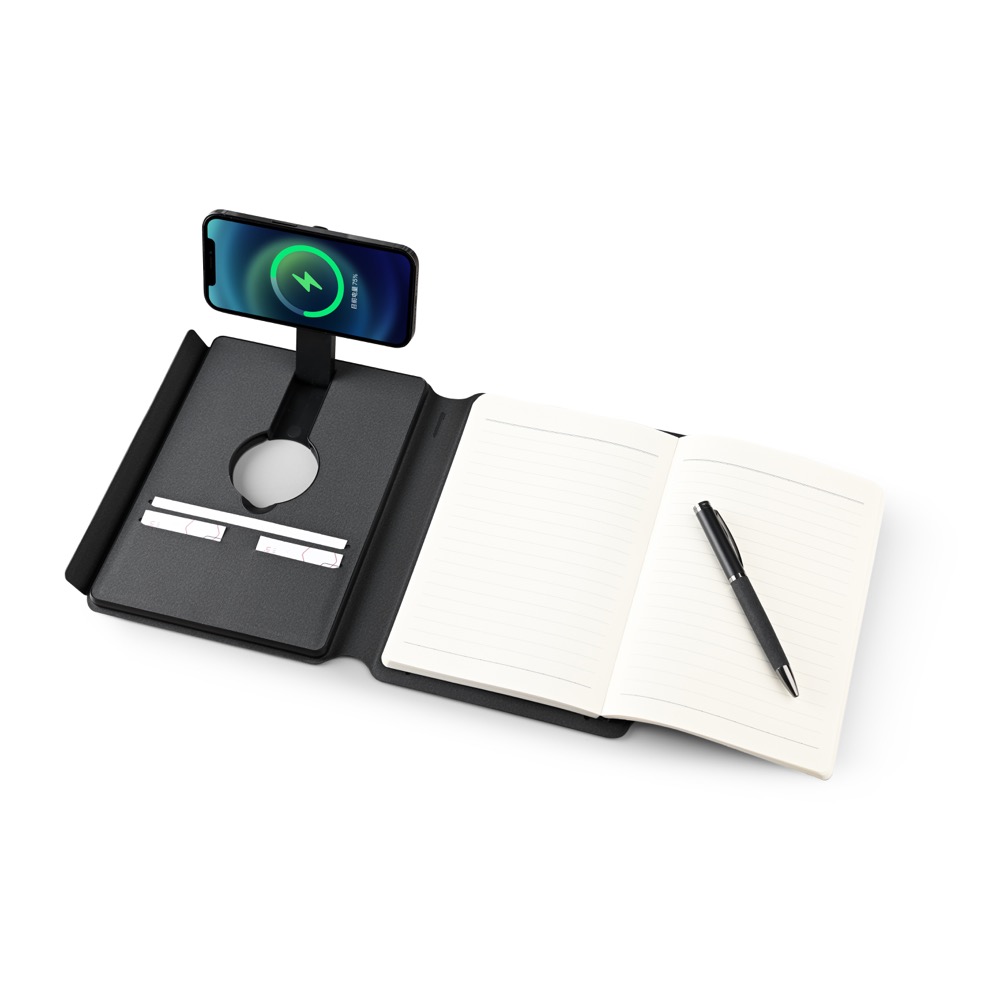
- Tech accessories — wireless chargers, power banks, Bluetooth speakers, earbuds, laptop sleeves. Higher perceived value; well suited to client and executive gifting.
- Bags and apparel — tote bags, backpacks, t-shirts, polo shirts, caps. Strong walking-billboard effect at events and conferences.
- Eco-friendly gifts — bamboo products, recycled notebooks, reusable bottles, wheat-straw accessories. Increasingly requested by companies with sustainability commitments.
- Premium and luxury items — leather goods, executive gift sets, crystal awards, premium writing instruments. Reserved for VIP clients, milestone awards, and board-level relationships.
- Seasonal and festive collections — Ramadan and Eid gift sets, UAE National Day merchandise, year-end hampers. These sell in defined windows, so supplier readiness matters.
Breadth matters for a practical reason: your gifting needs will change over the year. The supplier who handles your conference giveaways in March should ideally also be able to assemble your Ramadan gift sets and your December employee gifts. Switching suppliers for every campaign means repeating the vetting process, re-establishing brand guidelines, and losing the consistency that builds a recognisable gifting identity.
When browsing a supplier’s range — for example, a full corporate gifts product category — look past the photography and check for real variety in price tiers, branding options, and stock depth. A catalogue with fifty mugs but no premium tier and no eco-friendly line is a catalogue built for one kind of buyer.
Branding and Print Methods: The Detail That Determines Quality
Two suppliers can sell you the “same” pen and deliver completely different results. The difference is the branding method and the skill with which it is applied. Here is what the main techniques involve, in plain terms:
Screen printing is the workhorse of the industry. Ink is pressed through a fine mesh screen onto flat or gently curved surfaces — ideal for tote bags, t-shirts, notebooks, and many plastic items. It is cost-effective at volume and produces bold, solid colours. Its limitation is fine detail: very small text or intricate artwork can lose sharpness.
Pad printing uses a silicone pad to transfer ink from an etched plate onto the item, which makes it excellent for small, curved, or irregular surfaces — think pens, keychains, USB drives, and bottle caps. If your gift is small, pad printing is probably what you need.
Laser engraving burns the design into the surface with a laser, producing a precise, permanent mark. It is the standard for metal pens, flasks, awards, and premium items. Engraving looks refined and never peels or fades, but it typically reproduces your logo in a single tone rather than full colour.
UV printing cures ink with ultraviolet light as it prints, allowing full-colour, photographic-quality designs on a wide range of materials including plastic, wood, and coated metal. It is increasingly popular for high-impact, colourful branding.
Sublimation infuses dye into specially coated surfaces — most famously on mugs and apparel. The result is a full-colour design that becomes part of the item rather than sitting on top of it.
Embroidery and debossing apply to textiles and leather respectively. Embroidery gives apparel and caps a premium, tactile logo; debossing presses a subtle, elegant impression into leather goods without ink.
Why does this matter to you as a buyer? Because the method affects three things: appearance, durability, and cost. A supplier who recommends engraving for your executive metal pens and screen printing for your event tote bags is thinking about the right outcome for each item. A supplier who quotes the same technique for everything may be optimising for their own convenience. When discussing an order, ask which method they recommend for each item and why — their answer will tell you a lot about their expertise.
Minimum Order Quantities (MOQs): How They Really Work
Minimum order quantities are one of the most misunderstood parts of corporate gifting. An MOQ is the smallest number of units a supplier will produce in a single customised order, and it exists for practical production reasons: setting up printing screens, calibrating engraving machines, and preparing artwork all carry fixed costs that only make sense when spread across a batch.
MOQs vary by item and branding method rather than by supplier whim. As an approximate industry norm, simple screen-printed items such as tote bags or basic t-shirts may carry lower minimums, while items requiring dedicated tooling — embroidered caps, custom-moulded products, or specially manufactured gift sets — generally require larger runs. The exact numbers differ between suppliers and products, so always confirm the MOQ for the specific item and branding method you want.
If you need a deeper explanation of how these minimums are set and how to plan around them, our guide to minimum order quantities for custom corporate gifts in the UAE breaks the subject down in detail. The key strategic point for Abu Dhabi buyers is this: MOQs should shape your campaign planning, not surprise you. If you know an exhibition is coming in six months, consolidating two planned orders into one larger run can unlock better unit economics and a more consistent result. Conversely, if you only need a handful of premium gifts for a board meeting, ask about digital or low-setup branding methods and off-the-shelf premium items that can be personalised individually.
Two practical tips: first, always ask whether the quoted MOQ is per item, per design, or per colour — this changes the maths significantly when you want several logo variations. Second, confirm whether excess or shortfall is normal: a supplier who transparently explains that a small percentage overrun is standard in printing is more trustworthy than one who promises an exact count with no caveats.

Samples and Proofs: Never Skip This Step
For any order that matters — and branded merchandise that carries your company identity always matters — request a proof before production and a physical sample for significant orders. There are two levels:
Digital artwork proofs are mockups showing your logo positioned on the product, at the correct size and in the correct colours. Review these carefully. Check spelling, check that the logo proportions have not been stretched, and confirm the placement (a logo centred on a mockup may sit differently on the physical item). Approve proofs in writing, because the approved proof is what production will follow.
Physical samples go a step further: the supplier produces one finished unit using the actual item and branding method. For large orders, premium items, or first-time supplier relationships, a physical sample is worth its weight. It reveals things no screen can show — the true colour of ink on fabric, the depth of an engraving, the feel of a debossed logo on leather.
Reputable suppliers treat sampling as a normal part of the process, sometimes charging a small fee that is adjusted against the final order. Be cautious of any supplier who resists providing proofs or samples, or who pressures you to approve production from a catalogue photo alone. That resistance is one of the clearest early warning signs in this industry.
Order Timelines: How Far in Advance to Plan
Timeline planning is where many corporate gifting projects go wrong — not because suppliers are slow, but because buyers underestimate the chain of steps. A realistic timeline for a branded order typically includes: artwork preparation and proof approval, blank-item availability, the branding production run, quality checking, packaging, and delivery to Abu Dhabi. Each step takes time, and steps cannot all be compressed at once.
For standard branded items with stock available locally, the industry norm is often measured in working days to a couple of weeks once artwork is approved — but that assumes proofs are approved promptly and the blanks are in stock. Orders requiring items to be sourced internationally, complex multi-item gift sets, or embroidery and custom manufacturing need considerably longer lead times. Seasonal peaks add another layer: Ramadan and Eid, UAE National Day, and the December year-end season are the busiest periods in the UAE gifting calendar, and production slots fill up.
Our detailed breakdown of corporate gifting timelines and how far in advance to order in Dubai applies equally to Abu Dhabi buyers, since the production infrastructure is largely shared across the emirates. The golden rule: work backwards from your event date. Identify the date the gifts must be in hand, subtract delivery and production time, subtract proofing time, and that gives you the date by which you need to brief the supplier. Add a buffer week. Then add another buffer week during peak season. The buyers who plan early get better pricing, calmer production, and time to fix problems if proofs come back wrong.
Rush orders are sometimes possible, and many suppliers will try to accommodate genuine emergencies — but rush production compresses quality control, limits your branding options, and usually costs more. Treat rush capability as an emergency parachute, not a planning strategy.
UAE-Wide Delivery: What to Confirm About Abu Dhabi Coverage
If your chosen corporate gifts supplier is based in Dubai or Sharjah, delivery to Abu Dhabi is routine — the emirates are connected by well-established courier and freight routes, and many suppliers ship to the capital daily. Still, confirm the specifics rather than assuming:
- Delivery destinations within Abu Dhabi. Can they deliver to your office tower on the Corniche, to Khalifa City, to Mussafah industrial areas, or to Yas Island with equal reliability? Ask about any areas that incur surcharges or longer lead times.
- Delivery scheduling. For event-driven orders, confirm the delivery date in writing and agree on what happens if production runs late. Will they split-ship partial quantities so you have something in hand for the event?
- Multi-location distribution. If your company has offices in Abu Dhabi, Dubai, and Sharjah, a good supplier can split a single production run across delivery addresses — often more economical than placing separate orders. This is also where a gift items supplier in Sharjah or a Dubai-based operation with UAE-wide logistics earns its keep: one order, one consistent brand application, three destinations.
- Handling of fragile or premium items. Engraved crystal, glassware, and boxed gift sets need proper packing for inter-emirate transport. Ask how premium items are packed and whether damaged-in-transit replacements are covered.
- Proof of delivery and tracking. For large or high-value orders, insist on tracked delivery with confirmation. It protects both sides if anything goes missing.
A supplier confident about their Abu Dhabi service will answer these questions crisply, with specifics. Vague answers — “yes, we deliver everywhere” with no detail on timing, tracking, or surcharges — deserve a follow-up.
How to Evaluate a Corporate Gifts Supplier: The Checklist
With the fundamentals covered, here is a practical evaluation framework. Use it to compare two or three shortlisted suppliers on equal terms.
1. Catalogue depth and relevance. Does the range cover your likely needs across tiers — everyday items, mid-range gifts, and premium options? Can they show you current catalogues rather than outdated PDFs?
2. Branding capability in-house. Do they operate their own printing, engraving, and embroidery, or do they outsource everything? In-house capability usually means better quality control and faster problem resolution. Outsourcing is not automatically bad, but you should know who is actually handling your brand.
3. Proofing process. Will you receive digital proofs for approval before production? For what order sizes do they offer physical samples? How many proof revisions are included?
4. MOQ transparency. Are minimums stated clearly per item, or do they emerge late in the conversation? Can they explain what drives the MOQ for your chosen items?
5. Timeline honesty. Do they give you a production schedule with milestones, or just a single delivery date? Do they proactively flag seasonal capacity constraints?
6. Delivery coverage. As discussed above: confirmed Abu Dhabi delivery, tracking, multi-location splits, and damage policies.
7. Communication quality. How quickly do they respond to enquiries? Do they ask smart questions about your event, audience, and brand guidelines, or do they just send a price list? The quality of pre-sale questions predicts the quality of the final product.
8. Business legitimacy. Do they have a verifiable physical address, a trade licence, and a real showroom or office you could visit? In the UAE, these basics are easy to check and worth checking.
9. Portfolio and references. Can they show examples of past corporate work — ideally for clients in similar industries? You are not looking for famous names; you are looking for evidence of consistent execution.
10. Payment terms. What deposit is required, and when is the balance due? Standard practice in the industry involves a deposit to begin production with the balance on or before delivery. Terms that demand 100% upfront before you have even approved a proof deserve scrutiny.
Score each supplier on these ten points, and the right choice usually becomes obvious. Price matters, but it should be the tiebreaker between two suppliers who both pass the checklist — not the first filter.
Questions to Ask Before You Place an Order
Even with a shortlisted supplier, a structured briefing call prevents most problems. Here are the questions worth asking every time:
- Which branding method do you recommend for this specific item, and why?
- Can I see a digital proof before production begins, and how many revisions are included?
- Is a physical sample available for this order size, and what does it cost?
- What is the exact MOQ for this item with this branding method — per item, per design, per colour?
- What is the production timeline from proof approval to delivery in Abu Dhabi, step by step?
- Are the blank items in stock locally, or do they need to be sourced? If sourced, from where, and how does that affect the timeline?
- How will the items be packed for transport to Abu Dhabi, especially fragile or premium pieces?
- What is your policy if items arrive damaged, misprinted, or short in quantity?
- Can you split delivery across multiple office locations?
- What are the payment terms, and what triggers each payment?
- During Ramadan, National Day, or December peaks, how much extra lead time do you recommend?
A supplier who welcomes these questions is a supplier who has answered them many times before — which is exactly what you want. If you are still deciding what kinds of gifts suit your business in the first place, our guide on how to choose the right corporate gifts for your business in Dubai offers a structured way to match gift types to audiences and occasions before you start briefing suppliers.
Red Flags: When to Walk Away
Not every supplier deserves your order. Watch for these warning signs:
No physical presence. A supplier with no verifiable address, no showroom, and no trade licence details is asking you to trust them blindly. Legitimate UAE suppliers are easy to verify.
Catalogue-only selling. If they can only show you stock photos from the internet and cannot produce a physical sample or show you the actual item, they may be brokering orders they cannot control.
Pressure to skip proofs. Any supplier who discourages proofing, calls it unnecessary, or wants to start production the same day you enquire is cutting the step that protects you most.
Vague timelines. “Inshallah next week” is not a production schedule. You need dates for proof delivery, production completion, and dispatch.
Full payment upfront before proof approval. Deposits are normal; demanding the entire amount before you have approved anything is not.
Unwillingness to put terms in writing. Quotations, timelines, branding specifications, and delivery commitments should all be documented. Verbal promises in this industry have a short half-life.
Prices dramatically below market. If one quote is a fraction of the others for the same specification, something is being compromised — item quality, branding quality, or the likelihood of delivery. As an approximate industry norm, legitimate suppliers’ quotes for identical specifications tend to cluster within a reasonable band; extreme outliers in either direction warrant questions.
No damage or rework policy. Mistakes happen in production. What matters is whether the supplier has a clear process for fixing them at their cost when the error is theirs.
Trust your instincts, too. If communication is chaotic before you have paid, it will not improve after you have.

Budgeting for Branded Merchandise Without the Guesswork
No honest guide can quote you exact prices — costs depend on the item, the branding method, quantities, and market conditions at the time of ordering. But you can budget intelligently by understanding what drives cost:
The blank item. The base product is usually the largest cost component. Premium materials, recognised brands, and complex products cost more before any branding is applied.
The branding method and complexity. Single-colour screen printing on a straightforward surface is generally the most economical branding route; multi-colour designs, embroidery, engraving, and full-colour UV printing involve more setup and machine time. The number of branding positions (one side versus two, plus individual personalisation such as names) also adds cost.
Quantity. Unit costs typically fall as quantities rise, because fixed setup costs are spread across more units. This is the single biggest lever in your budget — consolidating orders usually beats splitting them.
Packaging and finishing. Standard bulk packing costs little; individual gift boxes, ribbon, inserts, and personalised cards add per-unit cost but transform perceived value.
Logistics. Inter-emirate delivery is routine and usually modest in cost, but multi-location splits, timed deliveries, and special handling for fragile items should be factored in.
A practical approach: define your per-recipient budget band first, then ask shortlisted suppliers what they can deliver within it at your quantity. Good suppliers are adept at value engineering — suggesting a different item or branding method that hits your budget without looking cheap. Give them the constraint and let their expertise work.
Cultural and Compliance Considerations in the UAE
Corporate gifting in the UAE carries cultural and regulatory dimensions that buyers in other markets may not encounter:
Government and semi-government recipients. Many public-sector organisations have policies limiting the value of gifts employees may accept. When ordering for such audiences, favour modest, useful items and keep values conservative. Your supplier should be familiar with this landscape if they regularly serve Abu Dhabi clients.
Brand approval processes. Large organisations and government-linked entities often require marketing or communications departments to approve branded items before production. Build approval time into your timeline — it is frequently longer than the production itself.
Cultural sensitivity. Choose gifts and messaging appropriate to a diverse, multicultural workforce. Avoid items that could be culturally or religiously insensitive, and be thoughtful about imagery and wording during Ramadan and other significant periods.
Anti-bribery compliance. Multinationals operating in Abu Dhabi are subject to anti-bribery laws that restrict gifts to clients and officials. If your company has a gifting policy, share its value thresholds with your supplier early so they can propose compliant options.
A supplier experienced with the Abu Dhabi market will raise these considerations unprompted. If yours does not, raise them yourself — it is a quick test of how well they know your world.
Working With a Dubai-Based Supplier for Abu Dhabi Orders
Given the concentration of production infrastructure in Dubai and Sharjah, many Abu Dhabi buyers end up working with suppliers based in those emirates — and there is nothing disadvantageous about it, provided the supplier is set up for inter-emirate service. Here is how to make the arrangement work smoothly:
Start with a video or in-person review of samples. If visiting a Dubai showroom is impractical, ask for a video walkthrough of shortlisted items or have physical samples couriered to your Abu Dhabi office. Never approve a significant order from catalogue photos alone.
Nominate a single point of contact on each side. Inter-emirate coordination works best when one person at your company and one account manager at the supplier own the thread. It prevents the miscommunication that distance can magnify.
Agree on delivery milestones in writing. Proof approval date, production completion date, dispatch date, and delivery date in Abu Dhabi — each confirmed in writing, with a named contact responsible for updates.
Plan a pre-event buffer. Because the goods travel between emirates, keep at least a few working days between confirmed delivery and your event. This buffer is your insurance against courier delays.
Consider consolidated annual planning. If you gift across Ramadan, National Day, and year-end, briefing all three campaigns to one supplier early in the year can secure production slots during peak seasons and give you a consistent gifting identity across the calendar.
Suppliers who serve the whole UAE as a matter of routine — including established corporate gifts operations in Dubai with daily Abu Dhabi delivery routes — handle this workflow every week. The key is choosing one deliberately, using the evaluation framework above, rather than defaulting to whoever is geographically closest.
Making Your Final Decision
Choosing a corporate gifts supplier in Abu Dhabi ultimately comes down to a simple question: who will treat your brand with the same care you do? The supplier who asks about your audience before quoting, who insists on proofs, who explains MOQs and timelines plainly, and who has a clear process for when things go wrong — that supplier will protect your brand on every item they produce.
Start your search early, shortlist two or three candidates, run them through the ten-point checklist, and brief the winner with the questions in this guide. Your future self — calmly handing out beautifully branded gifts at your event while others scramble — will thank you.
If you are ready to discuss your requirements, you can reach our corporate gifting team to talk through your campaign, timelines, and delivery needs across Abu Dhabi, Dubai, Sharjah, and the wider UAE. Vision Advertising is based at 38A St, Hor Al Anz, Deira, Dubai, UAE, and serves clients across all seven emirates — you can also call +971 50 970 9564 or email [email protected].
Frequently Asked Questions
Should I choose a corporate gifts supplier physically located in Abu Dhabi?
Not necessarily. What matters is the supplier’s ability to serve Abu Dhabi reliably: confirmed delivery coverage, clear timelines, tracking, and a proper proofing process. Many of the UAE’s most capable suppliers — including experienced promotional gifts suppliers serving Abu Dhabi — operate from Dubai or Sharjah, where much of the country’s printing and branding infrastructure is based, and deliver to the capital daily. Evaluate service capability, not just the showroom address.
What is a typical minimum order quantity for branded corporate gifts in the UAE?
There is no single standard — MOQs depend on the item and the branding method. As an approximate industry norm, straightforward printed items tend to carry lower minimums, while items needing dedicated tooling, embroidery, or custom manufacturing require larger runs. Always confirm the MOQ per item, per design, and per colour with your supplier before planning your quantities.
How far in advance should I order branded merchandise for an event in Abu Dhabi?
Work backwards from the date the gifts must be in hand. As a planning rule, allow time for artwork proofing and approval, blank-item sourcing, the branding production run, quality checks, packaging, and inter-emirate delivery — plus a buffer of at least a week, more during peak seasons such as Ramadan, UAE National Day, and December. For large or complex campaigns, briefing your supplier several weeks ahead is the norm among experienced buyers.
Can one supplier handle delivery to our offices in Abu Dhabi, Dubai, and Sharjah?
Yes — this is standard practice for established UAE suppliers. A single production run can be split across multiple delivery addresses, which is usually more economical and more consistent than placing separate orders per location. Confirm multi-location splitting, any surcharges, and per-address tracking when you brief the supplier. Many companies source from a gift items supplier in Sharjah or a Dubai-based operation precisely because one order can cover all their UAE offices.
What branding method is best for corporate gifts?
It depends on the item and the look you want. Laser engraving suits metal pens, flasks, and awards for a permanent, premium finish. Screen printing is cost-effective for bags, apparel, and notebooks. Pad printing works for small curved items like pens and keychains. UV printing delivers full-colour designs, sublimation is standard for mugs, and embroidery elevates textiles. A knowledgeable supplier will recommend the right method per item rather than using one technique for everything.
How do I verify that a corporate gifts supplier in the UAE is legitimate?
Check for a verifiable physical address and trade licence, look for a real showroom or office you could visit, review their portfolio of past corporate work, and assess their communication quality during the enquiry stage. Suppliers who provide written quotations, clear proofing processes, defined timelines, and transparent payment terms are demonstrating the professionalism you should expect throughout the order.