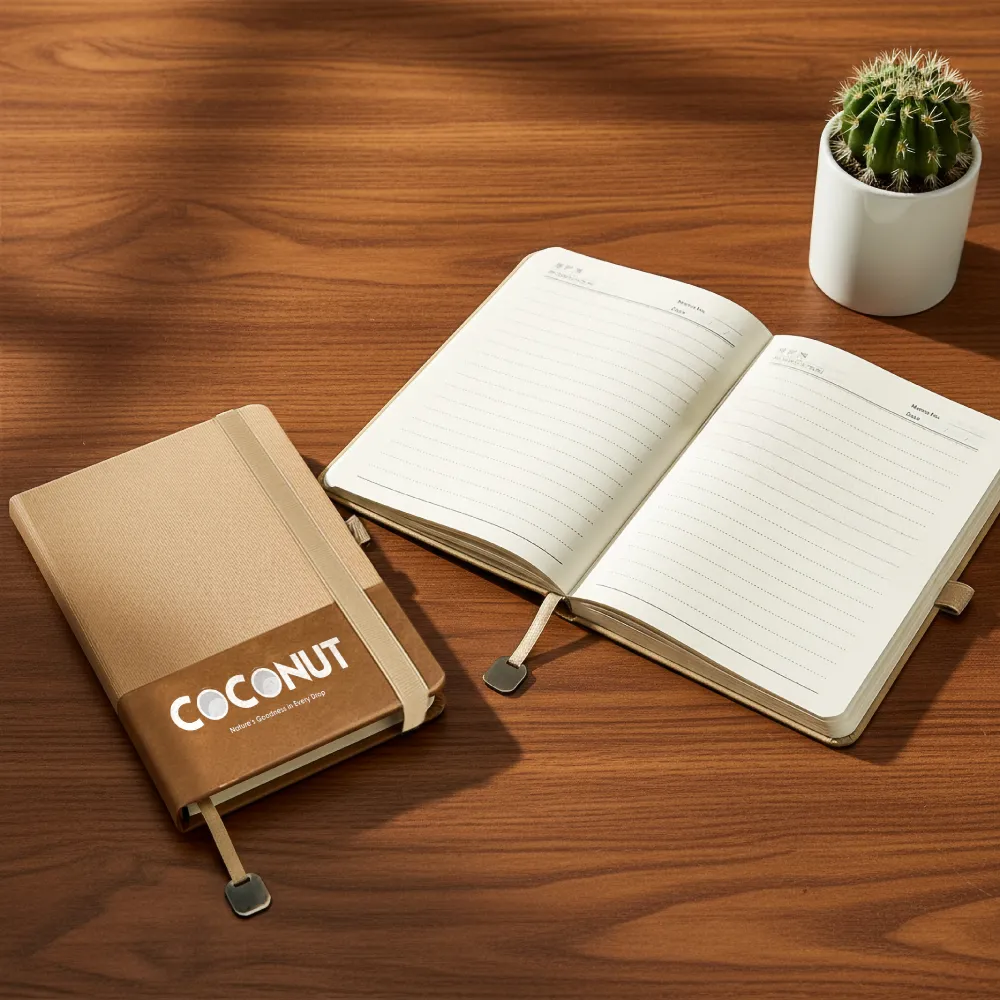

Imagine this: you order 1,000 branded notebooks for your company’s annual conference. The quote looked perfect, the digital mockup on screen was crisp, and delivery arrived two days before the event. Then you open the first box — and your navy-blue logo has printed as a faded teal, the text is slightly crooked, and the paper feels thinner than the one in the brochure photo. You cannot reorder. The event is in 48 hours.
This scenario plays out more often than Dubai’s corporate gifting industry likes to admit. And in nearly every case, the entire disaster could have been prevented by one simple step that costs a fraction of the bulk order: ordering a physical sample first.
Smart procurement managers, marketing heads, and HR professionals across the UAE treat sampling as non-negotiable. Not because they distrust suppliers, but because they understand a fundamental truth about branded merchandise — a screen can show you what a product might look like, but only your hands can tell you what it actually is.
What a “Sample” Actually Means in Corporate Gifting
Before we go further, it helps to know there are different kinds of samples, and they answer different questions:
A blank sample is the unbranded product — the plain mug, the unprinted tote bag, the bare notebook. It tells you about material quality, weight, feel, and functionality. Is this a mug someone would actually drink from daily, or one that will be quietly discarded?
A branded (pre-production) sample carries your actual logo, printed, engraved, or embroidered with the exact method planned for the bulk run. This is the one that answers the big questions: does the logo look right, are the colors accurate, is the placement correct?
A digital proof is not a sample at all. It is a computer-generated mockup — your logo pasted onto a product photo. Useful for confirming artwork placement, but it tells you nothing about material, print quality, or color fidelity on the real surface. Treat digital proofs as step one, never as the final sign-off.
For orders above a few hundred units — or any order where the gifts represent your brand at a high-stakes event — a branded pre-production sample is the gold standard. Everything below explains why.
The Seven Things Only a Physical Sample Can Tell You
1. True color — screens lie
This is the single most common sampling lesson. Computer screens display color in RGB; printing uses CMYK or Pantone spot colors. Your brand’s crimson on a MacBook can arrive as brick red on fabric, or neon-adjacent on coated paper. The material itself shifts color too — printing on dark fabric, matte ceramic, or natural bamboo each interacts with ink differently.
A physical sample shows you the real result before 1,000 units lock it in. Always provide your brand’s Pantone codes to the supplier, then check the sample against them in natural daylight — not under office fluorescents, which flatter everything.
2. Logo legibility at actual size
A logo that looks razor-sharp at 10 cm on your screen can turn into a smudge at the 3 cm print area on a pen barrel. Fine lines, small text (like a tagline under the logo), and intricate details routinely fail at small scales. Engraving on metal behaves differently from embroidery on fabric, which behaves differently from screen printing on plastic.
Hold the sample at arm’s length. Can you read it? Can a recipient? If the answer is “sort of,” redesign the artwork or change the product — before the bulk run, not after.
3. Print and branding precision
Registration (alignment of multiple colors), edges, bleeding, ghosting in engraving, thread tension in embroidery — these are physical-world qualities no mockup captures. On a sample, check: is the logo straight? Are edges clean? Does the engraving have consistent depth? Does embroidery pucker the fabric? These details separate a gift that looks premium from one that looks cheap.
4. Material quality and feel
Photos are lit, styled, and shot from flattering angles. In person, a “premium leatherette” notebook might feel like cardboard, a “sturdy” tote might be tissue-thin, or a power bank might feel suspiciously light (a red flag for battery quality). Weight, texture, stitching, zipper smoothness, lid fit — your hands catch in five seconds what a catalog hides completely.
5. Functionality
Does the bottle actually seal? Does the USB drive work when plugged in? Does the pen write smoothly for more than a paragraph? Does the backpack’s strap adjustment hold? A branded product that does not function is worse than no gift at all — it becomes a story people tell about your company.
6. Packaging as the recipient will see it
Unbox the sample the way a recipient would. Is it protected? Does the presentation feel intentional, or does the item rattle around in an oversized box? For VIP and executive gifting especially, the unboxing is half the experience. A sample lets you approve the full presentation, not just the product.
7. Consistency benchmark for the bulk order
Here is a strategic use of samples most buyers miss: once you approve a sample, it becomes your quality benchmark. When the bulk order arrives, you compare a random handful of units against the approved sample. Same color? Same print quality? Same materials? Without an approved reference, “this doesn’t look right” is an argument; with one, it is a documented claim.
The Real Cost of Skipping the Sample
Buyers skip samples for understandable reasons: deadlines are tight, the order seems straightforward, the catalog photos look great. Here is what that gamble actually risks:
A full reprint at your expense. If you approved the artwork and waived the sample, most suppliers will consider the bulk order “as approved.” Fixing 2,000 misprinted mugs means paying for 2,000 more — plus the lost originals.
Event disaster with no recovery window. Corporate gifts are usually tied to immovable dates: UAE National Day, GITEX, Ramadan, a product launch. A bad bulk delivery two days before the event cannot be fixed at any price. The sample is your insurance policy against exactly this.
Brand damage you cannot undo. A flimsy, misprinted gift does not just fail to impress — it actively communicates that your company cuts corners. Multiply that impression by every recipient, and the “saved” sample cost looks absurd.
The math that settles it: a branded sample typically costs a small fraction of the bulk order — and many Dubai suppliers deduct the sample cost from your final invoice once the bulk order is confirmed. Ask for this in writing. The sample is not an extra expense; it is the cheapest quality insurance in procurement.
How to Order Samples Like a Professional
Ask the right questions up front
- Is this a blank sample or a branded pre-production sample?
- What is the sample cost, and is it deductible from the bulk order?
- How long does the branded sample take? (Typically 3–7 working days in Dubai for in-house branding; longer for overseas manufacture.)
- Will the bulk production use the exact same materials, machines, and branding method as the sample?
That last question matters enormously. A sample printed with one method and a bulk run produced with another is not a sample at all — it is theater.
Build sampling into your timeline
One of the most practical corporate gifting timelines rules: add the sample stage to your plan from day one. For a National Day order needed in late November, your bulk order should be confirmed by early October — which means sampling in September. Buyers who discover sampling two weeks before their event either skip it (risking everything) or pay rush fees that dwarf the sample cost.
Evaluate the sample properly
When the sample arrives, do not just glance at it. Run a real evaluation:
1. Check it in daylight against your brand guidelines — Pantone codes, logo clearspace, proportions.
2. Test it — use the product the way a recipient would for a full day.
3. Show it to stakeholders — the person who approved the budget and the person whose team will receive the gifts. Samples align expectations across marketing, procurement, and leadership before production, not after.
4. Photograph and document any issues precisely (“logo sits 5mm too low,” “blue reads as teal”), so corrections are unambiguous.
5. Approve in writing — an email saying “sample approved, proceed with bulk run” protects both sides and starts the production clock cleanly.
When You Can Reasonably Skip the Sample
Sampling is not a religion; it is risk management. There are situations where it adds little:
- Repeat orders of an identical item from the same supplier, where the original approved sample still exists as the benchmark.
- Very small quantities of individually engraved items (like crystal awards), where each piece is made to order anyway.
- Unbranded stock items bought purely on price for mass distribution, where brand representation is not the point.
Even then, a quick blank sample for a new product line is cheap peace of mind. The buyers who skip sampling entirely are almost always the ones reordering something they have never actually held.
Red Flags: What a Bad Sample Response Tells You
How a supplier handles your sample request reveals how they will handle your bulk order:
- Refuses to provide a branded sample or insists digital proofs are enough — walk away. Confidence in quality shows up as willingness to prove it.
- Sample quality differs suspiciously from catalog claims — the bulk will not be better than the sample. Ever.
- Vague about whether bulk matches the sample in materials and methods — press for a written answer.
- No sample cost deduction offered — not a dealbreaker, but worth negotiating; most established Dubai suppliers offer it as standard practice.
A supplier that welcomes sampling, documents the approval, and treats the sample as a binding quality benchmark is a supplier you can trust with a 5,000-unit National Day run.
FAQs About Ordering Samples
How much does a branded sample cost in Dubai?
It varies by product and branding method — typically a modest flat fee plus courier. Many suppliers deduct it from your bulk invoice on confirmation. Always ask for the deduction in writing before paying.
How long does sampling add to the timeline?
For locally branded stock items in Dubai, expect 3–7 working days for a branded sample plus courier time. Fully custom or overseas-manufactured items take longer. Build this into your ordering timeline from the start.
Is a digital proof enough instead of a physical sample?
No — a digital proof confirms artwork placement only. It cannot show you true color on the material, print quality, or how the product feels and functions. For any significant order, insist on the physical piece.
Should I order samples from multiple suppliers?
For large or high-visibility orders, sampling two or three shortlisted suppliers is smart practice. It lets you compare real quality side by side — and suppliers who know they are being compared tend to send their best work.
What if the sample is perfect but the bulk order is not?
This is exactly why you keep the approved sample. Compare bulk units against it, document the differences with photos, and raise the discrepancy with the supplier immediately. An approved sample turns a subjective complaint into an objective quality claim.
The Bottom Line
Ordering a sample before committing to bulk is the highest-ROI step in corporate gift buying. It catches color errors, artwork problems, quality gaps, and functionality failures when they cost almost nothing to fix — instead of after thousands of units are printed, packed, and delivered to an event you cannot reschedule.
Before your next bulk order, talk to our branding services team about sampling. We will walk you through blank versus branded samples for your shortlist, give you honest timelines, and deduct the sample cost from your bulk invoice on confirmation — because a supplier that is confident in its quality has nothing to hide and everything to show. Browse our corporate gifts range to start your shortlist, and if you are still working out quantities, our guide to minimum order quantities for corporate gifts will help you plan the numbers before you sample.